When you click on links to various merchants on this site and make a purchase, this can result in this site earning a commission. Affiliate programs and affiliations include, but are not limited to, the eBay Partner Network.
P13C9 B' Camshaft Stuck (Bank 1) error on Cooper S
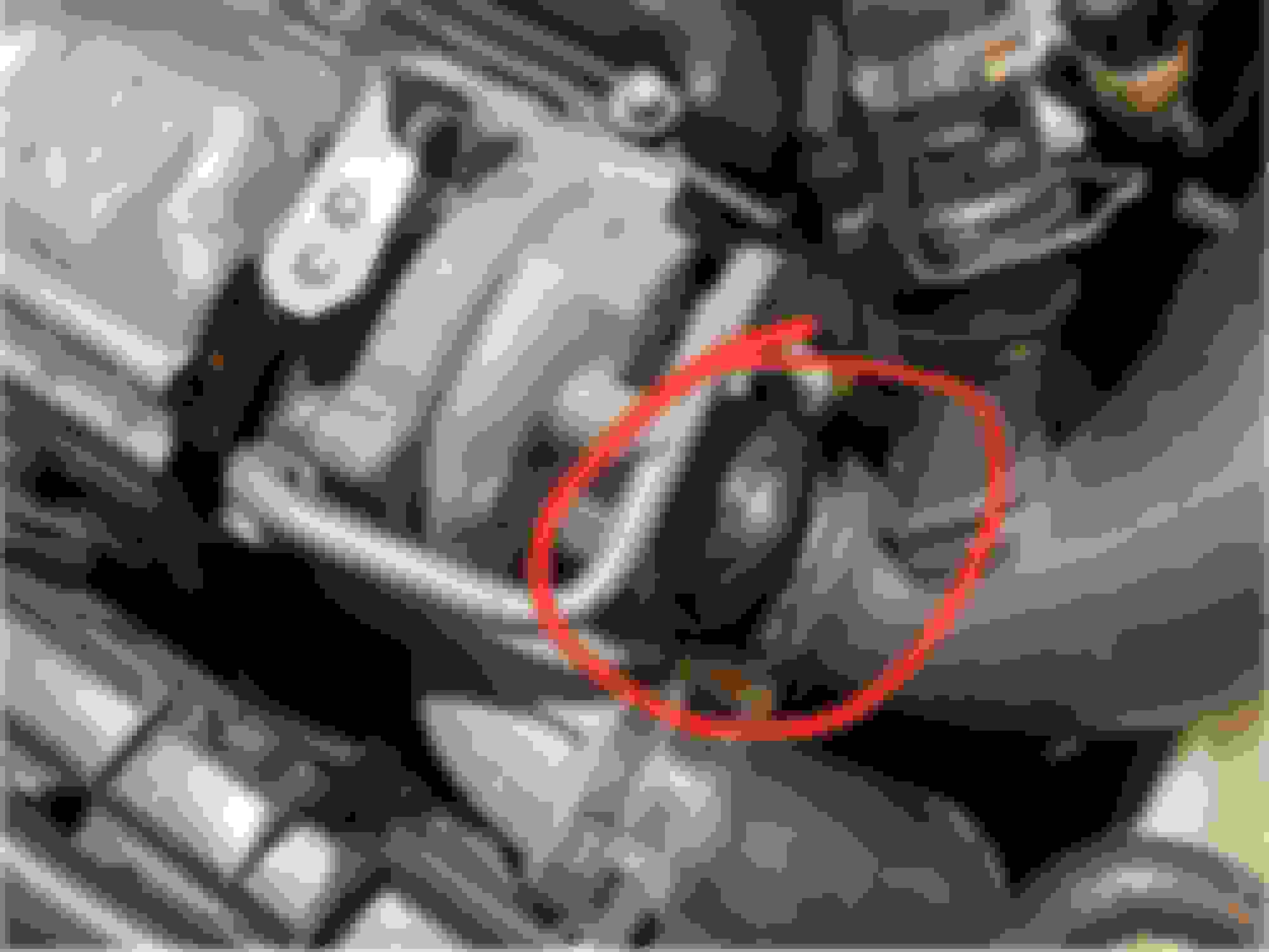
Hi. I've had this intermittent error code for a few months now, ever since I replaced the leaky thermostat. Some posts indicated it's the intake VANOS solenoid (on the back of the engine by the air intake). I did disconnect this sensor a few times while trying to get to the water pipe so that could be it. But I just want to confirm that is what this error code indicates since other posts say they replaced the solenoid and it didn't fix the problem...
I wouldn't expect disconnecting the solenoid would cause the error code; but when one of these solenoids starts to fail, it's generally an intermittent issue from my experience. I will say, if you have the N18 engine - with dual VANOS solenoids - you're best route is to replace them both. The intake one is far more challenging than the exhaust, simply because you're on the back side of the engine and it's difficult to see what you're doing. But if you've done a thermostat, it's not a difficult repair at all.
I would expect that you're also getting a half power light in addition to this fault code.
If the exhaust camshaft sensor and exhaust VANOS solenoid are fine, then consider checking the camshaft timing, which is done by installing the special tool used for a timing chain job.
Is this code specific to the exhaust solenoid or could it be either intake or exhaust? Not sure which one is Bank 1 or whether all the documentation referencing "exhaust" is just overlooking the dual VANOS setup.
Just looked under the hood and the intake solenoid is definitely gonna be substantially more challenging to replace! I'll have to basically remove the air intake and intake manifold again just to have enough clearance to reach down... argh!
Think I'm gonna do some testing with the OBD2 reader to try to pinpoint the issue first, because removing that intake manifold is a pain.
You should not have to remove very much beyond the air box and inlet elbow on the charge pipe. The solenoid is held in with a single TORX screw - it's the same size as the one on the other side of the motor, so do that one first.
If you're removing the intake manifold to get this solenoid out, something is very very wrong.
Just want to report back on my findings and get some feedback. So I checked the codes that pop up when I disconnect the VANOS sensors. Here's what I got:
Intake sensor: P0010 Intake Camshaft Position Actuator Circuit / Open (Bank 1)
Exhaust sensor: P0013 Exhaust Camshaft Position Actuator Circuit / Open (Bank 1)
P13C9 did not pop up when disconnecting either sensor. I disconnected these with the engine running, and when I unplugged the intake sensor, the engine rocked similar to when the P13C9 error trips. However the fault code linked above points to P13C9 being the exhaust sensor, but that could be specific to BMWs and not MINI. So I'm back to square one... I guess replace both? Could it be something else wrong with the camshaft?
@spaktacular I didn't think the system would be smart enough to distinguish between a faulty sensor vs an open circuit but I guess it is?!
Last edited by HAMnMINI; Jul 18, 2024 at 05:47 PM.
So I was about to replace both VANOS sensors and while removing the air intake housing, I noticed the air duct (13717627501) is broken where it connects to the turbo. The plastic has literally crumbled. It was fine when I replaced the thermostat a few months ago so I’m not sure what happened.
Is this a separate issue from P13C9? I did a full OBD diagnostic and under the engine codes, 2C58 also pops up, along with 2D60. Picture attached.
Can I just replace the air duct with a generic from Amazon? ECS shows it would take a few weeks for them to ship.
Last edited by HAMnMINI; Jul 27, 2024 at 05:45 PM.
The ripped intake boot is a non-issue for the VANOS code. I actually had the same ripped boot problem on my R55S, and it wasn't creating a code or even a MIL.
We have the genuine in stock and one aftermarket, get that replaced asap as you don't want anything to suck into that turbo. Thats the bigger risk. After a while if it does not suck anything in you might get an unmetered air code.
I'm not informed enough to state whether the system distinguishes between faulty v. open circuit. My recommendation is that you replace both of the solenoids. If one of them is malfunctioning, it's fair to extrapolate the other will at some point sooner rather than later.
The oil service interval from MINI is probably higher than it should be if you want devices like these to perform beyond the 100,000 mile window. My car had 93,000 on it when they began throwing fault codes, just 2,000 miles after I purchased. I have very little idea of what the service history was for the car before I bought it - although I can say that it was repossessed from the last owner, which is telling.
I went ahead and replaced the air duct with one from Amazon. Nothing beats overnight shipping with Prime, I just can’t let the car sit for a week waiting to get it from y’all.
I went ahead replaced both solenoids. Intake one was a pain but I didn’t lose any screws!
I do an oil change every 5,000 miles.10k is too long.
I went ahead and replaced the air duct with one from Amazon. Nothing beats overnight shipping with Prime, I just can’t let the car sit for a week waiting to get it from y’all.
I went ahead replaced both solenoids. Intake one was a pain but I didn’t lose any screws!
I do an oil change every 5,000 miles.10k is too long.
Yes that fixed the issue. The intake solenoid is a big job imo, because of it's location, but doable with the right tools. You have to remove the intake manifold to get to the solenoid from what I recall.
One thing I've learned working on this car, It's much faster to remove things out of the way to get easier access than it is wasting time trying to cram tools into tight spaces.
Yes that fixed the issue. The intake solenoid is a big job imo, because of it's location, but doable with the right tools. You have to remove the intake manifold to get to the solenoid from what I recall.
One thing I've learned working on this car, It's much faster to remove things out of the way to get easier access than it is wasting time trying to cram tools into tight spaces.