When you click on links to various merchants on this site and make a purchase, this can result in this site earning a commission. Affiliate programs and affiliations include, but are not limited to, the eBay Partner Network.
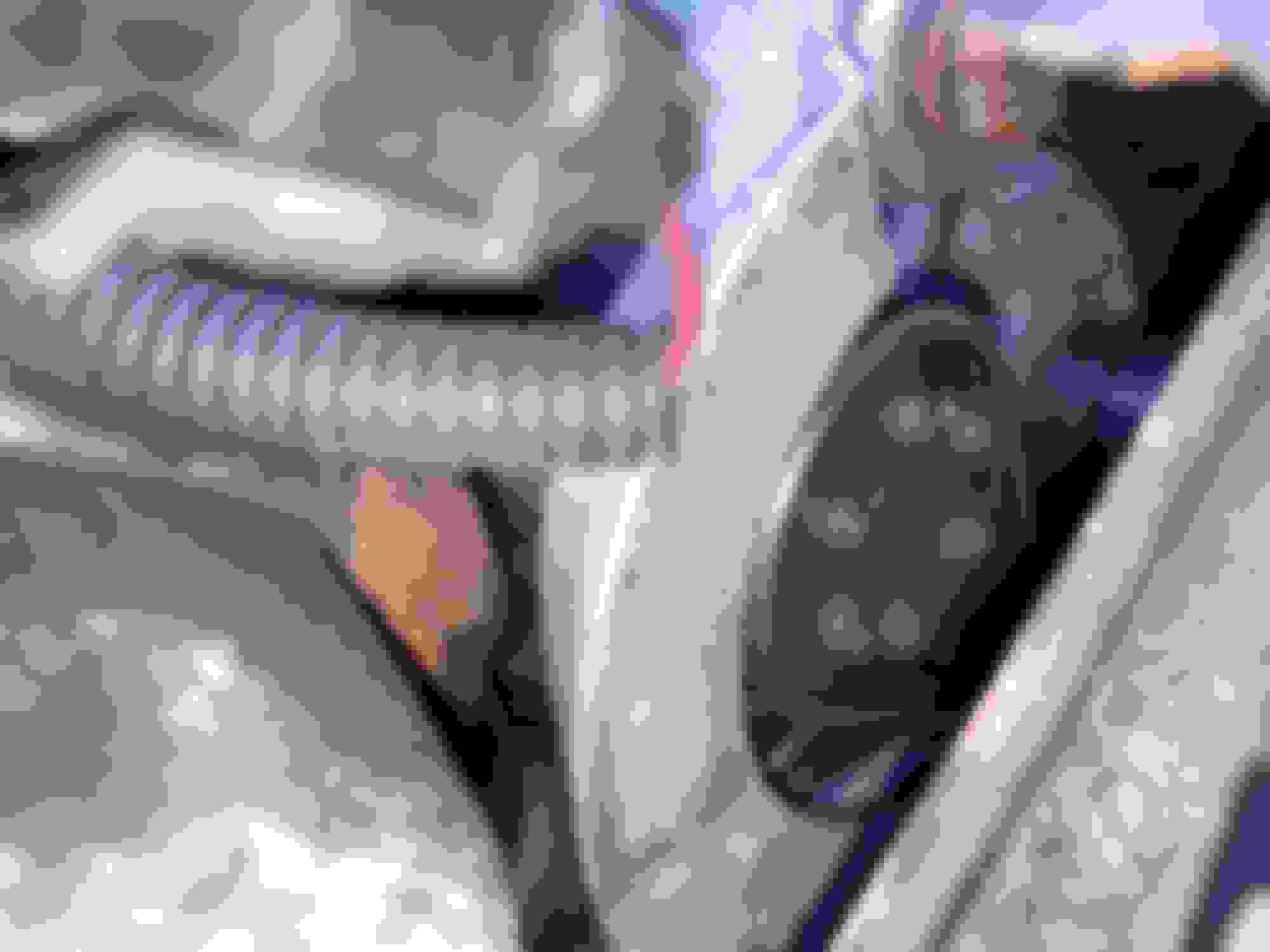
(Repost because i posted in wrong thread before) I have an 05 cooper s. (My second R53 now) Alta overdrive pulley that i can see. Alta air intake and bigger intercooler. Msd ignition. Ngk 1 step colder plugs. Upgraded intercooler boots and fresh map sensors installed. The previous owner told me it has an alta 17% pulley installed which i sort of believe but my boost gauge only shows 10 psi at wot 6000rpms. My bypass valve is easy to push in but does spring back. So i will be changing that. Im getting a tune but want to make sure that i give the tuner the right info by saying its a 17% pulley. If anyone can help me identify the pulley that would be awesome.
It's definitely aftermarket, so it's smaller than stock.
Can you read the part number printed on the serp belt? Since you know the size of the crank pulley, and assuming you can find the diameter of the belt via the part number, you should be able to find out what size the SC pulley is.
How are you measuring boost? External gauge or through an OBD scanner?
Adding to those questions, at what elevation was that boost level reading taken? Might be relatively accurate if at or near sea level, however higher elevations will significantly reduce actual boost being produced. Here's what I determined at my 5k' home location as illustrated May 2022 in post # 281 of my (sig) thread topic, i.e., I start with negative 2.5 psi boost before even firing up the engine.
Edited to add a link to an interesting video which demonstrates how atmospheric pressure at sea level vs higher elevations significantly effect the actual boost being produced:
It's definitely aftermarket, so it's smaller than stock.
Can you read the part number printed on the serp belt? Since you know the size of the crank pulley, and assuming you can find the diameter of the belt via the part number, you should be able to find out what size the SC pulley is.
How are you measuring boost? External gauge or through an OBD scanner?
Okay so I am reading this through a boost gauge not an obd tool. I will check the part number on belt after work and hopefully come up with something. I also dont think the pulley looks stock.
Adding to those questions, at what elevation was that boost level reading taken? Might be relatively accurate if at or near sea level, however higher elevations will significantly reduce actual boost being produced. Here's what I determined at my 5k' home location as illustrated May 2022 in post # 281 of my (sig) thread topic, i.e., I start with negative 2.5 psi boost before even firing up the engine.
Edited to add a link to an interesting video which demonstrates how atmospheric pressure at sea level vs higher elevations significantly effect the actual boost being produced: Turbine Research: "Altitude VS Boost and Tuning"
thanks for the great video and insight. So im at practically sea level. If we get technical about it im at 16 feet above sea level. Here is a side note i forgot to mention. I am battling a P1498 code which only comes on after about a half hour of driving and finally winding down to park. Cant see a vacuum leak anywhere. Checked all hoses and usual suspects and nothing. Car runs fine before and after the code comes on.
Could measure the diameter of the pulley teeth to get a closer idea, within a percent or so. Stock is nominally 65.5mm, JCW (11%) is about 58.3mm. A 17% reduction would be 0.17x65.5 = 11.1mm, so about a 54.4mm diameter. Alternatively, remove the belt and use a tailor's tape to get the pulley circumference and divide by 3.14 (pi) to get the diameter D.
Could measure the diameter of the pulley teeth to get a closer idea, within a percent or so. Stock is nominally 65.5mm, JCW (11%) is about 58.3mm. A 17% reduction would be 0.17x65.5 = 11.1mm, so about a 54.4mm diameter.
Great idea. I will give it a shot. All i have is a regular tape measurer on hand at the moment and its pouring rain here in Jersey at the moment.
Okay so I am reading this through a boost gauge not an obd tool. I will check the part number on belt after work and hopefully come up with something. I also dont think the pulley looks stock.
Definitely not stock, with OEM shown on this image snagged from an ALLMAG new OEM S-spec supercharger listing. Mine is even more unusual than yours with that manufacturer still not identified.
Not to hijack or veer off subject but interestingly enough my 15% pulley is also unbranded.
Way @WayMotorWorks by chance happened notice it was one of his first yet unbranded (WMW) 15% pulleys produced.
Nice to know.
Not to hijack or veer off subject but interestingly enough my 15% pulley is also unbranded.
Way @WayMotorWorks by chance happened notice it was one of his first yet unbranded (WMW) 15% pulleys produced.
Nice to know.
I want to assume its an early alta pulley because everything else is alta. I also measured the pulley roughly with a tape measurer. And it came it about 2-1/4 inch to 2-3/8 inch. Rough estimate. And i could be measuring wrong.
Definitely not stock, with OEM shown on this image snagged from an ALLMAG new OEM S-spec supercharger listing. Mine is even more unusual than yours with that manufacturer still not identified.
i guess the plot thickens lol! Never seen an eight screw one. Now im really confused.
By the picture the outer bevel may or may not be the same height as the teeth. If it is then a measurement between 2.25" and 2.375" diameter would mean the reduction would fall somewhere in the 8-13% range. Not aware of anyone ever making a pulley less than 12% (again JCW is 11%). Guessing that the bevel is slightly larger than the teeth and we're looking at a 15% pulley. A 19% would be noticably much smaller.
By the picture the outer bevel may or may not be the same height as the teeth. If it is then a measurement between 2.25" and 2.375" diameter would mean the reduction would fall somewhere in the 8-13% range. Guessing the bevel is slightly larger than the teeth and we're looking at a 15% pulley.
If this helps any I was able to get the belt into a position so I could see the lettering and here is the photo of the writing on the belt. Let me know your ideas.
Just having fun with the post title.
Here's a pic of my (4 bolt) 15% SC pulley:
Here's a shot with a tape measure dragged across the face:
The image above is at a bit of an angle: The face of the pulley actually measures 2-3/16" across. If we can assume the belt to be approx 5/32" - 1/16" thick - one could suggest that the splines might measure out to be 2-5/32" (?)
Don't know if that is relevant or even helps.
EDIT: IMO an "in home" smoke test is at least worth an effort. At least it was something to help rule out.
If this helps any I was able to get the belt into a position so I could see the lettering and here is the photo of the writing on the belt. Let me know your ideas.
The face of the pulley actually measures 2-3/16" across.
That's what I was thinking; if it's 2.25" on the outside but slightly less for the teeth, say 2 3/16, or 2.1875 inches x 25.4mm/inch = 55.6mm for a 15.2% reduction. The best way to determine for sure would be to remove the belt and caliper or tape it.
Just having fun with the post title.
Here's a pic of my (4 bolt) 15% SC pulley:
Here's a shot with a tape measure dragged across the face:
The image above is at a bit of an angle: The face of the pulley actually measures 2-3/16" across. If we can assume the belt to be approx 5/32" - 1/16" thick - one could suggest that the splines might measure out to be 2-5/32" (?)
Don't know if that is relevant or even helps.
EDIT: IMO an "in home" smoke test is at least worth an effort. At least it was something to help rule out.
Hahahaha! I love this community. And yes it actually did help because thats roughly what I measured. Good to know we are about the same size buddy! Im thinking of investing in atleast an amazon smoke machine and giving it another shot. And getting oem map sensors because I did read somewhere that a failing map could throw that code.
That's what I was thinking; if it's 2.25" on the outside but slightly less for the teeth, say 2 3/16, or 2.1875 inches x 25.4mm/inch = 55.6mm for a 15.2% reduction. The best way to determine for sure would be to remove the belt and caliper or tailor tape it.
BINGO! Looks like the mystery has been solved. However is 10lbs of boost at sea level normal for a 15% pulley with a 2% over drive pulley? I feel like that number is still low. And I only start building boost once I punch it and over 4000-4500 rpms wot
BINGO! Looks like the mystery has been solved. However is 10lbs of boost at sea level normal for a 15% pulley with a 2% over drive pulley? I feel like that number is still low. And I only start building boost once I punch it and over 4000-4500 rpms wot
That I don't know. Running a stock JCW configuration and no boost gauge so I won't be of any help there. Plenty of others on this board who do though, and lots of related threads to pore through in your off hours not actually spent in or under the car...
That I don't know. Running a stock JCW configuration and no boost gauge so I won't be of any help there. Plenty of others on this board who do though, and lots of related threads to pore through in your off hours not actually spent in or under the car...
Well I appreciate everyones help on this tread it means a ton!
Well - I'm down a few hundred miles from you just above FL and I normally boost around 14 @5,500 RPMs.
I don't usually tax my Mini on a daily but I have hit 16 @ wot (6,500 RPMs) on a few occasions during colder months.
So boosting 10 w/15% pulley seems like something is stifling.
I had some issues with a surging/jerking feeling a while back when pushing the car @ WOT. It was suggested that the usual suspect of this symptom was the bypass valve.
I bought a new one and was prepared to install it but decided to replace my MAP & TMAP (easier to get to) with $OEM$ just to see if that might be the cure. It was. An expensive (OEM) cure for just 2wo little plastic plug-in thingamabobs.
It was recommended to purchase OEM because most others/cheaper brands fail or are defective right out of the box. You may want to try cleaning your MAP sensors with electrical contact cleaner or isopropyl alcohol first to see if that helps.
Just be sure not to mix them up. TMAP and MAP look the same but are different.
I am not a mechanic. Just mechanically adept.
Not sure if cleaning or replacing the MAP sensors are the answer to your particular issue. But hoping for a simple fix for you.