


Drivetrain Back Pressure - Hissing


Thread Starter
|
5th Gear
Joined: May 2006
Posts: 847
Likes: 0
From: Kennewick, WA
Back Pressure - Hissing
I'm running a SuperTrapp exhaust on our 2006 Cooper S. I'm running it because it's really light (9 lbs verses the 40 lbs worth I removed).
The other reason we went with the SuperTrapp is that we wanted adjustabliity. You can run 4 discs and have a quiet exhaust for daily use, and run all 12 discs for loud race use. But when ever I run 4 discs, I hear a "hissing" coming from the exhaust. I also notice that the throttle isn't as responsive when it's out of gear. You blip the throttle and it doesn't rev up as quickly. I think is due to the muffler restricting the back pressure too much.
1. Doesn't a supercharged (or turbo charged) engine produce more back pressure than a NA engine?
2. Does anyone have any experience with an exhaust system that's too restricitive? What are the symptoms?
The other reason we went with the SuperTrapp is that we wanted adjustabliity. You can run 4 discs and have a quiet exhaust for daily use, and run all 12 discs for loud race use. But when ever I run 4 discs, I hear a "hissing" coming from the exhaust. I also notice that the throttle isn't as responsive when it's out of gear. You blip the throttle and it doesn't rev up as quickly. I think is due to the muffler restricting the back pressure too much.
1. Doesn't a supercharged (or turbo charged) engine produce more back pressure than a NA engine?
2. Does anyone have any experience with an exhaust system that's too restricitive? What are the symptoms?

6th Gear
Joined: Jul 2004
Posts: 2,664
Likes: 1
From: Orlando, FL
Not sure about #2 but forced induction cars do have more pressure on the exhaust side. Unline NA cars, boosted cars don't have throttle response problems caused by low backpressure. The lower the backpessure, the higher the performance...on the MCS at least.

Moderator :: Performance Mods
Joined: Mar 2003
Posts: 5,427
Likes: 6
From: A Den in Maryland
Any time you hear a hissing from an exhaust it's generally too restrictive. Running a restricted exhaust results in high exhaust gas temps (EGTs), premature catalyst wear, and short lived exhaust valves, among more obvious stuff like poor performance and bad gas mileage.
In the case of adjustable mufflers like SuperTrapps, some amount of hissing can be acceptable, since the restriction is at the very end of the line and not muffled by any more pipe or baffling. Tuning a Supertrapp involves adjusting the number of disks in the end of the muffler to balance the peak horsepower by controlling the resonance of the entire system. Trying to make it run quiet by removing too many disks sometimes results in too much of a restriction. Generally, a Supertrapp system will have a distinct snarl at or near the torque peak.
In the case of adjustable mufflers like SuperTrapps, some amount of hissing can be acceptable, since the restriction is at the very end of the line and not muffled by any more pipe or baffling. Tuning a Supertrapp involves adjusting the number of disks in the end of the muffler to balance the peak horsepower by controlling the resonance of the entire system. Trying to make it run quiet by removing too many disks sometimes results in too much of a restriction. Generally, a Supertrapp system will have a distinct snarl at or near the torque peak.
Thread Starter
|
5th Gear
Joined: May 2006
Posts: 847
Likes: 0
From: Kennewick, WA
Is there any indication of a problem that I can see by pulling my spark plugs? I can live with the noise level when 5 discs are in. But it responds best with all 12 discs (way to loud).
Plan B is to go with a new exhaust system like the Quicksilver or MyMini. I wonder how much more they weigh compared to the 9 lb SuperTrapp?
Plan B is to go with a new exhaust system like the Quicksilver or MyMini. I wonder how much more they weigh compared to the 9 lb SuperTrapp?
5th Gear
Joined: Mar 2005
Posts: 772
Likes: 0
IMHO there is simply no way to make a Supertrapp type muffler quiet without choking the crap out of the engine. Think about it: it's just a miniature glasspack, with too little packing (limited by the tiny case volume) to quiet things much at all, so it relies on simple backpressure. Backpressure is how the OEMs inelegantly made things quiet 40 years ago... because that was cheaper than adding packing, pass tubes or baffles. Even the OEMs know better today (mostly because there is now a penalty for poor fuel economy thanks to CAFE standards) so why use it anymore? It takes engine power to pump air past a restriction and the more airflow (rpms, throttle opening) the more power it wastes. So you can look at it as a dynamic or non-linear parasitic load that consumes the most energy exactly when the engine is trying to deliver the most power.
However adding a giant 6" diameter straight-through resonator would likely help a lot and allow you to run more discs all the time. Shouldn't add much weight either; mine weighs about six pounds.
Generally I am not a fan of adjustable mufflers for the simple reason that A/F mixtures tend to become considerably leaner when backpressure is reduced, throwing all your careful tuning out the window at least part of the time. Especially when it is now possible to have quiet and high performance at the same time (though it does weigh a little more).
However adding a giant 6" diameter straight-through resonator would likely help a lot and allow you to run more discs all the time. Shouldn't add much weight either; mine weighs about six pounds.
Generally I am not a fan of adjustable mufflers for the simple reason that A/F mixtures tend to become considerably leaner when backpressure is reduced, throwing all your careful tuning out the window at least part of the time. Especially when it is now possible to have quiet and high performance at the same time (though it does weigh a little more).
5th Gear
Joined: May 2006
Posts: 923
Likes: 1
From: Southern IL
Have you concidered adding a small resonator into the system? It would seem cheaper than going to an all new exhaust and would only add an extra pound or two.
On the topic of a forced induction motor producing more or less back-pressure; the amount of backpressure is directly the result of the exhaust system, however the amount of air flowing into a supercharged or turbocharged motor is greater so the potential for more air to flow out needs to also be greater. So while having a forced induction motor won't increase the amount of backpressure using an exhaust system suitable for a N/A application may have too much back pressure for the increased amount of exhaust gasses trying to leave the engine. The only way a forced induction system actually produces more back pressure is when one conciders the restriction the exhaust side of a turbocharger creates.
On the topic of a forced induction motor producing more or less back-pressure; the amount of backpressure is directly the result of the exhaust system, however the amount of air flowing into a supercharged or turbocharged motor is greater so the potential for more air to flow out needs to also be greater. So while having a forced induction motor won't increase the amount of backpressure using an exhaust system suitable for a N/A application may have too much back pressure for the increased amount of exhaust gasses trying to leave the engine. The only way a forced induction system actually produces more back pressure is when one conciders the restriction the exhaust side of a turbocharger creates.
Thread Starter
|
5th Gear
Joined: May 2006
Posts: 847
Likes: 0
From: Kennewick, WA
Yeah, adding a resonator is a good solution.....but I still want to determine if there's actually a problem.
I thought that forced induction (supercharged) caused the air to be compressed in the cylinder so it was a denser charge. This creates a bigger explosion which equals more power. So maybe because there's a bigger explosion, there is more exhaust gas the needs to be forced out?
I wonder if there's a back pressure measuring device that I can place in the exhaust stream. Kind of like an oxegen sensor.
Again, a number of people I know have driven their cars cross country to autocross events with only 4 discs in place. They did this a number of times and never had problems. So I'm a little suspicious about the idea that the muffler is doing damage to my engine.
I'm going to call SuperTrapp today and ask them about it.
I thought that forced induction (supercharged) caused the air to be compressed in the cylinder so it was a denser charge. This creates a bigger explosion which equals more power. So maybe because there's a bigger explosion, there is more exhaust gas the needs to be forced out?
I wonder if there's a back pressure measuring device that I can place in the exhaust stream. Kind of like an oxegen sensor.
Again, a number of people I know have driven their cars cross country to autocross events with only 4 discs in place. They did this a number of times and never had problems. So I'm a little suspicious about the idea that the muffler is doing damage to my engine.
I'm going to call SuperTrapp today and ask them about it.
Trending Topics

Thread Starter
|
5th Gear
Joined: May 2006
Posts: 847
Likes: 0
From: Kennewick, WA
Yeah, I started with 4, then switched to 5 and it got a little better (less hissing and slightly more responsive). Then I switched to 8 and it got a little better again. But when I switched to 12 was the biggest change. The throttle was finally as responsive as it was with the stock muffler.....but A LOT louder.
I want to be clear, the throttle response is only when the car is out of gear or between gears. Like when you're blipping the throttle for a nice heel/toe down shift for a turn. Or when you blip the throttle at a light.
But even with only 4 discs, the power seems to be about the same. A friend of mine with an MR-2 Spyder says that when he runs only 4 discs, his car won't rev to redline. I don't have that problem at all. In fact it's really hard to feel the performance difference between 4 discs and 12 discs. It's only the missing throttle response and hissing that makes it noticable.
I want to be clear, the throttle response is only when the car is out of gear or between gears. Like when you're blipping the throttle for a nice heel/toe down shift for a turn. Or when you blip the throttle at a light.
But even with only 4 discs, the power seems to be about the same. A friend of mine with an MR-2 Spyder says that when he runs only 4 discs, his car won't rev to redline. I don't have that problem at all. In fact it's really hard to feel the performance difference between 4 discs and 12 discs. It's only the missing throttle response and hissing that makes it noticable.
5th Gear
Joined: May 2006
Posts: 923
Likes: 1
From: Southern IL
It is possible to tap pressure gauges before and after different components of the exhaust system to measure back pressure but with the Supertrap being at the end of the system it would be difficult to get any meaningful measurements from this. It really does sound like the Supertrapp is causing more back pressure. You may not notice it while moving because of a slight scavenging effect the forward motion of the car would have on the exhaust. I've never used this paticular muffler but if your friend says his vehicle won't rev to redline at a certain setting that most certainly seems to be excessive back pressure, the MINI's exhaust probably doesn't restrict it's breathing at redline as much as the cam profiles and cylinder head do so you won't have the same problem he does. It seems expiramenting with different resonators would be your best solution to the problem. The supertrap isn't a very effecient muffler because the exhaust flowing through it hits the end cap and must make a right turn to exit the exhaust system. Some of the gasses don't make the right turn and instead reverberate back up into the exhaust, creating even more back pressure and more turbulence within the muffler. if you need to run 8 or more disks to reach a point where you have stock throttle response then that means at 8 discs you've managed to replicate the flow charactersictics of the stock exhaust system.
5th Gear
Joined: Mar 2005
Posts: 772
Likes: 0
Yep, all it would require is a pressure gauge, but consider do you really need to check since worse backpressure than stock is obviously counterproductive... even when that may not be "actually a problem?"
This long thread on backpressure of various MCS exhausts is suggested reading. And it's really difficult to notice a performance difference of less than 10% by seat-of-the-pants...
This long thread on backpressure of various MCS exhausts is suggested reading. And it's really difficult to notice a performance difference of less than 10% by seat-of-the-pants...

Yeah, I started with 4, then switched to 5 and it got a little better (less hissing and slightly more responsive). Then I switched to 8 and it got a little better again. But when I switched to 12 was the biggest change. The throttle was finally as responsive as it was with the stock muffler.....but A LOT louder.
I want to be clear, the throttle response is only when the car is out of gear or between gears. Like when you're blipping the throttle for a nice heel/toe down shift for a turn. Or when you blip the throttle at a light.
But even with only 4 discs, the power seems to be about the same. A friend of mine with an MR-2 Spyder says that when he runs only 4 discs, his car won't rev to redline. I don't have that problem at all. In fact it's really hard to feel the performance difference between 4 discs and 12 discs. It's only the missing throttle response and hissing that makes it noticable.
I want to be clear, the throttle response is only when the car is out of gear or between gears. Like when you're blipping the throttle for a nice heel/toe down shift for a turn. Or when you blip the throttle at a light.
But even with only 4 discs, the power seems to be about the same. A friend of mine with an MR-2 Spyder says that when he runs only 4 discs, his car won't rev to redline. I don't have that problem at all. In fact it's really hard to feel the performance difference between 4 discs and 12 discs. It's only the missing throttle response and hissing that makes it noticable.
Thread Starter
|
5th Gear
Joined: May 2006
Posts: 847
Likes: 0
From: Kennewick, WA
Sorry Herbie, but that doesn't make sense. The throttle response get's better when I add more disc's (less backpressure)
I talked to the SuperTrapp folks, they are VERY helpful by the way. They suggested I try on of their "open end cap's" like this:
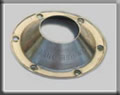
It will reduce the back pressure, but still muffle the sound some what. He said that because it directs the sound straight back, it actually is quieter in the car versus using a closed end cap.
I guess we'll see!
I talked to the SuperTrapp folks, they are VERY helpful by the way. They suggested I try on of their "open end cap's" like this:
It will reduce the back pressure, but still muffle the sound some what. He said that because it directs the sound straight back, it actually is quieter in the car versus using a closed end cap.
I guess we'll see!
6th Gear
Joined: Jul 2004
Posts: 2,664
Likes: 1
From: Orlando, FL
For an NA motor, less backpressure means less throttle response. The same goes for less intake restriction (at least at low rpm's). On a forced induction motor, reduced backpressure will, at least, not reduce throttle response.
Sorry Herbie, but that doesn't make sense. The throttle response get's better when I add more disc's (less backpressure)
I talked to the SuperTrapp folks, they are VERY helpful by the way. They suggested I try on of their "open end cap's" like this:
It will reduce the back pressure, but still muffle the sound some what. He said that because it directs the sound straight back, it actually is quieter in the car versus using a closed end cap.
I guess we'll see!
I talked to the SuperTrapp folks, they are VERY helpful by the way. They suggested I try on of their "open end cap's" like this:
It will reduce the back pressure, but still muffle the sound some what. He said that because it directs the sound straight back, it actually is quieter in the car versus using a closed end cap.
I guess we'll see!

I noticed that when I put the Quicksilver exhaust on my MCS that is took more throttle at normal take off. I since removed the quicksilver, at torque at low end returned to "normal" feel.

Thread
Thread Starter
Forum
Replies
Last Post
Navigation & Audio My 07 COOPER S has an mp3 jack STOCK!
surfblue
Navigation & Audio
4
Oct 24, 2018 01:20 AM