


Drivetrain Intercooler Cooling Tests


I appreciate every bit helps as well as the thought behind the Rotex development.

What I getting at is that its primary function is cooling the bearings as opposed to reducing heat from the air passing threw it. Clearly if it helps keep the rotex internals cooler it has to have a positive effect on the air passing threw it but it should be minimal. no? The real job of cooling the air would be the intercooler (a-to-a or a-to-w).
I appreciate every bit helps as well as the thought behind the Rotex development.
I appreciate every bit helps as well as the thought behind the Rotex development.
ROTREX.... ROTREX......lol
as I said before we built the LARGEST a/a intercooler we could and angled it to get the most flow through it. All it needs now is a small diverter


Joined: Apr 2007
Posts: 702
Likes: 2
From: Utah
Not to side track the current discussion but I've been thinking about the back pressure on the intercoolers I tested. I went back and looked at the data and started looking at the inlet temps which are basically the outlet temps of the SC.
Now in theory, in the intercoolers that had higher back pressure, we should see higher temps right before entry into the IC. That air would sit in that horn longer getting whipped by the hot air leaving the SC, so the temps should show higher.
Looking back at the inlet temps I see the following highest inlet temps then I averaged them. The lower temps "should" indicate the units with less back pressure.
(keep in mind my averages we just eyeballed)
M7 -high temp 315 - Average temp 310ish
Alta -high temp 305 - Average temp 302ish
GRS -high temp 305 - Average temp 302ish
Forge -high temp 293 - Average temp 280ish
Stock -high temp 317 - Average temp 306ish
Looking at it, the data would suggest that the Forge unit has the lower pressure drop due to the heat recorded at the outlet of the SC
kinda rough I know, but it gives some indication. There is definitely something going on thats different with the Forge.
Now in theory, in the intercoolers that had higher back pressure, we should see higher temps right before entry into the IC. That air would sit in that horn longer getting whipped by the hot air leaving the SC, so the temps should show higher.
Looking back at the inlet temps I see the following highest inlet temps then I averaged them. The lower temps "should" indicate the units with less back pressure.
(keep in mind my averages we just eyeballed)
M7 -high temp 315 - Average temp 310ish
Alta -high temp 305 - Average temp 302ish
GRS -high temp 305 - Average temp 302ish
Forge -high temp 293 - Average temp 280ish
Stock -high temp 317 - Average temp 306ish
Looking at it, the data would suggest that the Forge unit has the lower pressure drop due to the heat recorded at the outlet of the SC
kinda rough I know, but it gives some indication. There is definitely something going on thats different with the Forge.
Not to side track the current discussion but I've been thinking about the back pressure on the intercoolers I tested. I went back and looked at the data and started looking at the inlet temps which are basically the outlet temps of the SC.
Now in theory, in the intercoolers that had higher back pressure, we should see higher temps right before entry into the IC. That air would sit in that horn longer getting whipped by the hot air leaving the SC, so the temps should show higher.
Looking back at the inlet temps I see the following highest inlet temps then I averaged them. The lower temps "should" indicate the units with less back pressure.
(keep in mind my averages we just eyeballed)
M7 -high temp 315 - Average temp 310ish
Alta -high temp 305 - Average temp 302ish
GRS -high temp 305 - Average temp 302ish
Forge -high temp 293 - Average temp 280ish
Stock -high temp 317 - Average temp 306ish
Looking at it, the data would suggest that the Forge unit has the lower pressure drop due to the heat recorded at the outlet of the SC
kinda rough I know, but it gives some indication. There is definitely something going on thats different with the Forge.
Now in theory, in the intercoolers that had higher back pressure, we should see higher temps right before entry into the IC. That air would sit in that horn longer getting whipped by the hot air leaving the SC, so the temps should show higher.
Looking back at the inlet temps I see the following highest inlet temps then I averaged them. The lower temps "should" indicate the units with less back pressure.
(keep in mind my averages we just eyeballed)
M7 -high temp 315 - Average temp 310ish
Alta -high temp 305 - Average temp 302ish
GRS -high temp 305 - Average temp 302ish
Forge -high temp 293 - Average temp 280ish
Stock -high temp 317 - Average temp 306ish
Looking at it, the data would suggest that the Forge unit has the lower pressure drop due to the heat recorded at the outlet of the SC
kinda rough I know, but it gives some indication. There is definitely something going on thats different with the Forge.

What I getting at is that its primary function is cooling the bearings as opposed to reducing heat from the air passing threw it. Clearly if it helps keep the rotex internals cooler it has to have a positive effect on the air passing threw it but it should be minimal. no? The real job of cooling the air would be the intercooler (a-to-a or a-to-w).
I appreciate every bit helps as well as the thought behind the Rotex development.
I appreciate every bit helps as well as the thought behind the Rotex development.
Longboard
Now put the diverter on that we talked about and watch them drop even further on high boost


6th Gear
Joined: Mar 2006
Posts: 1,710
Likes: 1
From: Northampton MA
Not to side track the current discussion but I've been thinking about the back pressure on the intercoolers I tested. I went back and looked at the data and started looking at the inlet temps which are basically the outlet temps of the SC.
Now in theory, in the intercoolers that had higher back pressure, we should see higher temps right before entry into the IC. That air would sit in that horn longer getting whipped by the hot air leaving the SC, so the temps should show higher.
Looking back at the inlet temps I see the following highest inlet temps then I averaged them. The lower temps "should" indicate the units with less back pressure.
(keep in mind my averages we just eyeballed)
M7 -high temp 315 - Average temp 310ish
Alta -high temp 305 - Average temp 302ish
GRS -high temp 305 - Average temp 302ish
Forge -high temp 293 - Average temp 280ish
Stock -high temp 317 - Average temp 306ish
Looking at it, the data would suggest that the Forge unit has the lower pressure drop due to the heat recorded at the outlet of the SC
kinda rough I know, but it gives some indication. There is definitely something going on thats different with the Forge.
Now in theory, in the intercoolers that had higher back pressure, we should see higher temps right before entry into the IC. That air would sit in that horn longer getting whipped by the hot air leaving the SC, so the temps should show higher.
Looking back at the inlet temps I see the following highest inlet temps then I averaged them. The lower temps "should" indicate the units with less back pressure.
(keep in mind my averages we just eyeballed)
M7 -high temp 315 - Average temp 310ish
Alta -high temp 305 - Average temp 302ish
GRS -high temp 305 - Average temp 302ish
Forge -high temp 293 - Average temp 280ish
Stock -high temp 317 - Average temp 306ish
Looking at it, the data would suggest that the Forge unit has the lower pressure drop due to the heat recorded at the outlet of the SC
kinda rough I know, but it gives some indication. There is definitely something going on thats different with the Forge.

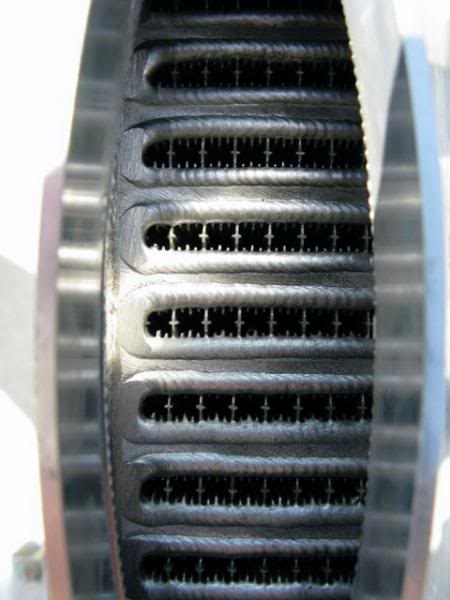

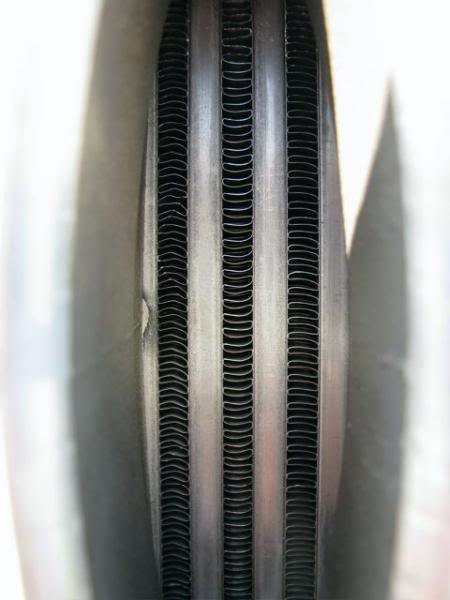
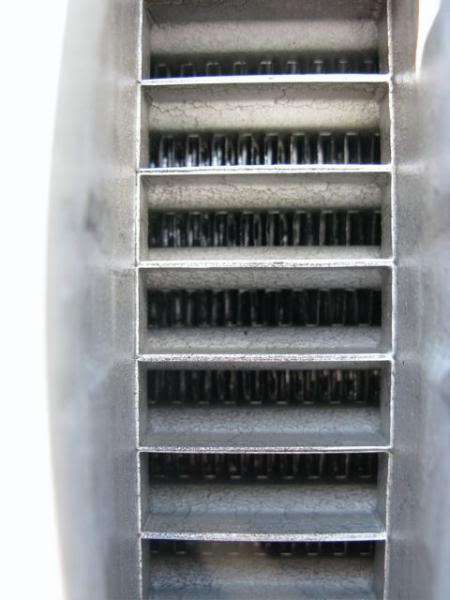

6th Gear
Joined: Mar 2006
Posts: 1,710
Likes: 1
From: Northampton MA


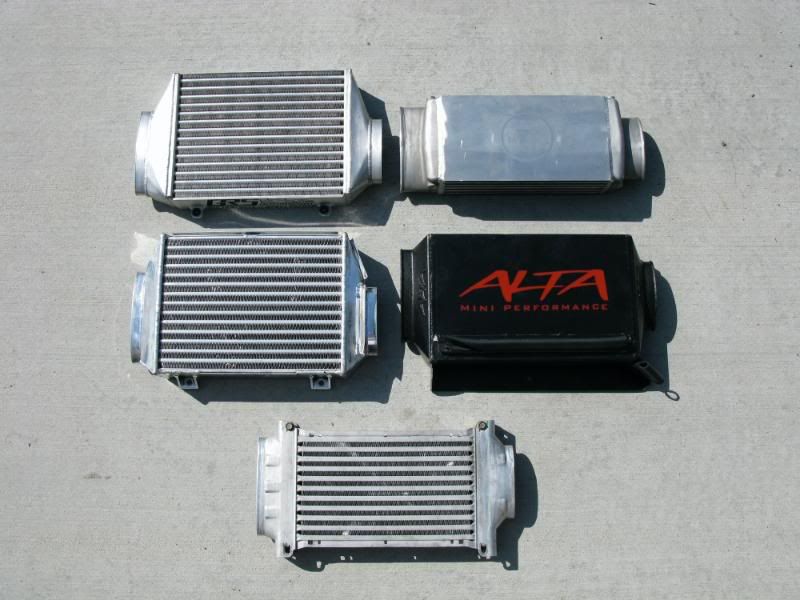
If the core has too much restriction the loss of boost may not be recovered even if the end result is a cooler charge. The air flow through the outside air collection area must have the correct fin count to cool efficently. Of the 4 ICs I tested the forge had the least restricted inner & outer core. I would have expected the GRS to be similar since the inner core looks to be a less restrictive design ( I did not test a GRS ), my guess - the exterior fin count must restrict air flow too much.
The key is to capture as much air on the outside & keep it in the IC long enough for it to cool the charge & not loose boost. Easy right?
The reality is the post you made at 1:04 is about as good as it gets with the available equipment that we can use. There are too many variables to overcome, air quality is big. What you did get are good numbers that, if read correctly, give some answers that you & many others that have followed this thread were looking for. BUT it's not over. Looking at Longboards setup, the end result is great air management & efficency.
Next, for me, exploite the hole in the hood.

just a comment...
the extruded cores tend to have better pressure behaviour but worse heat transfer.
All of the aftermarket units I've seen to date have the handicap of square faces that the intake air has to go around vs the stocker that has nice pinched tubes that form little funnels. It'd be nice to put half round on the intake side of the aftermarket units, but this would mean cutting the end tank off, attaching the rounds, then welding the tank back on. Some gain may also be had by using internal baffles that more evenly direct airflow into the core from the offset SC side port....
None of this is secret information. A good read like

covers all the details of IC design and optimization that we're re-discovering on our own.
Matt
Matt
All of the aftermarket units I've seen to date have the handicap of square faces that the intake air has to go around vs the stocker that has nice pinched tubes that form little funnels. It'd be nice to put half round on the intake side of the aftermarket units, but this would mean cutting the end tank off, attaching the rounds, then welding the tank back on. Some gain may also be had by using internal baffles that more evenly direct airflow into the core from the offset SC side port....
None of this is secret information. A good read like
covers all the details of IC design and optimization that we're re-discovering on our own.
Matt
Matt
Some threads from way back when.....
https://www.northamericanmotoring.co...ad.php?t=62843
https://www.northamericanmotoring.co...ad.php?t=61326
https://www.northamericanmotoring.co...ad.php?t=60653
I just notice, this thread is in the 151,000 something. So in the above, we're travelling back about half of the NAM thread count! Just like hem lines, thread content repeats itself!
Matt
ps I did some pressure logging of the GP vs the stock, and the results were surprising! I'll see if I can dig them up....
https://www.northamericanmotoring.co...ad.php?t=62843
https://www.northamericanmotoring.co...ad.php?t=61326
https://www.northamericanmotoring.co...ad.php?t=60653
I just notice, this thread is in the 151,000 something. So in the above, we're travelling back about half of the NAM thread count! Just like hem lines, thread content repeats itself!
Matt
ps I did some pressure logging of the GP vs the stock, and the results were surprising! I'll see if I can dig them up....
Some threads from way back when.....
https://www.northamericanmotoring.co...ad.php?t=62843
https://www.northamericanmotoring.co...ad.php?t=61326
https://www.northamericanmotoring.co...ad.php?t=60653
I just notice, this thread is in the 151,000 something. So in the above, we're travelling back about half of the NAM thread count! Just like hem lines, thread content repeats itself!
Matt
ps I did some pressure logging of the GP vs the stock, and the results were surprising! I'll see if I can dig them up....
https://www.northamericanmotoring.co...ad.php?t=62843
https://www.northamericanmotoring.co...ad.php?t=61326
https://www.northamericanmotoring.co...ad.php?t=60653
I just notice, this thread is in the 151,000 something. So in the above, we're travelling back about half of the NAM thread count! Just like hem lines, thread content repeats itself!
Matt
ps I did some pressure logging of the GP vs the stock, and the results were surprising! I'll see if I can dig them up....
many were told this same information a few yrs ago... most didn't listen at that time.... now people are more aware of the facts
hard to dispute the facts that the most powerful Mini supercharged cars are running around with :
stock JCW intakes
Stock throttle bodies
stock intake tubes
stock superchargers with aftermarket pullies (one even has a JCW pulley
 )
)stock intercoolers
stock inlet horns.... blah blah blah
it boils down to : Properly done cylinder head, cam, pulley, exhaust and tune

Joined: Apr 2007
Posts: 702
Likes: 2
From: Utah
I think what an aftermarket intercooler boils down to is engine jewelry, with the possibility of slight gains in thermal efficiency or boost levels, unfortunately its one or the other.
For me, I'm one that happens to like the engine jewelry look of the aftermarket IC's. Now, I do believe that these intercoolers offer some differences and slight benefit depending on what your looking for from your car i.e. throttle response, added cooling for hot climates etc. Identifying these differences for these IC's is my goal. I also want to know what gains if any and how miniscule or great they might be.
My hope would be to find an IC that has better Thermal efficiency and boost levels over that of the stock one. Is there such a beast? There isn't one thats "wowed" me enough yet. Maybe with all this talk about IC's the manufacturers are taking note of what people are looking for and get back to the drawing board.
Anyway, I'm betting there are a lot of people like me out there that want some "engine jewelry". Which one does it best compared to stock is the real topic of conversation.
For me, I'm one that happens to like the engine jewelry look of the aftermarket IC's. Now, I do believe that these intercoolers offer some differences and slight benefit depending on what your looking for from your car i.e. throttle response, added cooling for hot climates etc. Identifying these differences for these IC's is my goal. I also want to know what gains if any and how miniscule or great they might be.
My hope would be to find an IC that has better Thermal efficiency and boost levels over that of the stock one. Is there such a beast? There isn't one thats "wowed" me enough yet. Maybe with all this talk about IC's the manufacturers are taking note of what people are looking for and get back to the drawing board.
Anyway, I'm betting there are a lot of people like me out there that want some "engine jewelry". Which one does it best compared to stock is the real topic of conversation.
I think what an aftermarket intercooler boils down to is engine jewelry, with the possibility of slight gains in thermal efficiency or boost levels, unfortunately its one or the other.
For me, I'm one that happens to like the engine jewelry look of the aftermarket IC's. Now, I do believe that these intercoolers offer some differences and slight benefit depending on what your looking for from your car i.e. throttle response, added cooling for hot climates etc. Identifying these differences for these IC's is my goal. I also want to know what gains if any and how miniscule or great they might be.
My hope would be to find an IC that has better Thermal efficiency and boost levels over that of the stock one. Is there such a beast? There isn't one thats "wowed" me enough yet. Maybe with all this talk about IC's the manufacturers are taking note of what people are looking for and get back to the drawing board.
Anyway, I'm betting there are a lot of people like me out there that want some "engine jewelry". Which one does it best compared to stock is the real topic of conversation.
For me, I'm one that happens to like the engine jewelry look of the aftermarket IC's. Now, I do believe that these intercoolers offer some differences and slight benefit depending on what your looking for from your car i.e. throttle response, added cooling for hot climates etc. Identifying these differences for these IC's is my goal. I also want to know what gains if any and how miniscule or great they might be.
My hope would be to find an IC that has better Thermal efficiency and boost levels over that of the stock one. Is there such a beast? There isn't one thats "wowed" me enough yet. Maybe with all this talk about IC's the manufacturers are taking note of what people are looking for and get back to the drawing board.
Anyway, I'm betting there are a lot of people like me out there that want some "engine jewelry". Which one does it best compared to stock is the real topic of conversation.
sounds like you are headed down the path of W2A
Joined: Apr 2007
Posts: 702
Likes: 2
From: Utah
I dunno my friend, I have yet to be convinced of the benefit for a daily driver. Not to mention the cost to power and gain increase exponentially as well.
I have to admit, I am fascinated by the allure of consistent 120 degree intake temps. If those temps are what people are typically seeing from the laminova, its more than a player in the game of IC's
I have to admit, I am fascinated by the allure of consistent 120 degree intake temps. If those temps are what people are typically seeing from the laminova, its more than a player in the game of IC's
I dunno my friend, I have yet to be convinced of the benefit for a daily driver. Not to mention the cost to power and gain increase exponentially as well.
I have to admit, I am fascinated by the allure of consistent 120 degree intake temps. If those temps are what people are typically seeing from the laminova, its more than a player in the game of IC's
I have to admit, I am fascinated by the allure of consistent 120 degree intake temps. If those temps are what people are typically seeing from the laminova, its more than a player in the game of IC's
no one said hp was cheap
you really aren't gaining anything... just saving what you have
My little dose of LITHIUM
iTrader: (1)
Joined: Jul 2005
Posts: 2,435
Likes: 2
From: Albuquerque New Mexico
My goal is to never see an approach above 20F. Without W-M systems it's unlikely you'll ever get much below ambient even at no-boast/low-load driving.
6th Gear
Joined: Mar 2006
Posts: 1,710
Likes: 1
From: Northampton MA
Phil you built a good scoop & did a bunch of heat management as well.
This subject ceeps creeping up. Lots are intrested, but the result is almost the same.
The cheapest, most reliable HP, has always been heads.
As far as ICs, OE works fine. Of the aftermarket bunch, I have what works best for my driving. I still run the OE about 50% of the time. It's an easy change.
If you buy an aftermarket IC look for a company that specializes ICs as a business. More than likely they will be the best engeneered.
Dr Phil, not only did a visit to your site inspire a kitchen rebuild ( doing the cabinets in hickory ) & I have been playing with the hole in the hood.
This subject ceeps creeping up. Lots are intrested, but the result is almost the same.
The cheapest, most reliable HP, has always been heads.
As far as ICs, OE works fine. Of the aftermarket bunch, I have what works best for my driving. I still run the OE about 50% of the time. It's an easy change.
If you buy an aftermarket IC look for a company that specializes ICs as a business. More than likely they will be the best engeneered.
Dr Phil, not only did a visit to your site inspire a kitchen rebuild ( doing the cabinets in hickory ) & I have been playing with the hole in the hood.

6th Gear
Joined: Dec 2004
Posts: 2,047
Likes: 0
From: NJerz
Here's an interesting intercooler note:
I was at a three day track even this weekend and employed the entirely scientific "hand on the IC" data-logging technique. After I'd get off the track, it'd be cooler than when I'd venture into town to get gas. What gives? The high speed=better cooling? All of this stuff is so beyond me; I just want the car to go, handle, and stop.
I guess the point of my post is to wonder if there's any documentation of what's the best IC for track use. I honestly didn't feel heat soak, although I'm sure it was there.
mb
I was at a three day track even this weekend and employed the entirely scientific "hand on the IC" data-logging technique. After I'd get off the track, it'd be cooler than when I'd venture into town to get gas. What gives? The high speed=better cooling? All of this stuff is so beyond me; I just want the car to go, handle, and stop.
I guess the point of my post is to wonder if there's any documentation of what's the best IC for track use. I honestly didn't feel heat soak, although I'm sure it was there.
mb