


Tire Rotation


Thread Starter
|
1st Gear
Joined: Oct 2009
Posts: 29
Likes: 0
Tire Rotation
Hey everyone. I've got on '06 R50 and I just cross rotated the tires myself. Since doing so, it seems like the gas mileage has gone down. Am I just misreading this, or are you not supposed cross rotate? Thanks in advance.

6th Gear
Joined: May 2003
Posts: 1,118
Likes: 1
For safety reasons, the best tires (ie, the ones with the most tread) should always be mounted at the rear of any vehicle (FWD/AWD/RWD). What this means is that you should never rotate tires front-to-back in a FWD car because the front tires always wear faster than the rears. If you rotate a front tire to a rear position, you end up with a more worn tire at the rear, thus leading to a less safe condition.
The way to deal with this quandary is to wait til the fronts need replacing. Then, bring the former partially worn rears to the front and buy two new tires for the rear. Keep replacing tires two at a time like this until you get sick of the car, then sell it.
BTW, you'll get just as much wear from the tires as you would have by rotating them but you'll be driving a safer vehicle.
The way to deal with this quandary is to wait til the fronts need replacing. Then, bring the former partially worn rears to the front and buy two new tires for the rear. Keep replacing tires two at a time like this until you get sick of the car, then sell it.
BTW, you'll get just as much wear from the tires as you would have by rotating them but you'll be driving a safer vehicle.

6th Gear
Joined: Sep 2005
Posts: 3,925
Likes: 2
From: Laurel MD
Not knowing what kind of tire you I would make sure that you don't have a tire that is supposed to rotate in a certain direction. There should be an arrow on the tire. If this is the case and you cross rotated them, you will have tires running in the wrong direction which could eat your fuel.

And with directional tire patterns cross rotation is a real no, no. If you are unsure if you have directional tires, check the side walls for info - there is usually some sort of an arrow or emblem w/in the tire info on the side wall which shows how the tire is to spin in relation to the car.
Also, if you wait too long to do a r/f rotation, additional NVH is common as the tread blocks of the rear tires have worn to the rear camber adjustments.
Also, if you wait too long to do a r/f rotation, additional NVH is common as the tread blocks of the rear tires have worn to the rear camber adjustments.

6th Gear
Joined: Feb 2008
Posts: 2,358
Likes: 1
From: Graham, NC
I think 911's guidance that front tires should not be rotated to the rear should be qualified. That would be true if one has not rotated often enough and the wear difference between front and back has become excessive. If one is rotating on a regular basis and maintaining close to even wear at all four corners, moving the fronts to the rears should not be a problem.

I think 911's guidance that front tires should not be rotated to the rear should be qualified. That would be true if one has not rotated often enough and the wear difference between front and back has become excessive. If one is rotating on a regular basis and maintaining close to even wear at all four corners, moving the fronts to the rears should not be a problem.
The OP has an R50 & if it is on its original tires they can be used on either side.

2nd Gear
Joined: Dec 2009
Posts: 84
Likes: 0
From: Long Island, NY USA
I've never heard this hypothisis before and could you please expound on what the safety reasons are..
Trending Topics
From what I understand the reason they want the best tires on the rear is if one has a problem the car will understeer rather than oversteer. Putting the worst tires on the front will limit front grip. FWIW I would rather deal with an oversteering car.



I cross rotate my directional tires for track purposes because I run significant negative camber so the outside of my tires wear much faster than the inside. I have no problems with this as long as the track is dry. I wouldn't do this for street driving conditions, but if you did, I don't think it would reduce your fuel economy by a noticeable amount.
6th Gear
Joined: Feb 2008
Posts: 2,358
Likes: 1
From: Graham, NC


5th Gear

Joined: Nov 2005
Posts: 874
Likes: 60
From: Modesto, Ca
I maybe wrong, but the tires tread is designed to go in one direction on tire with directional arrows. If you rotate them in the other direction dont they loose grip. Other wise why have the arrows.

2nd Gear
Joined: Apr 2008
Posts: 62
Likes: 0
From: Orange County, CA
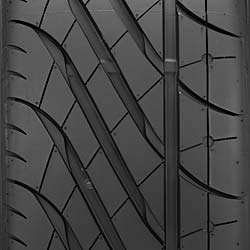
Also keep in mind some tires are unidirectional but are not marked as such. Take Parada Spec 2's for instance. Yokohama made a huge blunder. The sidewall is marked with something like "This side faces out", but not a directional arrow. If you look closely at the tread pattern you'll see that each side of the car will hit the tread in opposite patterns.

5th Gear
Joined: Oct 2002
Posts: 779
Likes: 5
Tire rotation is a subject that brings up a lot of opinions. The recommendations vary from car to car and tire to tire. Even the experts aren't unanimous about what's the best strategy.
My general take:
1. If a tire has a direction arrow (most high-perf tires do these days), you definitely want that tire to always rotate in the direction of the arrow. This means that side-to-side rotation is a definite no-no unless you're willing to mount/unmount tire from rims and rebalance each time which is way more effort/trouble and opportunity for problems. (If the tire has a assymetric tread pattern like the one pictured earlier, even this isn't allowed since you can't swap inside/outside. And some cars these days use different size tires front/back, so any rotation is prohibited, although this doesn't apply to the Mini.) So for the Mini fitted with directional tires, rotation basically means moving tires from front to back on the same side.
2. BMW and Mini have not been clear-cut on recommending rotation - for some years/models, they say to do it, other years not. That being said, it's generally accepted that rotation is a good strategy to equalize tire wear and maximize tire mileage. And it generally allows you to replace all four tires at the same time, which is desirable to get the best deal and make sure you have the same four tires on the car all the time. If you do rotate, it is best not to let it go too long, both to make sure you get the benefits of rotation and to avoid moving very worn tires to the rear.
3. A strategy of not rotating is certainly Okay too. Since the fronts usually wear faster on a FWD car, you'll usually be replacing the fronts before the rears and replacing in pairs. If you're lucky, you might get a 2:1 ratio of front to rear wear and basically replace two tires, then four, then two again, etc. if you put the new ones on the front (see next point). But it depends on how hard you drive, especially how you use the throttle.
4. The idea of always putting a new pair of tires on the rear is generally considered a good one because, as someone else mentions, it biases the car towards safer understeer rather than more dangerous oversteer. That being said, just because a tire has more tread, it does not mean it is clear cut that it has more grip so in reality, the situation on any given road with any given tires will not always be that the car understeers with better tires on the rear. And if you drive in snow with a FWD car, I'd always want the best tires on the front. Generally FWD cars handle better in normal driving if the best tires are on the front. I think you can make an argument either way on this one, although if there were no snow driving, I'd probably put new tires on the rear, but I wouldn't get religious about it. And if the car has DSC, you already have an oversteer safety net in place, although you certainly don't want to depend solely on it.
5. You can probably mix similar tires, but I'd never mix sizes or dissimilar tires.
All in all, I think the best strategy for most Mini drivers, both from a wear and a handling standpoint, is to rotate front to back every 5K or so, don't rotate side to side, and replace all four tires as a group when any tire starts to get near the wear bars. But other strategies are Okay too. If you do rotate, then you want to make sure that you do it properly and torque the lug nuts to the right torque. Personally, I wouldn't trust many of the "free rotation" places to do a very good job of it as these monkeys just slam the wheels on the car and hit them with their air wrenches to whatever torque they develop. If rotation is not done with some care, you're just offering up a good opportunity to screw things up every 5K miles. And as an aside, I don't think the common practice of jacking up the Mini with a 2x4 placed at the mid-point of each side to raise both wheels is a very good idea either.
- Mark
My general take:
1. If a tire has a direction arrow (most high-perf tires do these days), you definitely want that tire to always rotate in the direction of the arrow. This means that side-to-side rotation is a definite no-no unless you're willing to mount/unmount tire from rims and rebalance each time which is way more effort/trouble and opportunity for problems. (If the tire has a assymetric tread pattern like the one pictured earlier, even this isn't allowed since you can't swap inside/outside. And some cars these days use different size tires front/back, so any rotation is prohibited, although this doesn't apply to the Mini.) So for the Mini fitted with directional tires, rotation basically means moving tires from front to back on the same side.
2. BMW and Mini have not been clear-cut on recommending rotation - for some years/models, they say to do it, other years not. That being said, it's generally accepted that rotation is a good strategy to equalize tire wear and maximize tire mileage. And it generally allows you to replace all four tires at the same time, which is desirable to get the best deal and make sure you have the same four tires on the car all the time. If you do rotate, it is best not to let it go too long, both to make sure you get the benefits of rotation and to avoid moving very worn tires to the rear.
3. A strategy of not rotating is certainly Okay too. Since the fronts usually wear faster on a FWD car, you'll usually be replacing the fronts before the rears and replacing in pairs. If you're lucky, you might get a 2:1 ratio of front to rear wear and basically replace two tires, then four, then two again, etc. if you put the new ones on the front (see next point). But it depends on how hard you drive, especially how you use the throttle.
4. The idea of always putting a new pair of tires on the rear is generally considered a good one because, as someone else mentions, it biases the car towards safer understeer rather than more dangerous oversteer. That being said, just because a tire has more tread, it does not mean it is clear cut that it has more grip so in reality, the situation on any given road with any given tires will not always be that the car understeers with better tires on the rear. And if you drive in snow with a FWD car, I'd always want the best tires on the front. Generally FWD cars handle better in normal driving if the best tires are on the front. I think you can make an argument either way on this one, although if there were no snow driving, I'd probably put new tires on the rear, but I wouldn't get religious about it. And if the car has DSC, you already have an oversteer safety net in place, although you certainly don't want to depend solely on it.
5. You can probably mix similar tires, but I'd never mix sizes or dissimilar tires.
All in all, I think the best strategy for most Mini drivers, both from a wear and a handling standpoint, is to rotate front to back every 5K or so, don't rotate side to side, and replace all four tires as a group when any tire starts to get near the wear bars. But other strategies are Okay too. If you do rotate, then you want to make sure that you do it properly and torque the lug nuts to the right torque. Personally, I wouldn't trust many of the "free rotation" places to do a very good job of it as these monkeys just slam the wheels on the car and hit them with their air wrenches to whatever torque they develop. If rotation is not done with some care, you're just offering up a good opportunity to screw things up every 5K miles. And as an aside, I don't think the common practice of jacking up the Mini with a 2x4 placed at the mid-point of each side to raise both wheels is a very good idea either.
- Mark
Last edited by markjenn; Jan 8, 2010 at 11:37 AM.
6th Gear
Joined: May 2003
Posts: 1,118
Likes: 1
Really? Dealing with an understeering car is a lot safer than an oversteering car for the average driver. Most drivers' corrective instinct is to let off of the gas which remedies understeer and aggravates oversteer...
For this reason, if you buy two new tires in CA, the retailer must mount them at the rear, regardless of which axle is being replaced. I don't know about other states.
For this reason, if you buy two new tires in CA, the retailer must mount them at the rear, regardless of which axle is being replaced. I don't know about other states.
6th Gear
Joined: May 2003
Posts: 1,118
Likes: 1
I think you'll even find the mount-the-best-tires-at-the-rear advice mentioned on web sites like Tire Rack's.

2nd Gear
Joined: Dec 2009
Posts: 61
Likes: 0
From: Raleigh, NC
For safety reasons, the best tires (ie, the ones with the most tread) should always be mounted at the rear of any vehicle (FWD/AWD/RWD). What this means is that you should never rotate tires front-to-back in a FWD car because the front tires always wear faster than the rears. If you rotate a front tire to a rear position, you end up with a more worn tire at the rear, thus leading to a less safe condition.
The way to deal with this quandary is to wait til the fronts need replacing. Then, bring the former partially worn rears to the front and buy two new tires for the rear. Keep replacing tires two at a time like this until you get sick of the car, then sell it.
BTW, you'll get just as much wear from the tires as you would have by rotating them but you'll be driving a safer vehicle.
The way to deal with this quandary is to wait til the fronts need replacing. Then, bring the former partially worn rears to the front and buy two new tires for the rear. Keep replacing tires two at a time like this until you get sick of the car, then sell it.
BTW, you'll get just as much wear from the tires as you would have by rotating them but you'll be driving a safer vehicle.
I have never really like replacing tires 2 at a time, but that is my personal opinion but rotating your tires every +/- 5k should keep it safe to rotate the tires front to back
Really? Dealing with an understeering car is a lot safer than an oversteering car for the average driver. Most drivers' corrective instinct is to let off of the gas which remedies understeer and aggravates oversteer...
For this reason, if you buy two new tires in CA, the retailer must mount them at the rear, regardless of which axle is being replaced. I don't know about other states.
For this reason, if you buy two new tires in CA, the retailer must mount them at the rear, regardless of which axle is being replaced. I don't know about other states.
Yes, the outsides still are on the outside, but since the wheel has been transferred to the opposite side of the car, the camber is tilting in the opposite direction, evening out the wear on the tire. I only remount when putting new tires on.
You are correct that directional tires will lose grip...but only in the rain. It doesn't take much moisture on the track to feel the loss of grip. The directionality of the tire is to channel water away from the contact patch. Grip is not affected on dry surfaces, though I would not cross rotate an asymmetric tire.
5th Gear
Joined: Oct 2002
Posts: 779
Likes: 5
There's a lot more to directional tires than just the tread pattern and water dispersal. The internal construction of the tire may be directional too and running it in the wrong direction may lead to premature failure.
There are gray areas in tire rotation strategies, but there is no gray area in running a directional tire backwards - its just plain stupid.
- Mark
There are gray areas in tire rotation strategies, but there is no gray area in running a directional tire backwards - its just plain stupid.
- Mark
Please let me know where you obtained information about the directional properties of the internal structure of tires. All radial tires have cords that run at a right angle to the centerline. The belt that overlies this layer runs at a 15 degree angle to the centerline, to reduce tire 'squirm'. This internal structure in non-directional; in other words, once you get beneath the tread, the tire doesn't 'care' which direction it is rotating. If your theory was correct, driving in reverse would be pretty stupid too, right? 
Last edited by veggivet; Jan 8, 2010 at 04:53 PM.
6th Gear
Joined: Feb 2008
Posts: 2,358
Likes: 1
From: Graham, NC
So you are running one side with negative camber and the other positive? Are you running ovals or tracks with turns predominately in one direction?
All the wheels have negative readings for camber and caster. I run at Lime Rock fairly often, which only has one left hand turn. So all I'm doing is evening out the asymmetrical wear side to side, if that makes any sense.