


Suspension info needed please


info needed please
Not sure if this is the right place to post but thought I would start here. I'm getting parts together to get my r53 ready to do track day in march. for suspension, I'm thinking koni yellows with swift r springs. I believe this will lower car a little but not much so, my questions are
1: what is the widest wheel size I can use and tire size with the said struts and springs without rubbing and be as close as possible to flush with fenders?
2: will I need camber plates and if so, can I run fixed camber plates ?
p.s i wasn't sure if this should be here or in wheels but, I figured since the suspension was part of the equation I would post here. feel free to move if i was wrong
1: what is the widest wheel size I can use and tire size with the said struts and springs without rubbing and be as close as possible to flush with fenders?
2: will I need camber plates and if so, can I run fixed camber plates ?
p.s i wasn't sure if this should be here or in wheels but, I figured since the suspension was part of the equation I would post here. feel free to move if i was wrong

3rd Gear


Joined: Nov 2004
Posts: 261
Likes: 70
From: Silicon Valley
Not sure if this is the right place to post but thought I would start here. I'm getting parts together to get my r53 ready to do track day in march. for suspension, I'm thinking koni yellows with swift r springs. I believe this will lower car a little but not much so, my questions are
1: what is the widest wheel size I can use and tire size with the said struts and springs without rubbing and be as close as possible to flush with fenders?
1: what is the widest wheel size I can use and tire size with the said struts and springs without rubbing and be as close as possible to flush with fenders?
 . YMMV
.
Do run camber plates (or camber bushings). The IE fixed plates are excellent, they'll work with the Koni's, and they include an upgraded strut top mount from the Z3/Z4 BMW. They also reinforce the strut towers.
In my opinion, decambering the front is almost more valuable than a bigger swaybar in back, for lap times. That's because less camber in front reduces understeer (makes the front "stick" better), and I'd almost rather do that on the track than make the back-end "rotate" more than the front end is sliding. Autocross is different and big rear swaybars rule there.
Last edited by Mini_Crazy; Jan 3, 2022 at 08:52 PM.

[QUOTE=. But with the Swifts, when I hit the occasional pot holes hidden in the dark, my wife would describe the ride as "Brutal" . YMMV.[/QUOTE]
thanks for the info! is there another spring that would be good on the track and maybe not as harsh on the street?
. YMMV.[/QUOTE]thanks for the info! is there another spring that would be good on the track and maybe not as harsh on the street?
3rd Gear
Joined: Nov 2004
Posts: 261
Likes: 70
From: Silicon Valley
Ripper, I am currently using the TSW springs from Way (was Texas Speed Werks product), as it says in my sig. Link: https://www.waymotorworks.com/tsw-mi...e-springs.html
They are linear not progressive, are slightly stiffer than JCW springs (about the same height, and they avoid the JCW "barrel shape" that can make it impossible to go more than 1.5 degrees negative camber if you use adjustable plates. I like them combined with the Koni yellow, and Powerflex bushings for upper/rear shock.
The only problem with the TSW springs is that they are currently back-ordered, and Way doesn't have an arrival date from his manufacturer.
Note: To use stock gaiters with Koni bump stops on a street car, buy two BMW Bumper Strut Washers #33526764418, and enlarge washer hole to fit M14x1.5 Koni front strut. Mount gaiters on strut washers. (Most performance struts discard the stock gaiters, presuming no winter grunge or gravel roads. )
They are linear not progressive, are slightly stiffer than JCW springs (about the same height, and they avoid the JCW "barrel shape" that can make it impossible to go more than 1.5 degrees negative camber if you use adjustable plates. I like them combined with the Koni yellow, and Powerflex bushings for upper/rear shock.
The only problem with the TSW springs is that they are currently back-ordered, and Way doesn't have an arrival date from his manufacturer.
Note: To use stock gaiters with Koni bump stops on a street car, buy two BMW Bumper Strut Washers #33526764418, and enlarge washer hole to fit M14x1.5 Koni front strut. Mount gaiters on strut washers. (Most performance struts discard the stock gaiters, presuming no winter grunge or gravel roads. )
Last edited by Mini_Crazy; Jan 4, 2022 at 05:57 PM.


May I suggest that "adjustability" is extremely important on a track-oriented vehicle. You need adjustable camber plates to ensure that both sides are set the same. You need an adjustable rear sway bar to fine-tune for the suspension for your driving style with predictable handling. You need adjustable drop-links to ensure that you have no pre-load on the front and rear sway bars. You're going get jarred when you hit a pot-hole, no matter what springs you use. The name of the game is to compromise as little as possible. Stick with the Swift Spec R's or go coil-overs for even more adjustability...but an even harsher ride on the street.
Unless I get really into the track and decide to make it a track only car I most likely won’t do more then 3 track days a year. I don’t want to go to coil overs and adjustable camber plates until I’ve done a few track days.
ive never been on the track as a driver and figure I have to learn how to drive before I go throwing a ton of money into it. That’s why I was thinking koni yellows, swift springs and fixed camber plates to start along with Wilwood bbk, 22mm rsb, and some good tires. Then as I get better I can make changes that I’ll be able to use because my skill level has increased.
if my thought process is off please feel free to let me know. I appreciate all of the replies so far
ive never been on the track as a driver and figure I have to learn how to drive before I go throwing a ton of money into it. That’s why I was thinking koni yellows, swift springs and fixed camber plates to start along with Wilwood bbk, 22mm rsb, and some good tires. Then as I get better I can make changes that I’ll be able to use because my skill level has increased.
if my thought process is off please feel free to let me know. I appreciate all of the replies so far
Last edited by RIPPER; Jan 6, 2022 at 05:19 PM. Reason: spelling
3rd Gear
Joined: Nov 2004
Posts: 261
Likes: 70
From: Silicon Valley
I don't disagree with NC Trackrat, but the OP had asked about Koni yellows (struts), and whether there was any value in adding camber plates (yes, definitely), presumably for a daily driver with occasional fun on a track day. If the questions had been about coilover selection, the car should definitely be corner-balanced, and that does require adjustable swaybar droplinks on all four corners. I agree that any of these combinations will benefit from an adjustable rear swaybar, but every bar larger than stock (from 18mm to 25mm ) offers adjustable stiffness.
Improving performance, whether engine or chassis isn't a yes/no choice, but rather a continuum. You can build a no-compromise trailered race car, or the cushiest of grocery-getters, but any goal in-between requires tradeoffs and compromise to achieve best balance for multiple uses. Not the least of which is money-invested tradeoff.
There is an old saying: "Speed costs money, how fast do you want to go?"
Improving performance, whether engine or chassis isn't a yes/no choice, but rather a continuum. You can build a no-compromise trailered race car, or the cushiest of grocery-getters, but any goal in-between requires tradeoffs and compromise to achieve best balance for multiple uses. Not the least of which is money-invested tradeoff.
There is an old saying: "Speed costs money, how fast do you want to go?"
Trending Topics
"ive never been on the track as a driver and figure I have to learn how to drive before I go throwing a tune of money into it. That’s why I was thinking koni yellows, swift springs and fixed camber plates to start along with Wilwood bbk, 22mm rsb, and some good tires. Then as I get better I can make changes that I’ll be able to use because my skill level has increased."
Then I suggest you hold off on the BBK until you've mastered the brakes that are on the car. Just install and bed in a good set of high performance pads before the event. Once you're able to use what you've got properly and completely, then go to the BBK.
Then I suggest you hold off on the BBK until you've mastered the brakes that are on the car. Just install and bed in a good set of high performance pads before the event. Once you're able to use what you've got properly and completely, then go to the BBK.
6th Gear

Joined: May 2016
Posts: 1,410
Likes: 577
From: "The Other Arizona"
^^^ H&R were suggested to me (within my sig topic) vs the Eibach springs installed on as part of total track prepping in early 2006. You can read that but in summary, my objectives were to utilize the Koni yellows already in play but achieve a bit more compliance and ground clearance for road conditions and with no tracking planned. In the end, I chose OEM JCW Sport "reds" as my best compromise alternative. Those springs are more $$ since BMW spec but some are still available in BMW Germany warehouses. I can provide screenshot to what I bought, however this period pdf document outlines what BMW intended at that time, noting not available on factory order but instead only dealer installed (or DIY). I'm pleased with my choice...
SUBJECT: JOHN COOPER WORKS SPORT SUSPENSION
SUBJECT: JOHN COOPER WORKS SPORT SUSPENSION

5th Gear
Joined: Jun 2005
Posts: 824
Likes: 87
I'd suggest that since you have never driven on track before; try the car in it's current form. From your signature, it looks like your car is highly modded out, so I will assume that you have DOT4 brake fluid, better pads and grippy tires. I'd have a go at the track with your current set up so you set a baseline for where you can make educated decisions as to where you want to go with the suspension.
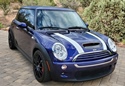
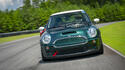
and yes that it my old car on my first track day in my signature.
and yes that it my old car on my first track day in my signature.
Thought of a good one brings up a very important point. You can "trick out" a car to the point that, if you don't like the way it's performing, you won't know where to go to solve it. The most important thing you can do to your car is to make it reliable...in day-in-day-out driving and at the track. I see so many people trying to fix their cars at the track when they should be concentrating on their driving.
I'd suggest that since you have never driven on track before; try the car in it's current form. From your signature, it looks like your car is highly modded out, so I will assume that you have DOT4 brake fluid, better pads and grippy tires. I'd have a go at the track with your current set up so you set a baseline for where you can make educated decisions as to where you want to go with the suspension.
and yes that it my old car on my first track day in my signature.
and yes that it my old car on my first track day in my signature.
actually the car in my sig is my old r53 that I traded in 09. The car I'm building now is all stock and the form the ride It feels like the struuts are about shot.so. I figured while I'm having a new clutch and lsd intalled it would be a good time to replace those at the same time.
Thought of a good one brings up a very important point. You can "trick out" a car to the point that, if you don't like the way it's performing, you won't know where to go to solve it. The most important thing you can do to your car is to make it reliable...in day-in-day-out driving and at the track. I see so many people trying to fix their cars at the track when they should be concentrating on their driving.
That makes perfect sense but, I have a track day at VIR march 18th and the shocks and breaks feel like they need to be replaced. My thoughts were to have all fluids replaced /flushed, replace busted upper motor mount, replace crank sensor o-ring, breaks and shocks and springs, new clutch and lsd and maybe a 22mm adjustable rsb and see how things go at the track before I make anymore changes. of course I'll need propper harnesses and tow hooks and my best friend has a helmet I can use.
VIR is a helluva place to start! Hopefully, you'll have a good instructor. First of all, learn the proper line and be able to do it lap after lap without trying to be fast. Look ahead...think ahead. Pretty soon, you'll realize that you're going faster without trying. Be safe, have fun!
2nd Gear
Joined: Sep 2021
Posts: 65
Likes: 24
From: ATL
RIPPER, I was in your same situation last year, with a very similar car, except I already had KONI Yellows. During the track season I tried different tires and upgraded my stock rear sway bar to Way's 22.5mm. Tires obviously made the biggest difference, but camber was my biggest frustration. I wore the outside edge off of all my tires, regardless of pressure. With rotating my tires, I basically wore out a whole set in about 3 track days. So this year I'm focusing on camber, and hoping it improves my tire life.
Rear sway not necessary to have fun.
Rear sway not necessary to have fun.
5th Gear
Joined: Jun 2005
Posts: 824
Likes: 87
@RIPPER
One day to TRACK DAY!
Unsolicited free advise so please ignore if you wish - not breaking any hearts over here - these are things that I wish someone told me before my first day out and with my first day out there was a novice class the night before and most of this wasn't actually covered.
If you have an instructor,listen to what they have to say and do your best to apply what you learn.
The two most important things to do in a track day; in this order -
1 - keep the shiny side UP!
2 - have fun.
Make sure you bring: (this would be the minimum)
Helmet.
Jack.
Torque wrench.
Tire pressure gauge.
Water - hydrate or die as the saying goes. You will need it.
Food. You will need it.
Small set of tools - never know what you might need to tighten back down. Driving on track is hard on every component of the car - all of them.
Tow hook(s) - just in case if a shunt or off. The rescue trucks will pull your car off the runoff areas without hesitation or regard for causing further damage or causing damage.
Open mind.
Things to check between each run session:
Brake pads.
Tires.
Wheel bearings - jack the car up and check for play especially if you bumped a curb or two.
Fuel level.
Brake fluid level.
Coolant level.
Make sure you are having fun.
I turn my heater on full when on the cool down lap and leaving the track - helps keep the motor from getting too hot.
Things to leave at home:
Your ego. Getting passed on a track day is nothing. It's even lesser than nothing on your first track day.
I'd leave the DSC on for your first day out; I did with my ND2 last year - there were no instructors available that day due to COVID precautions. I suspect that your instructor will advise the same for you. It will also be a bit of a teacher as well. This happened a several times with my ND2 last year. No DSC in my old R50 - my fear of death and destruction of my car was my DSC - I got passed a lot those first times out.
As far as the harness goes, if it's a 4-point or better, you really should have a HANS, even with a Schroth Quickfit - their instructions even say as much. Make sure that you have at least 75% of your brake pads remaining - front and rear - they will more than likely need replacing after the day if you have less than 75% at the start of the day. I had a day in my R50 where they were at about 60% (maybe a little less) at the start of the day and by the second lap of the 4th session - the low brake pad indicator light was on. You will be going faster and be on the brakes a lot harder and longer. If you have time - put new ones on tonight if you can.
This is all I can think of right now, I'm sure I forgot something.
Have fun. Shiny side up!
Craig. (who is a bit jealous that you are doing a track day so early in the year)
One day to TRACK DAY!
Unsolicited free advise so please ignore if you wish - not breaking any hearts over here - these are things that I wish someone told me before my first day out and with my first day out there was a novice class the night before and most of this wasn't actually covered.
If you have an instructor,listen to what they have to say and do your best to apply what you learn.
The two most important things to do in a track day; in this order -
1 - keep the shiny side UP!
2 - have fun.
Make sure you bring: (this would be the minimum)
Helmet.
Jack.
Torque wrench.
Tire pressure gauge.
Water - hydrate or die as the saying goes. You will need it.
Food. You will need it.
Small set of tools - never know what you might need to tighten back down. Driving on track is hard on every component of the car - all of them.
Tow hook(s) - just in case if a shunt or off. The rescue trucks will pull your car off the runoff areas without hesitation or regard for causing further damage or causing damage.
Open mind.
Things to check between each run session:
Brake pads.
Tires.
Wheel bearings - jack the car up and check for play especially if you bumped a curb or two.
Fuel level.
Brake fluid level.
Coolant level.
Make sure you are having fun.
I turn my heater on full when on the cool down lap and leaving the track - helps keep the motor from getting too hot.
Things to leave at home:
Your ego. Getting passed on a track day is nothing. It's even lesser than nothing on your first track day.
I'd leave the DSC on for your first day out; I did with my ND2 last year - there were no instructors available that day due to COVID precautions. I suspect that your instructor will advise the same for you. It will also be a bit of a teacher as well. This happened a several times with my ND2 last year. No DSC in my old R50 - my fear of death and destruction of my car was my DSC - I got passed a lot those first times out.
As far as the harness goes, if it's a 4-point or better, you really should have a HANS, even with a Schroth Quickfit - their instructions even say as much. Make sure that you have at least 75% of your brake pads remaining - front and rear - they will more than likely need replacing after the day if you have less than 75% at the start of the day. I had a day in my R50 where they were at about 60% (maybe a little less) at the start of the day and by the second lap of the 4th session - the low brake pad indicator light was on. You will be going faster and be on the brakes a lot harder and longer. If you have time - put new ones on tonight if you can.
This is all I can think of right now, I'm sure I forgot something.
Have fun. Shiny side up!
Craig. (who is a bit jealous that you are doing a track day so early in the year)
@RIPPER
One day to TRACK DAY!
Unsolicited free advise so please ignore if you wish - not breaking any hearts over here - these are things that I wish someone told me before my first day out and with my first day out there was a novice class the night before and most of this wasn't actually covered.
If you have an instructor,listen to what they have to say and do your best to apply what you learn.
The two most important things to do in a track day; in this order -
1 - keep the shiny side UP!
2 - have fun.
Make sure you bring: (this would be the minimum)
Helmet.
Jack.
Torque wrench.
Tire pressure gauge.
Water - hydrate or die as the saying goes. You will need it.
Food. You will need it.
Small set of tools - never know what you might need to tighten back down. Driving on track is hard on every component of the car - all of them.
Tow hook(s) - just in case if a shunt or off. The rescue trucks will pull your car off the runoff areas without hesitation or regard for causing further damage or causing damage.
Open mind.
Things to check between each run session:
Brake pads.
Tires.
Wheel bearings - jack the car up and check for play especially if you bumped a curb or two.
Fuel level.
Brake fluid level.
Coolant level.
Make sure you are having fun.
I turn my heater on full when on the cool down lap and leaving the track - helps keep the motor from getting too hot.
Things to leave at home:
Your ego. Getting passed on a track day is nothing. It's even lesser than nothing on your first track day.
I'd leave the DSC on for your first day out; I did with my ND2 last year - there were no instructors available that day due to COVID precautions. I suspect that your instructor will advise the same for you. It will also be a bit of a teacher as well. This happened a several times with my ND2 last year. No DSC in my old R50 - my fear of death and destruction of my car was my DSC - I got passed a lot those first times out.
As far as the harness goes, if it's a 4-point or better, you really should have a HANS, even with a Schroth Quickfit - their instructions even say as much. Make sure that you have at least 75% of your brake pads remaining - front and rear - they will more than likely need replacing after the day if you have less than 75% at the start of the day. I had a day in my R50 where they were at about 60% (maybe a little less) at the start of the day and by the second lap of the 4th session - the low brake pad indicator light was on. You will be going faster and be on the brakes a lot harder and longer. If you have time - put new ones on tonight if you can.
This is all I can think of right now, I'm sure I forgot something.
Have fun. Shiny side up!
Craig. (who is a bit jealous that you are doing a track day so early in the year)
One day to TRACK DAY!
Unsolicited free advise so please ignore if you wish - not breaking any hearts over here - these are things that I wish someone told me before my first day out and with my first day out there was a novice class the night before and most of this wasn't actually covered.
If you have an instructor,listen to what they have to say and do your best to apply what you learn.
The two most important things to do in a track day; in this order -
1 - keep the shiny side UP!
2 - have fun.
Make sure you bring: (this would be the minimum)
Helmet.
Jack.
Torque wrench.
Tire pressure gauge.
Water - hydrate or die as the saying goes. You will need it.
Food. You will need it.
Small set of tools - never know what you might need to tighten back down. Driving on track is hard on every component of the car - all of them.
Tow hook(s) - just in case if a shunt or off. The rescue trucks will pull your car off the runoff areas without hesitation or regard for causing further damage or causing damage.
Open mind.
Things to check between each run session:
Brake pads.
Tires.
Wheel bearings - jack the car up and check for play especially if you bumped a curb or two.
Fuel level.
Brake fluid level.
Coolant level.
Make sure you are having fun.
I turn my heater on full when on the cool down lap and leaving the track - helps keep the motor from getting too hot.
Things to leave at home:
Your ego. Getting passed on a track day is nothing. It's even lesser than nothing on your first track day.
I'd leave the DSC on for your first day out; I did with my ND2 last year - there were no instructors available that day due to COVID precautions. I suspect that your instructor will advise the same for you. It will also be a bit of a teacher as well. This happened a several times with my ND2 last year. No DSC in my old R50 - my fear of death and destruction of my car was my DSC - I got passed a lot those first times out.
As far as the harness goes, if it's a 4-point or better, you really should have a HANS, even with a Schroth Quickfit - their instructions even say as much. Make sure that you have at least 75% of your brake pads remaining - front and rear - they will more than likely need replacing after the day if you have less than 75% at the start of the day. I had a day in my R50 where they were at about 60% (maybe a little less) at the start of the day and by the second lap of the 4th session - the low brake pad indicator light was on. You will be going faster and be on the brakes a lot harder and longer. If you have time - put new ones on tonight if you can.
This is all I can think of right now, I'm sure I forgot something.
Have fun. Shiny side up!
Craig. (who is a bit jealous that you are doing a track day so early in the year)

Thread
Thread Starter
Forum
Replies
Last Post
duvinclunk
Suspension
4
Aug 3, 2011 07:46 AM
R50/53 Suspension upgrade R53
fastautoxmini
R50/R53 :: Hatch Talk (2002-2006)
4
Feb 4, 2011 04:47 PM