


Vacuum Pump Failure - What is the Reasons(s)


Thread Starter
|
2nd Gear
Joined: Jan 2008
Posts: 60
Likes: 1
Vacuum Pump Failure - What is the Reasons(s)
I've read a couple threads here and on other sites about vacuum pumps that seize up and cause catastrophic engine failure. What causes the vacuum pump to fail? Low oil level?


4th Gear
Joined: Apr 2009
Posts: 506
Likes: 30
From: UK
Also the BMW MINI recommended oil change mileage/time schedules are way too long, this can allow for small particles to collect, and these can come from a variety of sources, and dependant on where these particles form and collect, not all will be filtered out, by the oil filter, and when you look at the following images, you will see that the vacuum pump, gets it's oil feed through the rear bearing journal in the cylinder head, from the exhaust camshaft bearing journal supply feed line, and when you look at the oil supply feed hole diameter, and compare that with the feed hole and oil run lines, you will see just how easy it is to become blocked, and hence seizure will happen, resulting in catastrophic engine failure.
Rear bearing journal vacuum pump oil feed hole in cylinder head.
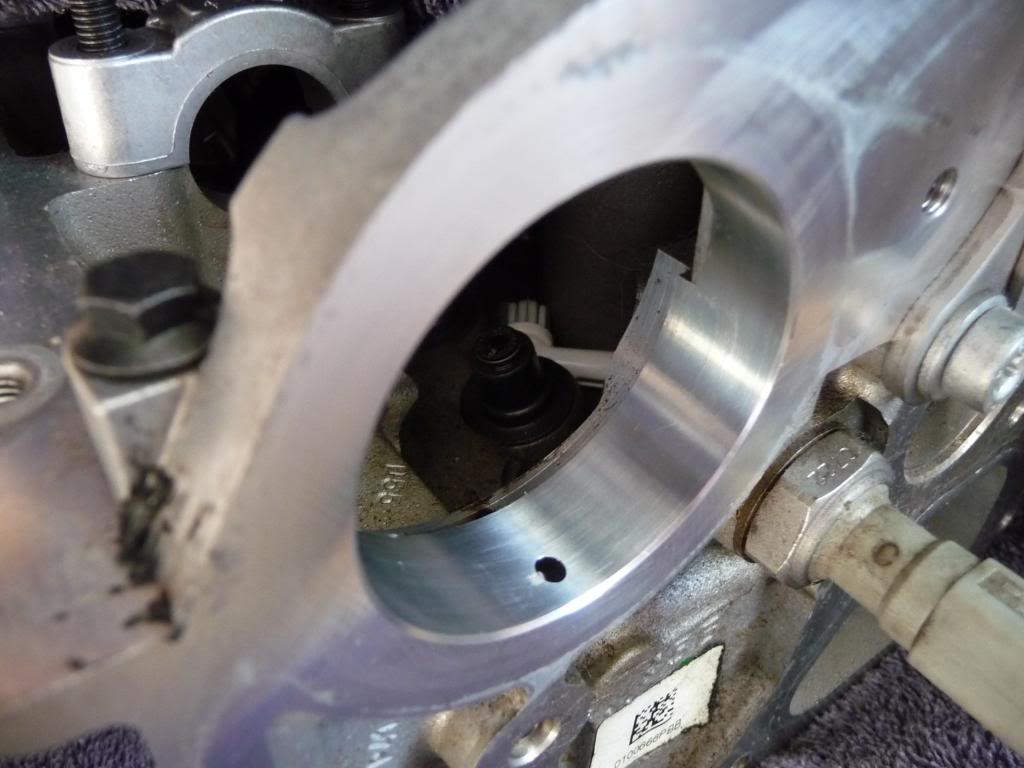
Oil feed holes and run lines.
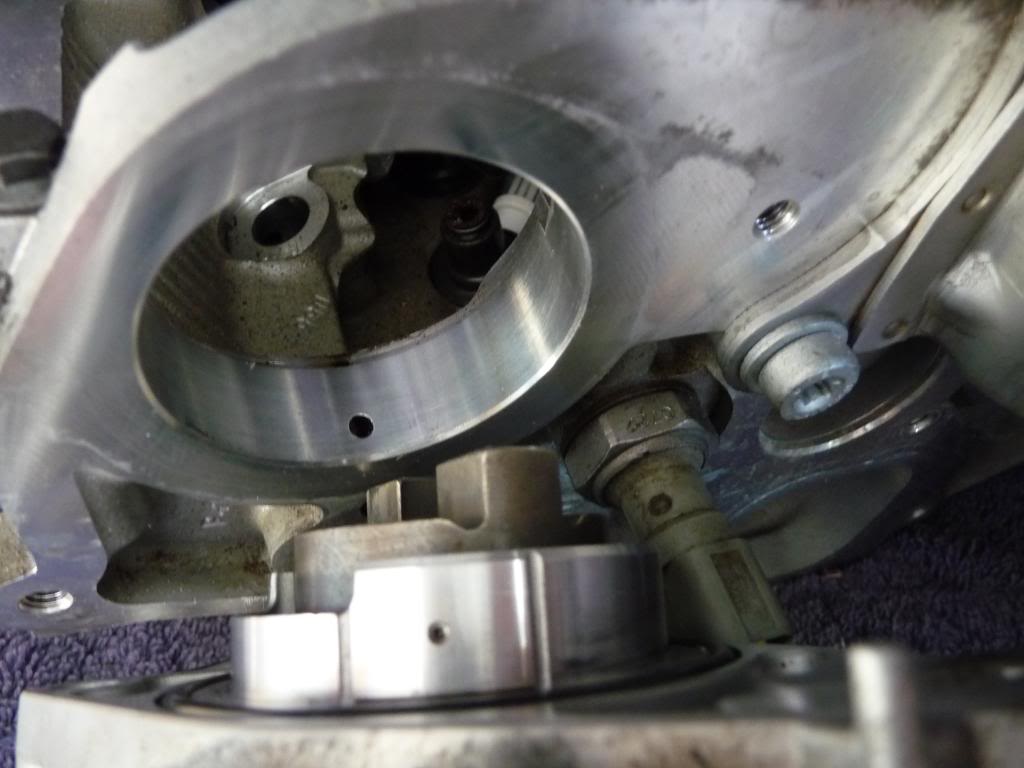
Comparison reference to hole diameter size, using a standard sized paperclip.


6th Gear
Joined: Apr 2008
Posts: 1,303
Likes: 11
From: Twin Cities, Minnesota
EXCELLENT post! I have totally been wondering why and how vacuum pumps were seizing. I suppose anyone that has had a low oil condition and is out of warranty may consider it wise to replace the pump before it seizes.
Thread Starter
|
2nd Gear
Joined: Jan 2008
Posts: 60
Likes: 1
I agree that the MINI 'recommended' oil change interval is too long. My 2007 MCS currently has 23K miles and I have been changing Mobil 1 at 5k intervals. I'll continue to be diligent about checking oil level, too.
Assuming the supply and quality of oil is optimized, will the bearings in the vacuum pump become noisy when the pump begins to 'wear out' and give some sort of early warning? Or should it be changed at a certain interval?
Assuming the supply and quality of oil is optimized, will the bearings in the vacuum pump become noisy when the pump begins to 'wear out' and give some sort of early warning? Or should it be changed at a certain interval?

Neutral
Joined: Oct 2012
Posts: 4
Likes: 3
"you will see that the vacuum pump, gets it's oil feed through the rear bearing journal in the cylinder head, from the exhaust camshaft bearing journal supply feed line"
This is not correct. The vacuum pump utilizes a double sealed bearing which DOESN'T
receive ANY lubrication and just relies on its initial bearing grease. To imply that
frequent oil changes will reduce the likelihood of the vacuum pump failing is totally
misleading. There is NO oil flow to lubricate bearing!
The only immediate and realistic solution is a redesigned vacuum pump where the
connection point from the cam shaft can shear easily if the bearing seizes.
This is not correct. The vacuum pump utilizes a double sealed bearing which DOESN'T
receive ANY lubrication and just relies on its initial bearing grease. To imply that
frequent oil changes will reduce the likelihood of the vacuum pump failing is totally
misleading. There is NO oil flow to lubricate bearing!
The only immediate and realistic solution is a redesigned vacuum pump where the
connection point from the cam shaft can shear easily if the bearing seizes.
4th Gear
Joined: Apr 2009
Posts: 506
Likes: 30
From: UK
"you will see that the vacuum pump, gets it's oil feed through the rear bearing journal in the cylinder head, from the exhaust camshaft bearing journal supply feed line"
This is not correct. The vacuum pump utilizes a double sealed bearing which DOESN'T
receive ANY lubrication and just relies on its initial bearing grease. To imply that
frequent oil changes will reduce the likelihood of the vacuum pump failing is totally
misleading. There is NO oil flow to lubricate bearing!
The only immediate and realistic solution is a redesigned vacuum pump where the
connection point from the cam shaft can shear easily if the bearing seizes.
This is not correct. The vacuum pump utilizes a double sealed bearing which DOESN'T
receive ANY lubrication and just relies on its initial bearing grease. To imply that
frequent oil changes will reduce the likelihood of the vacuum pump failing is totally
misleading. There is NO oil flow to lubricate bearing!
The only immediate and realistic solution is a redesigned vacuum pump where the
connection point from the cam shaft can shear easily if the bearing seizes.
In both my images you can quite clearly see that I have passed a section of 0.5mm wire through the oil feed hole into the journal bearing galley.
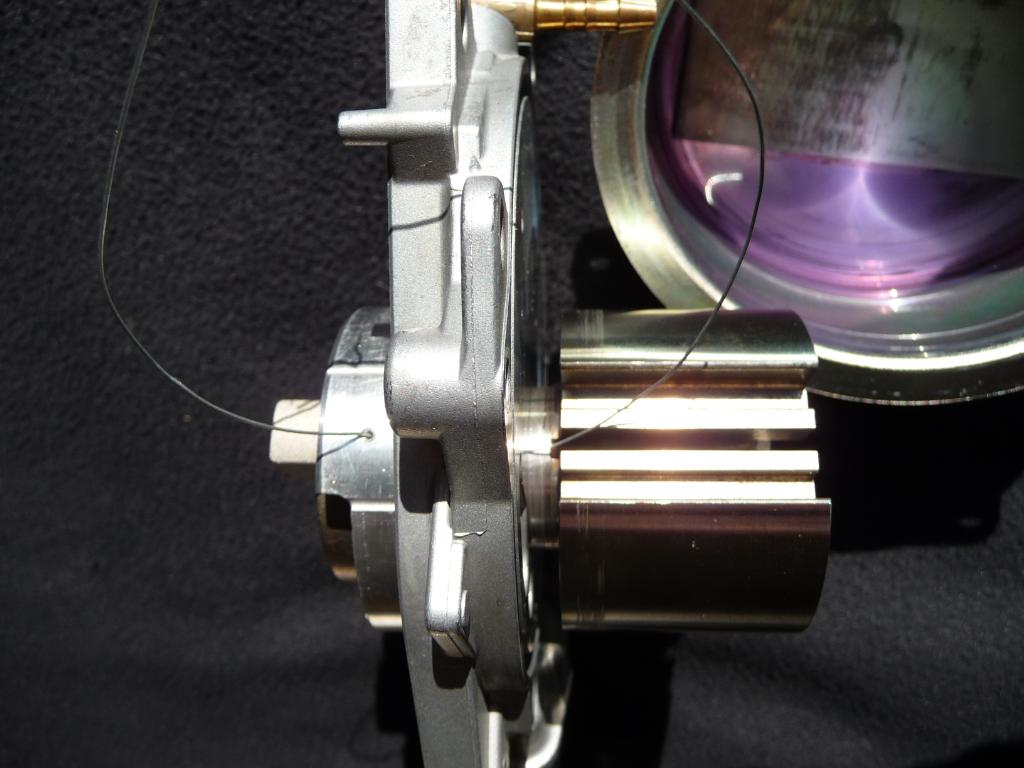

What I write is correct, based on 28 and counting years of knowledge in the Automotive and Motorsport industries, and not just an assumption based guess!
Trending Topics


Neutral
Joined: Oct 2012
Posts: 4
Likes: 3
"What I write is correct"
Really? You obviously have NOT taken the pump apart to see that the bearing is
FULLY sealed and NO oil can enter it. If oil flows as you indicate, it would then
enter the vacuum system.
What you argue is the typical hyperbole that an OEM car manufacturer would tell
the consumer when they have a problem. Mini R56 valve train failures are still
occurring on engines which are serviced more frequently than Mini recommends.
This a major design flaw on the R56 engine. All the the vacuum pumps will fail
no matter how frequently an oil service is performed.
It's the SAME problem Porsche has on their Boxster & 996 engines where they used
a double sealed bearing on their intermediate cam shaft drive shaft which has NO
lubrication.
Bottom line: Let's not drink the Mini factory 'cool aid'!
Really? You obviously have NOT taken the pump apart to see that the bearing is
FULLY sealed and NO oil can enter it. If oil flows as you indicate, it would then
enter the vacuum system.
What you argue is the typical hyperbole that an OEM car manufacturer would tell
the consumer when they have a problem. Mini R56 valve train failures are still
occurring on engines which are serviced more frequently than Mini recommends.
This a major design flaw on the R56 engine. All the the vacuum pumps will fail
no matter how frequently an oil service is performed.
It's the SAME problem Porsche has on their Boxster & 996 engines where they used
a double sealed bearing on their intermediate cam shaft drive shaft which has NO
lubrication.
Bottom line: Let's not drink the Mini factory 'cool aid'!
Last edited by lorenfb; Oct 14, 2012 at 09:48 AM.

Neutral
Joined: Oct 2012
Posts: 4
Likes: 3
Here are pictures of a recently purchased new vacuum pump from Mini.
It only has a small hole on the cam side not like the other pictures on
this thread. The key point, again, is that even if there is an oil passage,
the fact remains that with a double sealed bearing no lubrication can
enter the bearing itself. Besides, with a vacuum flow either thru the oil
passage as the other pictures show or thru the bearing, the vacuum system
would be compromised as the pump would then suck oil. Therefore, oil
can't proper enter the bearing and not at all with a double sealed bearing.
It only has a small hole on the cam side not like the other pictures on
this thread. The key point, again, is that even if there is an oil passage,
the fact remains that with a double sealed bearing no lubrication can
enter the bearing itself. Besides, with a vacuum flow either thru the oil
passage as the other pictures show or thru the bearing, the vacuum system
would be compromised as the pump would then suck oil. Therefore, oil
can't proper enter the bearing and not at all with a double sealed bearing.
Last edited by lorenfb; Oct 14, 2012 at 12:00 PM.
4th Gear
Joined: Apr 2009
Posts: 506
Likes: 30
From: UK
"What I write is correct"
Really? You obviously have NOT taken the pump apart to see that the bearing is
FULLY sealed and NO oil can enter it. If oil flows as you indicate, it would then
enter the vacuum system.
What you argue is the typical hyperbole that an OEM car manufacturer would tell
the consumer when they have a problem. Mini R56 valve train failures are still
occurring on engines which are serviced more frequently than Mini recommends.
This a major design flaw on the R56 engine. All the the vacuum pumps will fail
no matter how frequently an oil service is performed.
It's the SAME problem Porsche has on their Boxster & 996 engines where they used
a double sealed bearing on their intermediate cam shaft drive shaft which has NO
lubrication.
Bottom line: Let's not drink the Mini factory 'cool aid'!
Really? You obviously have NOT taken the pump apart to see that the bearing is
FULLY sealed and NO oil can enter it. If oil flows as you indicate, it would then
enter the vacuum system.
What you argue is the typical hyperbole that an OEM car manufacturer would tell
the consumer when they have a problem. Mini R56 valve train failures are still
occurring on engines which are serviced more frequently than Mini recommends.
This a major design flaw on the R56 engine. All the the vacuum pumps will fail
no matter how frequently an oil service is performed.
It's the SAME problem Porsche has on their Boxster & 996 engines where they used
a double sealed bearing on their intermediate cam shaft drive shaft which has NO
lubrication.
Bottom line: Let's not drink the Mini factory 'cool aid'!
Here are pictures of a recently purchased new vacuum pump from Mini.
It only has a small hole on the cam side not like the other pictures on
this thread. The key point, again, is that even if there is an oil passage,
the fact remains that with a double sealed bearing no lubrication can
enter the bearing itself. Besides, with a vacuum flow either thru the oil
passage as the other pictures show or thru the bearing, the vacuum system
would be compromised as the pump would then suck oil. Therefore, oil
can't proper enter the bearing and not at all with a double sealed bearing.
It only has a small hole on the cam side not like the other pictures on
this thread. The key point, again, is that even if there is an oil passage,
the fact remains that with a double sealed bearing no lubrication can
enter the bearing itself. Besides, with a vacuum flow either thru the oil
passage as the other pictures show or thru the bearing, the vacuum system
would be compromised as the pump would then suck oil. Therefore, oil
can't proper enter the bearing and not at all with a double sealed bearing.
Now you seem to think I have not taken a vacuum pump apart, WRONG, if as you say/think, how did I post up images that I took of a vacuum pump including internals ?
The bearing journal is lubricated in the manner to which I have already described, there is no getting away from that fact, no matter what you say or think, furthermore your images show exactly the same Pierburg camshaft driven vacuum pump.
I don't see what difficulty you are having in understanding about the pump and it's lubrication system, furthermore you clearly don't understand how a vacuum (the clue is there) pump works!
Neutral
Joined: Oct 2012
Posts: 4
Likes: 3
"before I correct you on any more issues the N14 engine may have."
Really, like what? Must be a Mini employee attempting to protect the image of
a marginally designed engine. To bad BMW won't 'bite-the-bullet' and design
properly a good engine.
"I don't see what difficulty you are having in understanding about the pump and it's lubrication system"
It's totally INADEQUATE!
Here's another picture of a fully disassembled pump. The earlier one from a failed
engine at a dealer had an actual double sealed bearing. As can be seen from this
later pump, the impeller is steel and its 'bushing' surface is aluminum, i.e. totally
marginal even with oil. Furthermore, there's no way oil can flow out of the needed
lubricated area resulting in oil contaminates from logging and blocking oil flow.
Again, there's NO shear point protecting the valve train in the event of a pump
failure the result of its seizure. THAT'S THE POINT!!!!!!!!!!!!!!!!!!!!
This situation is exactly the same as the timing chain tensioner problem where Mini
continually denied a tensioner problem until the customer becomes adamant.
The continual response was that "It's normal for the engine to make noise for a few
minutes when starting cold".
Typical: Just deny the reality and place the blame on the customer.
Lucky my MY08 S I bought new has only about 12K miles and I haven't 'discovered'
yet other problems inherent in the vehicle.
Really, like what? Must be a Mini employee attempting to protect the image of
a marginally designed engine. To bad BMW won't 'bite-the-bullet' and design
properly a good engine.
"I don't see what difficulty you are having in understanding about the pump and it's lubrication system"
It's totally INADEQUATE!
Here's another picture of a fully disassembled pump. The earlier one from a failed
engine at a dealer had an actual double sealed bearing. As can be seen from this
later pump, the impeller is steel and its 'bushing' surface is aluminum, i.e. totally
marginal even with oil. Furthermore, there's no way oil can flow out of the needed
lubricated area resulting in oil contaminates from logging and blocking oil flow.
Again, there's NO shear point protecting the valve train in the event of a pump
failure the result of its seizure. THAT'S THE POINT!!!!!!!!!!!!!!!!!!!!
This situation is exactly the same as the timing chain tensioner problem where Mini
continually denied a tensioner problem until the customer becomes adamant.
The continual response was that "It's normal for the engine to make noise for a few
minutes when starting cold".
Typical: Just deny the reality and place the blame on the customer.
Lucky my MY08 S I bought new has only about 12K miles and I haven't 'discovered'
yet other problems inherent in the vehicle.
Last edited by lorenfb; Oct 14, 2012 at 12:26 PM.
4th Gear
Joined: Apr 2009
Posts: 506
Likes: 30
From: UK
"before I correct you on any more issues the N14 engine may have."
Really, like what? Must be a Mini employee attempting to protect the image of
a marginally designed engine. To bad BMW won't 'bite-the-bullet' and design
properly a good engine.
Here's another picture of a fully disassembled pump. The earlier one from a failed
engine at a dealer had an actual double sealed bearing. As can be seen from this
later pump, the impeller is steel and its 'bushing' surface is aluminum, i.e. totally
marginal even with oil. Furthermore, there's no way oil can flow out of the needed
lubricated area resulting in oil contaminates from logging and blocking oil flow.
Again, there's NO shear point protecting the valve train in the event of a pump
failure. THAT'S THE POINT!!!!!!!!!!!!!!!!!!!!!!!!!!!!!!!!!!!!!!!!!!!!! !!!!!!!!!!!!!!!!!!!!!!
Really, like what? Must be a Mini employee attempting to protect the image of
a marginally designed engine. To bad BMW won't 'bite-the-bullet' and design
properly a good engine.
Here's another picture of a fully disassembled pump. The earlier one from a failed
engine at a dealer had an actual double sealed bearing. As can be seen from this
later pump, the impeller is steel and its 'bushing' surface is aluminum, i.e. totally
marginal even with oil. Furthermore, there's no way oil can flow out of the needed
lubricated area resulting in oil contaminates from logging and blocking oil flow.
Again, there's NO shear point protecting the valve train in the event of a pump
failure. THAT'S THE POINT!!!!!!!!!!!!!!!!!!!!!!!!!!!!!!!!!!!!!!!!!!!!! !!!!!!!!!!!!!!!!!!!!!!
I am not an employee of BMW MINI, and furthermore BMW did not design the engine, and furthermore your picking technical discussions with someone who really does no what he writes and talks about, as you were............


1st Gear
Joined: Apr 2011
Posts: 20
Likes: 3
Here's another picture of a fully disassembled pump. The earlier one from a failed
engine at a dealer had an actual double sealed bearing. As can be seen from this
later pump, the impeller is steel and its 'bushing' surface is aluminum, i.e. totally
marginal even with oil. Furthermore, there's no way oil can flow out of the needed
lubricated area resulting in oil contaminates from logging and blocking oil flow.
engine at a dealer had an actual double sealed bearing. As can be seen from this
later pump, the impeller is steel and its 'bushing' surface is aluminum, i.e. totally
marginal even with oil. Furthermore, there's no way oil can flow out of the needed
lubricated area resulting in oil contaminates from logging and blocking oil flow.
The pump IS lubricated by the oil galley as Czar has stated. And if you have the pump apart, what is there not to understand. Keeping up with the engine lubrication system (ie. oil changes, keeping the correct level, and seals) will help prevent a vacuum pump failure.
Really, like what? Must be a Mini employee attempting to protect the image of
a marginally designed engine. To bad BMW won't 'bite-the-bullet' and design
properly a good engine.
a marginally designed engine. To bad BMW won't 'bite-the-bullet' and design
properly a good engine.
a marginally designed engine". I'm sure most employees could care less about the image of the engine.

4th Gear

Joined: Jun 2012
Posts: 419
Likes: 14
From: Dayton Ohio
I cannot comment in the amount of detail above, however mine just failed... I had a small oil leak that I found dripping off of the passenger rear motor mount. I had my dealer service the car and find the leak. I was told that a seal in the vacuum pump failed and the oil entered the vacuum chambers (the can and the lines). $1100 repair and i've only had my R56 for a month... Logic would say that there is some kind of lubrication or a blown seal wouldn't have allowed the oil to pass through the vacuum (an air based) system. Maybe someone can explain more of how, why, and the relative frequency of this issue.
1st Gear
Joined: Apr 2011
Posts: 20
Likes: 3
The vacuum pump is is on the front left of the engine. If you were seeing oil on the rear lower engine mount, it was from something else. I think what they meant to say, was that you had a leak in the rear causing oil starvation and the vacuum pump to seize. The case of the pump could obtain more oil when it fails since there would be no more vacuum to pull the oil.
4th Gear
Joined: Jun 2012
Posts: 419
Likes: 14
From: Dayton Ohio
Well that is what I thought too. So i looked a little closer and the vacuum lines come across the back of the engine. I thought they were just suckering me for the money, but after seeing the line routes I can understand the possiblity.

3rd Gear
Joined: Jul 2011
Posts: 216
Likes: 0
From: Toronto, Canada
A couple questions...
I gather this is a slipper type pump with the 2 pawls riding on the inner circumference of the pump housing to generate vacuum the same/similar way a power steering pump works?
If yes, is it the bearing on the pump, or is it the slipper assembly in the housing seizing up?
E
I gather this is a slipper type pump with the 2 pawls riding on the inner circumference of the pump housing to generate vacuum the same/similar way a power steering pump works?
If yes, is it the bearing on the pump, or is it the slipper assembly in the housing seizing up?
E


1st Gear
Joined: Dec 2012
Posts: 22
Likes: 1
@czar
thanks for your knowledge and advice. I feel with your help I will be able to keep my mini going as long as I want to. I know the mini is now a less than maintance free vehicle but with your advice I hope to keep motoring for a long time. keep up the good work.
....to tell you the truth if you maintanced your own mini like a man. most of these issues wouldn't even come up.
I.E, CHECK YOUR DAMN OIL EVERY ONCE IN A WHILE.
....to tell you the truth if you maintanced your own mini like a man. most of these issues wouldn't even come up.
I.E, CHECK YOUR DAMN OIL EVERY ONCE IN A WHILE.


1st Gear
Joined: Sep 2011
Posts: 35
Likes: 3
Vacuum Pump Oil Leak and dissasembly.
I have/had a small and very slow oil leak at the bottom of my vacuum pump. The local dealership said I needed to replace the pump, just based on visual indication of an oil leak. I wanted to investigate further so I took the pump off and took it apart. Everything seems to be fine except the o-rings are very even with the metal surfaces, making me wonder how they could have a good seal. I put it all back together and so far no leak, but it might take a few days for it to show leakage again, like I said it's a really slow leak. If I need to take it apart again and put new o-rings on it I will, but in the meantime I wanted to run a few things by everyone here.
1) Am I right in thinking that a small oil leak is NOT necessarily an indication of a bad vacuum pump? Was the dealer trying to get $750 out of me when it should be a simple change of the o-ring? Or, are they going off experience and trying to help me out by switching this pump before it really does become a problem?
2) Also, there seems to be a little 'play' on the spindle that runs through the middle of the pump, is this normal? It doesn't really seal the inside and the outside parts from each other like some have said. There was a trace amount of oil inside the 'cap' where the vacuum is created.
Thanks in advance for your help...
07' cooper S
1) Am I right in thinking that a small oil leak is NOT necessarily an indication of a bad vacuum pump? Was the dealer trying to get $750 out of me when it should be a simple change of the o-ring? Or, are they going off experience and trying to help me out by switching this pump before it really does become a problem?
2) Also, there seems to be a little 'play' on the spindle that runs through the middle of the pump, is this normal? It doesn't really seal the inside and the outside parts from each other like some have said. There was a trace amount of oil inside the 'cap' where the vacuum is created.
Thanks in advance for your help...
07' cooper S

1st Gear
Joined: Apr 2011
Posts: 20
Likes: 3
As far as I know, the housing o-ring cannot be purchased from MINI, they only sell the o-ring for the pump to cylinder head. This is most likely why they quoted for a whole pump. It can be hard to tell if its leaking from the pump housing or the cylinder head as the evidence is usually towards the bottom of the pump. I would lean more towards they are trying to help, because if the pump does fail it can snap the pump end of the cam and maybe even cause terrible engine damage. Be sure to keep an eye on the leak and prepare to purchase the pump.
In my opinion and experience with MINIs, its better to be safe than sorry.
In my opinion and experience with MINIs, its better to be safe than sorry.