


R52 HORRORS... Say it isn't so


Thread Starter
|
1st Gear
Joined: Jun 2008
Posts: 31
Likes: 1
From: Green Bay
HORRORS... Say it isn't so
Someone at the local BMW shop said that the engine in our 05 Cooper S is the same as the Dodge Neon SRT/4. NOOOO... I assumed it's a BMW sourced motor. Not a Dodge.
Perry
Perry

Banned
iTrader: (2)
Joined: Oct 2005
Posts: 3,499
Likes: 0
From: Car Nut Since 1987, Owner Since Fall 2005, Vendor Since Fall 2007
From, http://www.netcarshow.com/mini/2005-cooper_convertible/
"The MINI One, Cooper and Cooper S use a Brazilian-built Tritec engine while the MINI One/D uses a Toyota-built diesel engine. In August 2006, BMW announced that engines would in future be built in the UK, making the car essentially British-built again (as well as the final assembly at Cowley, the body pressings are made in nearby Swindon)."
They build engines for more then a few cars/trucks.
"The MINI One, Cooper and Cooper S use a Brazilian-built Tritec engine while the MINI One/D uses a Toyota-built diesel engine. In August 2006, BMW announced that engines would in future be built in the UK, making the car essentially British-built again (as well as the final assembly at Cowley, the body pressings are made in nearby Swindon)."
They build engines for more then a few cars/trucks.

Not sure about the Neon, but the motor was a joint by project by BMW and Chrysler and was originally also going to be used in the PT Cruiser. Chrysler ended up backing out of using it, though.

Well, if wikipedia is to be believed, it ain't so.
On the Dodge Neon SRT/4:
Engine details
The SRT-4 used an identical block as the naturally aspirated Chrysler 2.4L block used in the PT Cruiser and mid-size cars such as the four-door Stratus. Both naturally aspirated and turbo engines (PT Cruiser GT Turbo and SRT-4) used the same cylinder head with the exception of the Iconel exhaust valves. The PT Cruiser Turbo engine package differs from the SRT-4 because the intake manifold, turbocharger plumbing and intercooler are different. The SRT-4 intercooler was a front-mounted cast aluminum 8-row unit produced by Valeo. The turbocharger was a reverse rotation Mitsubishi TD04LR-16Gk with a 6 cm² turbine inlet. Tight packaging forced some creative thinking on the turbocharger. The TD04 compressor has a compressor bypass valve built right into the compressor housing. The exhaust manifold and turbine housing were cast in one piece by Mitsubishi from high-nickel Ni-Resist steel. The one-piece design improved flow, reduced size and reduced thermal mass for quicker cat light-off. The turbine discharge was also part of the manifold/turbine housing casting, and it looped back around and hit the manifold again on its way to the catalytic converter. Where they met, there was a wastegate valve; keeping the wastegate valve away from the turbine housing improved flow where it mattered most. Maximum boost in stock form was around 14 psi (97 kPa). The stock turbine forces a rev limiter setting of 6240 rpm, although actual engine redline occurs at 6000 rpm (6500 rpm with Mopar Stage 2 or 3 upgrade).
---
I know that's not what's in my '05 MCSc
On the Dodge Neon SRT/4:
Engine details
The SRT-4 used an identical block as the naturally aspirated Chrysler 2.4L block used in the PT Cruiser and mid-size cars such as the four-door Stratus. Both naturally aspirated and turbo engines (PT Cruiser GT Turbo and SRT-4) used the same cylinder head with the exception of the Iconel exhaust valves. The PT Cruiser Turbo engine package differs from the SRT-4 because the intake manifold, turbocharger plumbing and intercooler are different. The SRT-4 intercooler was a front-mounted cast aluminum 8-row unit produced by Valeo. The turbocharger was a reverse rotation Mitsubishi TD04LR-16Gk with a 6 cm² turbine inlet. Tight packaging forced some creative thinking on the turbocharger. The TD04 compressor has a compressor bypass valve built right into the compressor housing. The exhaust manifold and turbine housing were cast in one piece by Mitsubishi from high-nickel Ni-Resist steel. The one-piece design improved flow, reduced size and reduced thermal mass for quicker cat light-off. The turbine discharge was also part of the manifold/turbine housing casting, and it looped back around and hit the manifold again on its way to the catalytic converter. Where they met, there was a wastegate valve; keeping the wastegate valve away from the turbine housing improved flow where it mattered most. Maximum boost in stock form was around 14 psi (97 kPa). The stock turbine forces a rev limiter setting of 6240 rpm, although actual engine redline occurs at 6000 rpm (6500 rpm with Mopar Stage 2 or 3 upgrade).
---
I know that's not what's in my '05 MCSc


OVERDRIVE
Joined: May 2005
Posts: 8,233
Likes: 128
From: San Francisco
2.4 liter engine
Acceleration figures (bone stock): 2003 models
Car and Driver Magazine: 0-60 in 5.6 seconds, top speed 153 mph
Sport Compact Car Magazine: 0-60 in 5.8 seconds, quarter mile 14.2 seconds.
Brooke McClelland wrote: According to their chassis dyno, this Neon puts out 223 HP and 250 lb-ft of torque at the wheels! ... In comparison, their test of a 2002 Nissan Sentra SE-R, which is rated at 175 HP, put out just 141 HP at the wheels. Apex Technology has dynoed the SRT-4 and found 248 hp - at the wheels!
Trending Topics

Neon engine is 2.4L and the mini engine is 1.6L. I'd say the engine is different. I believe the Euro version Srt-4's engine fits in the Mini. But does it really matter? Who cares who makes the engine. It works obviously.

We can only dream... This from allpar.com:


1st Gear
Joined: Aug 2008
Posts: 28
Likes: 0
I am a former SRT-4 owner. I can assure you that the Mini motor and the Dodge motor are no where near close. Though stuffing the 2.4L Turbo in there would be fun as hell! 230hp/250tq in a Mini...add Stage 1 and Wastegate Actuator.... 
The Dodge motor was based off of the turbo Stratus (yeah, I said Stratus) that was only available for sale in Mexico. The SRT-4 motor was still built in Mexico in fact, the tranny from Syracuse and assembled in Illinois.
The Dodge motor was based off of the turbo Stratus (yeah, I said Stratus) that was only available for sale in Mexico. The SRT-4 motor was still built in Mexico in fact, the tranny from Syracuse and assembled in Illinois.
1st Gear
Joined: May 2008
Posts: 23
Likes: 0
Who builds it?
For the 1st generation of Minis:
In Portugal and Greece, the Mini One was powered by a 1.4 litre I4 version of the Tritec engine but all other petrol powered Minis used the 1.6 litre I4 version.... The "Mk I" Mini One, Cooper and Cooper S used a Brazilian-built Chrysler-designed Tritec engine, while the Mini One D used a Toyota-built diesel engine.
The new version is built by Peugeot:
"Mini introduced a new, second generation of the car for the 2007 model year, Mk II Mini (or R56), on a re-engineered platform with many stylistic and engineering changes. The engine architecture is shared with PSA Peugeot Citroën and is intended to be more cost effective. The engineering was done in the United Kingdom by BMW Group UK Engineering, in Munich, Germany at BMW Group HQ and with external third parties."
Further:
As for engines, the Tritec engine has been replaced in the Cooper model with a 120 bhp 1.6-litre Prince engine with BMW's Valvetronic infinitely variable valve timing, developed on and with Peugeot's core engine. From 2008, all Mini models are equipped with BMW EfficientDynamics fuel-saving technology. This includes a start-stop feature shutting off the engine when the car is stationary (this is not available in 2008 Mini Cooper in the US market). When the gas pedal is depressed the engine is restarted with electricity generated from Brake Energy Regeneration.
And finally -- if you want to be really excited about a Diesel version:
The Cooper D model attains 74.0 mpg–imp (3.82 L/100 km / 61.6 mpg–U.S.) and emits 104 g of carbon dioxide per kilometre.
-- For those of you, like me, "challenged" by conversions, I saw statistics showing 60 mpg urban and 80 mpg extra-urban.
In Portugal and Greece, the Mini One was powered by a 1.4 litre I4 version of the Tritec engine but all other petrol powered Minis used the 1.6 litre I4 version.... The "Mk I" Mini One, Cooper and Cooper S used a Brazilian-built Chrysler-designed Tritec engine, while the Mini One D used a Toyota-built diesel engine.
The new version is built by Peugeot:
"Mini introduced a new, second generation of the car for the 2007 model year, Mk II Mini (or R56), on a re-engineered platform with many stylistic and engineering changes. The engine architecture is shared with PSA Peugeot Citroën and is intended to be more cost effective. The engineering was done in the United Kingdom by BMW Group UK Engineering, in Munich, Germany at BMW Group HQ and with external third parties."
Further:
As for engines, the Tritec engine has been replaced in the Cooper model with a 120 bhp 1.6-litre Prince engine with BMW's Valvetronic infinitely variable valve timing, developed on and with Peugeot's core engine. From 2008, all Mini models are equipped with BMW EfficientDynamics fuel-saving technology. This includes a start-stop feature shutting off the engine when the car is stationary (this is not available in 2008 Mini Cooper in the US market). When the gas pedal is depressed the engine is restarted with electricity generated from Brake Energy Regeneration.
And finally -- if you want to be really excited about a Diesel version:
The Cooper D model attains 74.0 mpg–imp (3.82 L/100 km / 61.6 mpg–U.S.) and emits 104 g of carbon dioxide per kilometre.
-- For those of you, like me, "challenged" by conversions, I saw statistics showing 60 mpg urban and 80 mpg extra-urban.

As far as I know, there is no neon ineurope except those owned by americans working for uncle sam. Ive never seen a foreign owned one in 5 years of autobahn cruising


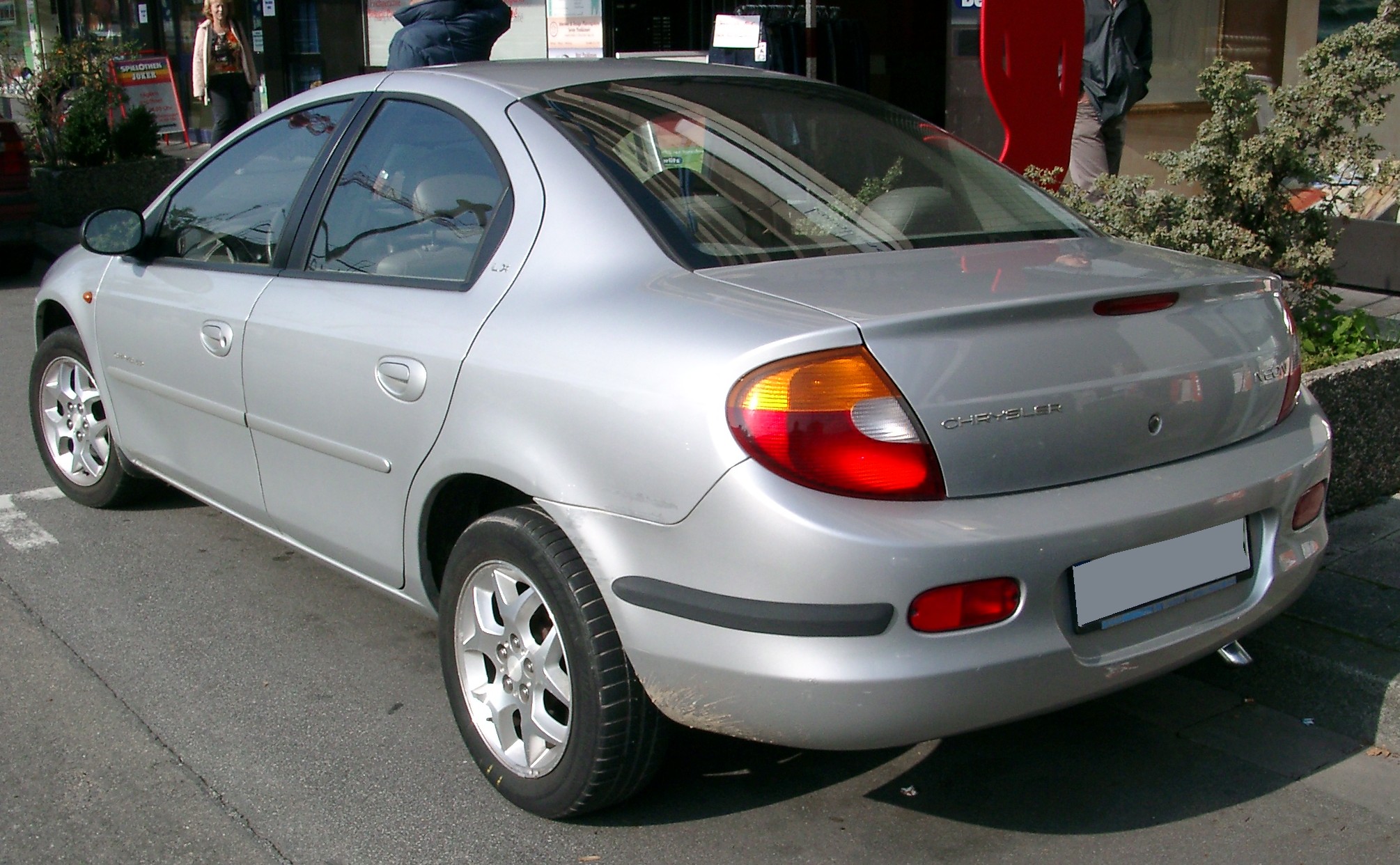


Strangely enough, I saw a bunch of "Chrysler Voyagers" and Jeep Cherokee/Grand Cherokees too. Most of the ones I saw had diesel engines.... *jealous*

If you've ever driven a Neon SRT/4
or ACR version, you wouldn't be so mad..... But some of the above posters are correct, it was the european Neon that got the same block. Don't know about the rest of the engine though. Take the Mini badge off the top of the valve cover, and there's a very generic 1.6 l cast into the cover.
Matt
Matt

6th Gear
Joined: Sep 2005
Posts: 1,188
Likes: 0
From: Chico, CA
Here is an article from March, 2008: Chrysler LLC has signed an agreement to transfer full ownership of Tritec Motors Ltd. to Fiat Powertrain Technologies (FPT). The purchase includes the facilities, manufacturing unit, production lines and the license to produce the current range of products.The Tritec Motors plant is located in the town of Campo Largo in the Curitiba metropolitan area, in the southern Brazilian state of Paraná.Chrysler and the BMW Group established Tritec Motors in 1996 between to manufacture 1.4- and 1.6-liter four-cylinder gasoline engines. The Tritec name stands for the union of the three countries involved: Germany, the United States, and Brazil.The gasoline-powered, four-cylinder, 16-valve 1.6- and 1.4-liter engines were destined for export, formerly equipping all BMW MINI models worldwide; the Chrysler PT Cruiser in South Africa, Europe and other foreign markets; and formerly, the Chrysler (Dodge) Neon sold outside North America.

Thread
Thread Starter
Forum
Replies
Last Post
RobbyD
MINIs & Minis for Sale
11
Jan 29, 2019 01:22 PM