When you click on links to various merchants on this site and make a purchase, this can result in this site earning a commission. Affiliate programs and affiliations include, but are not limited to, the eBay Partner Network.
So, here I am at 10pm, fighting my first clutch job.
New flywheel and McLeod clutch (hope that wasn't a mistake) installed, new throw out bearing, and so on.
Got the transmission back in, put some bolts in, and put the slave cylinder back on (original slave, never disconnected). Stepped on the clutch and almost almost nothing. Tried to bleed it, no apparent air in the line.
So, I pulled the trans back off and checked the throwout bearing. It was still seated on the clutch fork as it should be. So I started measuring.
The clutch fingers on the new clutch, assembled in the car are 7/16in further in than on my old clutch, that is they are 7/16in closer to the crankshaft flange.
I believe the fingers move out as the clutch disk wears, but 7/16in seems like a lot. My old clutch was only partially worn.
So here are my questions:
How much difference should there be in the fingers position between a new and old clutch?
OrHow much free play should there be in the clutch fork arm when the transmission is installed?
Does anyone have a measurement of the slave cylinder travel at full engage and disengage?
I have not ruled the slave cylinder out as a possible issue, maybe it needs to be replaced or bled. I understand there is a special procedure for that, but since I didn't disconnect the hydraulic line, I didn't think that would be an issue
After I bled , rebled and bled my clutch again . I HAD TO leave it sit over night , pedal fully depressed and once I came back outside after 3x more pumps it finally bled. I tried EVERYTHING. It was a nightmare but other DID tell me I HAD TO let it sit overnight and I couldn't see why bleeding it , correctly as I did wasn't good enough but it is what it is I guess. If you'd like to read through my post about it , here's what I went through and did
Pressure plates might look the same but they aren't. I almost made that mistake when going from the Midlands to a Getrag transmission. I laid them on the ground face down and there was a difference in finger length. They visibly look the same but different part numbers and a slight difference unless you really looked for it.
I wanted to provide this image in the event it may be helpful. This is a Valeo clutch with solid flywheel. I didn't take any measurements but also didn't have issues. I left the slave hanging like you did. I do recall the throw-out bearing feeling more loose that other clutches I have done in the past and I had it detach a couple of times. Seemed to be very sensitive.
Double check that slave. I had the same issue when I installed my clutch. It wouldn't engage and as I was working myself, I used my cell phone camera to make a video to check and see if the slave was depressing correctly. When I saw that it hadn't, I had to rebleed the system. What I ended up doing to fully bleed the system was take a long piece of wood, putting it on the clutch pedal and then using the seat - by bringing it as close to the steering wheel as possible - to compress it fully. I left that overnight and clutch worked in the morning. You can also use that trick with the brakes if you have air in the system; works like a charm.
" I left that overnight and clutch worked in the morning. You can also use that trick with the brakes if you have air in the system; works like a charm."
I had major maintenance done on my 05 S @ 144,000 miles last June including a new clutch/flywheel. My mechanic, Mike Marzo of MINI Rescue in PA, did the work and I stayed overnight in town since all the work I had done took him 12 hours to complete. He mentioned that the clutch has to be left overnight undisturbed to have it finished. At first I thought he was joking but damn he was exactly right when the next day it was PERFECT! So yes, it worked like a charm!!
Here is where I am at. Currently, the original clutch is installed, and I have most of the air out of the clutch line. Clutch pedal feels... acceptable for now.
With the slave removed from the transmission, I can wiggle the clutch fork back and forth probably less than 1/4in. I forgot to measure.
Compared to the new clutch assembly, this same measurement is 11/16in. So the slave is extended 11/16in before it begins to release the new clutch vs ~1/4in with the old clutch.
I know new clutches will have more free travel because the fingers extend as the clutch wears... but it seems to me roughly 1/2in difference is excessive. Does anyone have a recollection or measurement of this with a new clutch? With the slave cylinder removed, rotate the clutch fork back and forth and see what the free play is?
Maybe if I am ambitious I will go install the new clutch again and see if the slave cylinder bleeding has changed anything. I have had the trans in and out 5 times so far, and sadly it doesnt really get any easier... Faster maybe but not easier. Thats why shops charge thousands for this I guess
And @ChiefM I suspect you are right there is a difference in finger ratio here. Since this is not an OEM-style clutch, it would stand to reason that is one of the things that has been changed. I have been in contact with customer service at Mcleod and so far they have not been able to determine a solution. They had me verify the flywheel was the same as factory (it is) and I will be sending them several more measurements. Their going theory is the issue is with other parts, not theirs (big surprise). There is a possibility they are correct, of course, but we shall see.
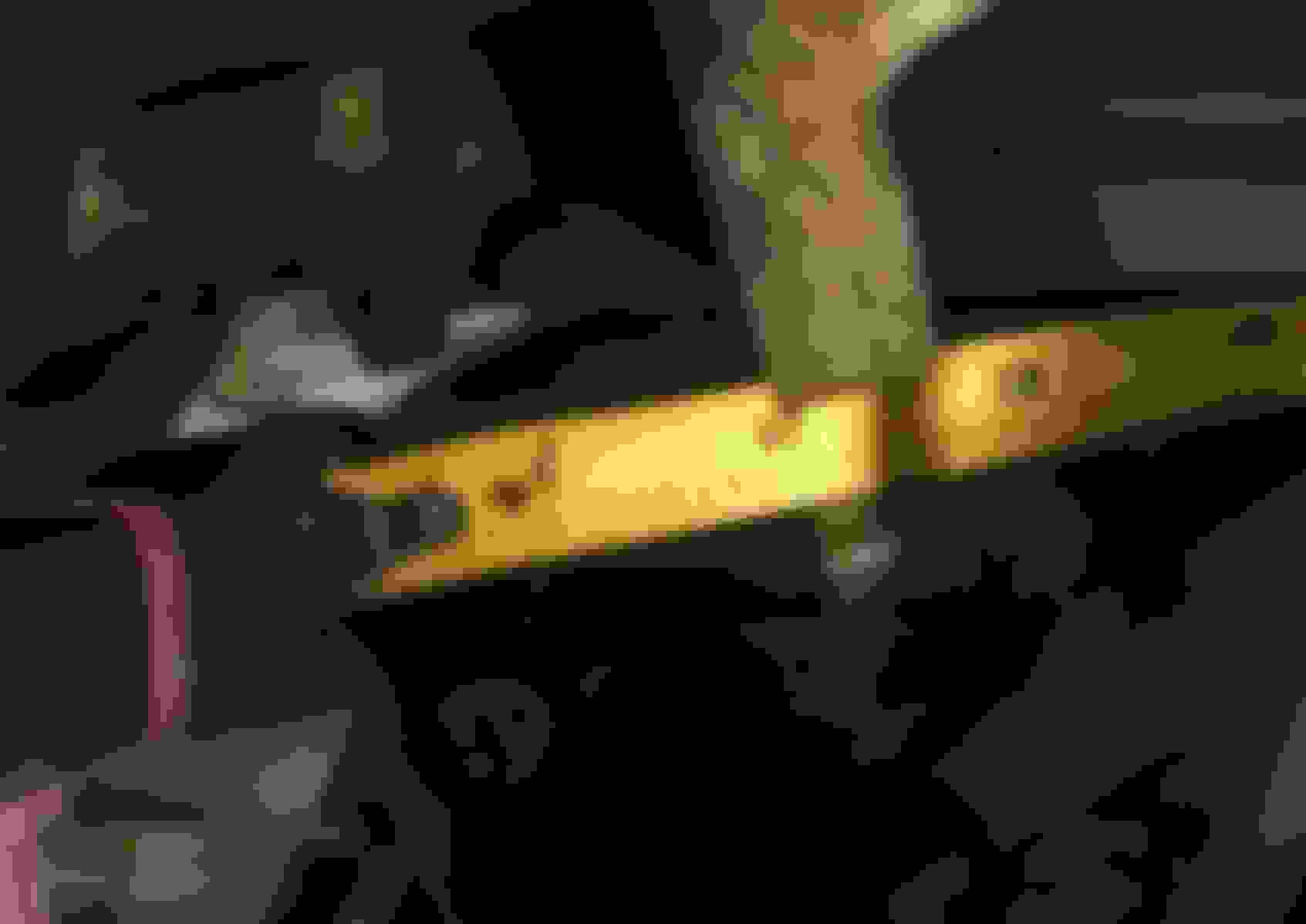
Pictures showing free play in the clutch arm with the new clutch:
If I can get some guidance on whether this ^ is normal or not, I can eliminate whether the slave cylinder/hydraulics is the issue here.
Thanks again,
PTTM
Last edited by PTTM; Dec 16, 2022 at 04:24 PM.
Reason: Clarity, additional info
In May, I replaced my clutch with an LUK DMF and clutch kit - same as the original parts. I also moved the slave cylinder off the transmission rather than open the hydraulic system. I did not have and still do not have any issues with the clutch. The only thing I noticed (my wife too) is that the clutch pedal is lighter than the stock clutch was.
Maybe you can add a spacer to the clutch fork or something to close the gap?
I recently replaced my clutch, flywheel, throw out bearing on my 2004 Cooper S, in my case installing a Luk assembly. Just as you I replaced everything, didn't open the line on the slave cylinder. All back together, stepped on the clutch pedal and no pressure. In short and after reading several threads in this forum I purchased a pressure bleeder and paying close attention to keeping the slave cylinder at or lower than mounting position on the transmission I bled the system. I also did the 2x4 on the clutch pedal overnight for added bleeding. Worked great!
BTW I removed the transmission and checked everything 2x as you did. In the end in my case it was air in the system.
Sorry, I do not understand when you say you "stepped on the clutch and almost nothing? Are you unable to go into gear?
I know some car, after replacing the clutch, you might need to adjust the clutch pedal, making it longer, thus pushing the slave longer for it to be able to disengage the clutch.
I learned this after working on a honda civic si stage 3 clutch.
Several months later I would like to provide some resolution. I did eventually get the car back on the road and have about 2000 miles on it.
Clutch Pedal Problem:
Long story short, I did have air in the clutch line and the master cylinder. I originally ruled that out as a possibility as I never disconnected any of the clutch lines. The clutch slave is compressed by the clutch fork assembly with the clutch in the engaged position (pedal up), and when you un-mount it, the slave extends to the end of its travel because of an internal spring. This sucks a lot of fluid down, even more than is used during clutch applications as the slave is never fully extended during normal operation. This is especially true with a worn clutch, as the clutch arm moves closer to the slave as the clutch wears (more on that later). Since the clutch draws from a point very high up on the reservoir, and the car was jacked up with a very steep angle (nose up), I suspect the fluid level was too low to cover the clutch supply line, even though it was between the normal and fill markers with he car level. Another possibility is that my slave cylinder was on the verge of failing and that air drew in through the seals. I did end up replacing the slave ($30 from auto-zone) as mine started leaking after a few attempts to bleed it. I know Duralast has a mixed reputation for parts, but it has a lifetime warranty and hopefully will at least outlast my ownership. Also it's very close to my house and was in stock.
TLDR: fill the brake fluid reservoir to the very top before removing the slave from the transmission. Have a plan in place to bleed the slave cylinder anytime you remove it, even if you think you won't need to.
Bleeding the Clutch:
R53 clutches are notoriously hard to bleed. Many discussions have been had on this. I ended up using a syringe (Cardone 10-5000MCB). This was recommended to me by a friend and was way cheaper than a power bleeder. It is clear that pushing fluid through the clutch system is the only way to bleed it, especially if the master has air in it. One must use caution however, as too much pressure can blow out the seals in the master. The tip of this tool fit very well into the black plastic clutch hose that goes from the brake reservoir, and I was able to use the syringe to push fluid through the whole way. When the syringe was empty, i would withdraw it. Draw more fluid in, and then use it to drip fluid into the plastic hose until it was overflowing. This ensured that no air bubbles would be present when I re-inserted the syringe into the hose. This is a messy process and you need rags everywhere to absorbed the spilt fluid. However, it was effective. I used a similar tactic to re-attach the hose to the reservoir. Fill the reservoir until fluid is coming out the clutch port. Block that with your finger, line up the clutch hose, move your finger and allow the hose to fill with fluid, slide it on so that no air pockets get into the hose. Messy but effective.
Slave cylinder really must be removed to properly bleed, although good results might be achieved by jacking up the left front corner of the car.
Another note, the black clutch hose has two parts, a gasket and the hose housing. I pulled the hose of the reservoir with much difficulty and the pieces separated. I assumed the end had broken off the hose and ordered a new one. When it arrived i realized that the gasket just came out of the hose.
Clutch fork travel:
This was my original question in the post, and an answer which was difficult to find from McLeod or forum members here. It IS normal for there to be a large amount of throw-out bearing/clutch fork play with a new clutch. For me, this was 11/16 inch. What I mean by this, is with the clutch and transmission properly installed and the slave cylinder removed, I could grab the clutch fork arm where the slave cylinder pushes and move it it back and forth 11/16in. This is shown in the pictures above with the tape measure. This is the free travel in the throw-out bearing that gets taken up as the clutch wears and the clutch fingers move further towards the transmission. My original clutch had around 1/4 inch of play and it had a fair amount of friction left. I suspect a fully worn clutch would have nearly zero play.
One consequence of this is a new clutch in the fully released position will have the slave piston at the farthest extension of any running condition. For most people, the slave seals will not have ridden on this part of the bore since the car was brand new. Very possibly a previously good slave will now leak for that reason. It is also easy to damage the slave seals when installing or removing it. You have to angle it into place, but allowing too much angle between the slave cylinder and piston could damage the seals or bore. I hope this description was clear, if not I can try to correct it.
TLDR: expect 1/2in+ free play in the clutch arm with a new clutch. This is taken up by the hydraulics and adjusts as the clutch wears.
McLeod Clutch Review:
I used a McLeod 673-770005 Street Tuner Clutch and LUK DMF089 flywheel (which is the OEM flywheel as I understand it. McLeod also makes a version of this clutch for the non-S Cooper.
In emailing with McLeod sales team, they claim they have sold hundreds of these specifically for Minis although I couldn't find any specific reviews; only reviews of this line on other cars and not many of that either. The line has been out since 2016. McLeod is a well known name in clutches, particularly for muscle cars and drag racing.
I purchased it because it was much cheaper than any of the typical upgrade clutches for R53s. It seems to me the factory clutches go pretty fast, so I didnt want one of them. My factory clutch was on track to be worn out well before 100k despite the fact that my car has no power upgrades (unless you count a CAI or Cat-back which I dont). My car had 58k when I bought it (65k at this job), so I cant vouch for it's use during it's early life, but reading online clutches going before 100k seems pretty common for these cars. Reason for changing the clutch was a input shaft seal leak, not the wear of the clutch. My goal was to never remove the transmission again. Hopefully that will be the case.
Another selling point for me was that this product line designed to be a mild performance upgrade intended mostly for street driving, not a full race clutch. They advertise them as rated for up to 25% higher than factory power, and spirited street driving with occasional track use. That describes exactly my intentions for the car. It is a solid hub clutch, intended to use with the factory style dual mass flywheel.
I purchased the clutch for around $250 and the flywheel was also around $250. This was around $150 more than the well known Valeo kit with a single mass flywheel. A full OEM style clutch from LUK was around $400 if I recall correctly. What I understand about the Valeo kit is that while people have used it with mild upgrades, it is very similar to an OEM clutch, just modified for a single mass flywheel.
Typical Stage-1 performance clutchs start around $500 for the clutch alone, and then an additional $300-500 for a flywheel, so this was a much cheaper route.
McLeod told me that the clutch would have around 10% heavier engagement than the factory clutch and that seems to be accurate. My memories of the factory clutch are fading as I last drove the car with it in September, so disclaimer: my comparisons are based on that memory.
The McLeod is noticeably heavier, however it is by no means a heavy clutch all things considered. I think it fits the driving experience quite well because the Mini already has a quite heavy steering and a "thunky" shifter feel compared to most other compact cars. The McLeod also has a much more progressive feel. The clutch is heavy at the engagement point, but noticeably lighter at full release. In traffic I do notice a little more fatigue compared to the OEM clutch, but compared to muscle cars or vintage cars with mechanical clutches, it is quite light.
It also grabs noticeably harder. You have to transition though the engagement point a little slower, or use more RPM to get a smooth launch without bogging the engine. I am quite glad I didn't spring for an aluminum flywheel as I think this would make the car much easier to stall. I did install a LSD during this project, so part of the difference could be the additional traction. I am still experimenting with the right way to launch this during normal driving, my goal there is a smooth start off with as little RPM as possible and no bogging.
I have not done any really aggressive driving with it yet, but if anyone is interested I can report back my findings once I do. I gave it a good 1500mi break in, so I have only had it for about 500mi in good working order. McLeod calls for 1000mi city driving or 600 clutch engagements, if memory serves. I had a few road trips in there so I gave it 1500mi. Only time will tell if this clutch proves durable. I drive between 8k and 10k a year with the car, so it should get lots of use.
I will also say about McLeod as a company, I was quite annoyed with them throughout this process as they couldn't give me the information I needed. However, objectively they were quite responsive and helpful. The customer service agent got engineers involved and tried to get answers from them. Unsurprisingly, they didnt have an R53 Mini just sitting around with a new clutch installed to compare measurements to mine. Also, most of this happened over the winter holidays and they responded to my emails throughout that time. Much better customer service than you get most places these days.
Overall, this was an extremely expensive project (Clutch, LSD, all new PS hoses, new poly engine mounts, oil pan and timing cover gaskets, new balancer, and more I'm forgetting) so I definitely need to get some use out of the car. Ideally I would like to get it up to 200-220hp which would be the advertised rating for this clutch, but I've had my fill of throwing money at it for a while. I havn't decided if I will do a full writeup on the other parts of the job, but give me a like or reply if you would be interested or let me know what specific parts you want details on. Hopefully my experiences will be helpful to someone so they don't go through the same struggles as I did. I think altogether I took the transmission out 8 times. Maybe 6? Either way, it was much to many.
However, I will note that if you get air in the clutch master (not the slave) due to a low fluid level or something (which was my situation), this process becomes more complicated. The 2-person method wont work because a master with an air pocket in it wont correctly draw or push fluid, or that is my experience.
Most master cylinders will not draw fluid properly if they get air in them. Then your only option is some sort of device that can pump fluid through the whole system (pressure bleeder, or my poor-mans bleeder which was a syringe). Bench bleeding is also an option, but the mini's configuration makes that more difficult than on other cars and it likely cant be done without removing the master.
I'm not saying that my way is the easiest or best, although it was the cheapest. Allowed me to skip buying a pressure bleeder once again. Since i was already over budget by a factor of 2 on this project, that was my priority.
Last edited by PTTM; Jun 13, 2023 at 10:32 AM.
Reason: Added information
However, I will note that if you get air in the clutch master (not the slave) due to a low fluid level or something (which was my situation), this process becomes more complicated. The 2-person method wont work because a master with an air pocket in it wont correctly draw or push fluid, or that is my experience.
Most master cylinders will not draw fluid properly if they get air in them. Then your only option is some sort of device that can pump fluid through the whole system (pressure bleeder, or my poor-mans bleeder which was a syringe). Bench bleeding is also an option, but the mini's configuration makes that more difficult than on other cars and it likely cant be done without removing the master.
I'm not saying that my way is the easiest or best, although it was the cheapest. Allowed me to skip buying a pressure bleeder once again. Since i was already over budget by a factor of 2 on this project, that was my priority.
I went and purchased a pressure bleeder for when I do mine ahead of time, just to make it a little easier hopefully. I also am replacing the clutch master while its all apart, unfortunately the bolt heads snapped off and now I have to drill them out lol..
Having an issue like clutch not engaging, when it was jacked up and put in gear the wheels stared spinning? But it goes through every gear easily. Now when on the ground I couldn’t get into gear easy and forced it into gear and car moved some and I let the clutch out and it don’t move but I can hear it trying to engage like rubbing noise.
I’m going to try and bleed the system again while on level surface. I really don’t want to pull this thing apart again!
Im not entirely sure I understand the issue you are having, but it sounds like your clutch is stuck partially or fully engaged.
So either there's a hydraulics issue or a mechanical linkage issue. See if you can get a partner to step on the clutch while you watch the slave, or else set up your phone and make sure the slave is moving. Should move an inch or so I think. If not, you have air in the system or possibly bad seals on the slave. It's easy to damage the seals on these because of how they are installed. And they are a pain to bleed.
On the mechanical side, it's totally possible the clutch fork fell out of the back of the throw out bearing. Which sucks, I know. Could be another problem too but that's the most likely. The only way to tell for sure is to take it apart again but you might be able to tell if you take the salve off and wiggle the clutch arm. Exhaust the hydraulics possibilities first. Hope this helps .
Im not entirely sure I understand the issue you are having, but it sounds like your clutch is stuck partially or fully engaged.
So either there's a hydraulics issue or a mechanical linkage issue. See if you can get a partner to step on the clutch while you watch the slave, or else set up your phone and make sure the slave is moving. Should move an inch or so I think. If not, you have air in the system or possibly bad seals on the slave. It's easy to damage the seals on these because of how they are installed. And they are a pain to bleed.
On the mechanical side, it's totally possible the clutch fork fell out of the back of the throw out bearing. Which sucks, I know. Could be another problem too but that's the most likely. The only way to tell for sure is to take it apart again but you might be able to tell if you take the salve off and wiggle the clutch arm. Exhaust the hydraulics possibilities first. Hope this helps .
I'm in that same boat too, where there's just not enough travel on the slave to fully disengage the clutch. Wheels start spinning when you even just put pressure on the gear lever, clutch pedal into the carpet. It's a new to me R53, but have two others. Bought this one with difficulty in shifting into gears. No idea of the clutch type or history, could be original. Changed out the original 2006 slave and bled a million times and methods, but no change. Gonna try a new master next. I put a pry bar on the clutch arm and manipulated it, and it's really stiff, and doesn't seem to get the pressure plate tines to 'flip' until the very end of motion and then a dead stop... That said, with the slave removed, what would the clutch arm play feel like if the fork fell out of the throwout bearing?
Well this is a somewhat old thread, but I happened to see the email notification.
If the clutch arm moves up and down (the rod will slide in and out of the transmission) then the fork fell out of the bearing. It should move very little (think less than 1/16in). More than that and your bearing is worn on the sleve it slides on and binding. This is somewhat common problem at higher mileage. More than 1/4in and the fork fell out. But that's very unlikely to happen with the clutch in place, usually that only happens during installation to my knowledge. If it fell out the arm will drop down and the slave cylinder will no longer push square on the arm. This is hard to explain without pictures but I hope you understand what I mean.
If there is a lot of resistance on the arm, you are still probably moving the throw out bearing against the clutch fingers.
These things are almost impossible to bleed without forcing fluid down from the reservoir. Especially if you have air trapped in the master cyilinder. So if you have not tried a pressure bleeder or some other way of forcing fluid down from the resavior (my syringe method) then you have not adequately beld the clutch. Also as I recall you have to remove the slave to bleed it. The bleed screw is not in a good position to remove the air with the slave mounted so you have to remove it and hold it so the bleed screw is at the highest point. Been 2 years but that is my memory.
I think the stroke is between 1 and 2 inches... maybe you can find that spec. Have someone (or block of wood) press the clutch pedal and measure the slave in the applied and released position. See if it is close to the maximum travel. Not then you have a bad slave (unlikely but possible since it's new), a bad master (also unlikely but maybe), or air trapped.
Oh... did the car sit awhile? Many other possibilities.... bugs or mice in the bell housing preventing the clutch releasing, or the clutch disk rusted to the flywheel can cause what you are experiances. Or a broke clutch disk or pressure plate. All possibilities if the car is new to you. Maybe worth pulling the starter and having a look in the bell housing to see if it looks rusty or full of junk.
All very helpful thank you for the quick response!
I do have a power bleeder, as well as a vacuum pump. Best results were doing the old clutch pedal depressed overnight...but seems to return back to marginal later in so maybe I damaged the new slave; I'll check under the gaitor boot again for fluid... I've got a another OEM BMW MINI slave as well as a new OEM master, so probably should suck it up and install them (carefully).
I do also have the homemade bolt and plate jig to compress the slave. Hard line looks good. No fluid in footwell from master, but that's probably not the end all be all failure mode there.
The clutch arm only goes in and out on the rod axis about 1/4" like you said... Bushings are a little worn but it's definitely not sliding up and down like crazy, and slave piston head is in good alignment with the arm's dimple. And yes lots of pressure is required to manipulate the arm full swing... My two old skinny arms with 2 foot breaker bar can barely disengage the clutch and hold it a full rotation. Hydraulics are amazing 😎
New LuK clutch, DMF089 flywheel, pressure plate, bearing, guide tube, bushings, bolts, just arrived today just in case, so I'm hoping further hydraulic efforts will fix the situation, as opposed to a much more involved clutch job. I'll also try to compare with my daily which has zero clutch issues.
You can all thank BMW engineers for designing a hydraulic system that uses the brake master cylinder reservoir for the clutch hydraulic system also. The simple solution would have been to have a secondary reservoir for the clutch but that would have been too easy.
Just a follow-up on this, still might be poor bleeding job on my end, but I did end up pulling the transmission to inspect the bell housing and clutch. Clutch was original to the car ('05 mfg. date) but still has some life left. However, I discovered that the release bearing fork was loose on the rod, primarily due to the cross bolt being sheared off halfway through the rod. Went to unbolt it and the head came off in the socket. The rest of the bolt was stuck in the shaft (factory loctite) so I ended up grinding off the fork... throwout bearing was broken plastic wing on one side too, but I don't think that affected anything... So $388 later to get a new fork, arm and bolt 🤦♂️ Those parts are NLA now, so remaining stocks are $$$
BTW the new LuK throwout bearing is really tight whereas the new OEM BMW part spins freely...I'm going with the LuK but wondered if anyone else noticed that when it came with the clutch kit? Broken head just sitting in the hole. Looks like it had been broken for some time. Looks normal at first glance... Finally removed LuK on left... New and used OEM BMW ones on right.
I'm an OEM *****, so stock LuK components... Plus, I'm going to be selling this car ASAP, and don't have the patience to screw around with single-mass flywheel Valeo conversions on this one... I'm just trying to do it 100% stock so I can (hopefully) get the issue taken care of.
Clutch assembly is installed, and release fork parts arrived....BTW, $383 for those three parts (now NLA, so remaining stocks are $$$). The screw alone was $14.
For all those advocating using a 2x4 and depressing the clutch pedal overnight, did you leave the cap off the brake fluid reservoir? If not, I don't understand how any air could be bled out of a closed system.