Suspension M7.............


6th Gear
Joined: Apr 2003
Posts: 3,957
Likes: 2
From: a canyon, south Bay Area
Originally Posted by KiLO
These types of threads are the types that make people leave NAM.
It does no good... I suggest we just move on.
It does no good... I suggest we just move on.

Oh, with re to the BBK question... From my experience, and what I've read, BBK's have not made for shorter stopping distances, or faster deacceleration. It does make for more consistent stopping distances, namely lessend fade with repetitive stops...
My BBK is 5.5 lbs lighter per wheel (most in the rotor), and with my wheels at 10.75 pounds, and tires at 19.8, the rotating mass to be overcome, or countered, is MUCH less than stock...


6th Gear
Joined: Jun 2003
Posts: 3,589
Likes: 2
From: Oregon, USA
Originally Posted by TonyB
I think you're right... For me, this one is only enough to make me unsubscribe. Which I'm doing now...
Oh, with re to the BBK question... From my experience, and what I've read, BBK's have not made for shorter stopping distances, or faster deacceleration. It does make for more consistent stopping distances, namely lessend fade with repetitive stops...
My BBK is 5.5 lbs lighter per wheel (most in the rotor), and with my wheels at 10.75 pounds, and tires at 19.8, the rotating mass to be overcome, or countered, is MUCH less than stock...
Oh, with re to the BBK question... From my experience, and what I've read, BBK's have not made for shorter stopping distances, or faster deacceleration. It does make for more consistent stopping distances, namely lessend fade with repetitive stops...
My BBK is 5.5 lbs lighter per wheel (most in the rotor), and with my wheels at 10.75 pounds, and tires at 19.8, the rotating mass to be overcome, or countered, is MUCH less than stock...

5th Gear
Joined: Feb 2003
Posts: 696
Likes: 0
From: Ohio
Originally Posted by ScottinBend
BBK kits will decrease the stopping distance over a stock setup. The greater the area of the pad and rotor, the quicker you can get to the lockup threshold. This will shorten the time to come to a stop. Compare the old style brakes on a bicycle ( the clamp-type on the rim) to the newer disc type. Both are cable operated, but the disc type will stop much quicker because it has a much larger surface to apply the forces with.

6th Gear
Joined: Apr 2003
Posts: 3,957
Likes: 2
From: a canyon, south Bay Area
That was my original belief also, but after some healthy discussions in the Tire/Wheel/Brake forum here on NAM... Might be worth a new thread as the topic is an interesting one
For the reasons mentioned here though, even if there is improved deacceleration, I wouldn't expect the forces to be greater, and I would guess less as mentioned earlier due to an overall lighter rotating mass being stopped (wheels, tires & rotors)...
Ok, I really am unsubscribing
For the reasons mentioned here though, even if there is improved deacceleration, I wouldn't expect the forces to be greater, and I would guess less as mentioned earlier due to an overall lighter rotating mass being stopped (wheels, tires & rotors)...
Ok, I really am unsubscribing

6th Gear
Joined: Aug 2002
Posts: 2,253
Likes: 0
From: NY NY
the lateral force of friction producing the braking effect is proportional to the vertical force and co-efficient of friction.
the vertical force is the wheel weight (as in corner balancing). Counter-intuitively, contact patch size doesn't have anything to do with it.
the vertical force is the wheel weight (as in corner balancing). Counter-intuitively, contact patch size doesn't have anything to do with it.
5th Gear
Joined: Feb 2003
Posts: 696
Likes: 0
From: Ohio
Originally Posted by jlm
the lateral force of friction producing the braking effect is proportional to the vertical force and co-efficient of friction.
the vertical force is the wheel weight (as in corner balancing). Counter-intuitively, contact patch size doesn't have anything to do with it.
the vertical force is the wheel weight (as in corner balancing). Counter-intuitively, contact patch size doesn't have anything to do with it.
I always thought a wider tire hooked up better & could stop shorter.
Or are you saying wider rubber would spread the weight out = less vertical force per measure of contact area, & therefore less co-efficient of friction... Yes? ...Sorry, still not sure I get you. ...Goes off to research


6th Gear
Joined: Oct 2002
Posts: 4,831
Likes: 1
From: Phoenix, AZ
Originally Posted by TonyB
From my experience, and what I've read, BBK's have not made for shorter stopping distances, or faster deacceleration. It does make for more consistent stopping distances, namely lessend fade with repetitive stops...
6th Gear
Joined: Aug 2002
Posts: 2,253
Likes: 0
From: NY NY
with respect to just basic friction, vertical force is the constant (corner weight) and that is what determines the lateral friction force (cornering and braking power). Pressure depends on how much area spreads that force out, so a wider contact patch will have the same overall vertical force, but less pressure.
Rolling tire grip is more complicated than simple friction, however.
Rolling tire grip is more complicated than simple friction, however.
Last edited by jlm; Jan 16, 2006 at 12:34 PM.

OVERDRIVE


Joined: May 2003
Posts: 7,926
Likes: 40
From: Greensboro, NC
Originally Posted by cooldaddy
no no no... user as in user of drugs, beers, modifications to Mini.
Sorry!
Sorry!
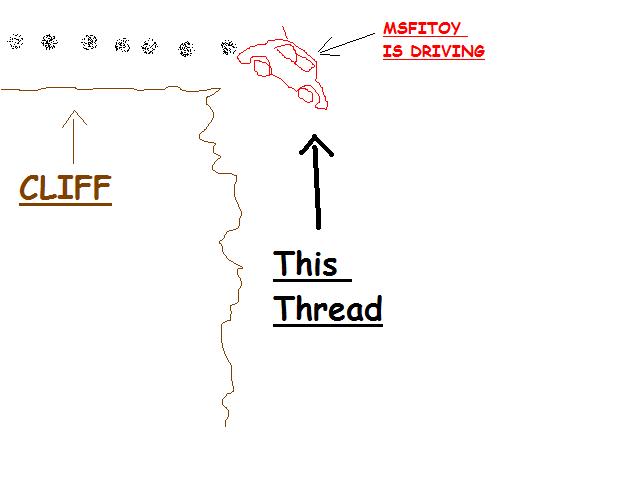
 ...are you clairvoyant or something Let me take the wheel of this thread and drive it off the cliff
OVERDRIVE
Joined: May 2003
Posts: 7,926
Likes: 40
From: Greensboro, NC
Andy's in the middle of the road ....I can't avoid him...we're going too fast to make the turn and miss him...we're all gonna die...AAAAAAAAAAAAAaaaaaaaaaaaaaaaaaaaaaaaaaaaaaaa THUDCRASHBANGKAPLOWEEZIINNGfssssssssss............ .threads dead
....I can't avoid him...we're going too fast to make the turn and miss him...we're all gonna die...AAAAAAAAAAAAAaaaaaaaaaaaaaaaaaaaaaaaaaaaaaaa THUDCRASHBANGKAPLOWEEZIINNGfssssssssss............ .threads dead