


So was it worth it? E-mini....


So was it worth it? E-mini....
Just curious for those of you that have the e-mini and had a gas mini before, do you still like it?
I know the electrical hookup was a pain for many but now that ya'll have had a chance to drive it, what's your thoughts?
Does it go far enough between charges?
Do you find yourself running low on a charge with no place to plug in or are there places around town that cater to electric cars/minis?
I'm assuming that the cars are quick with enough torque to make them fun but has anyone taken one to the track for fun?
Just curious to what everyone's thoughts are now that they've had time to really drive them.
Thanks,
Mark
I know the electrical hookup was a pain for many but now that ya'll have had a chance to drive it, what's your thoughts?
Does it go far enough between charges?
Do you find yourself running low on a charge with no place to plug in or are there places around town that cater to electric cars/minis?
I'm assuming that the cars are quick with enough torque to make them fun but has anyone taken one to the track for fun?
Just curious to what everyone's thoughts are now that they've had time to really drive them.
Thanks,
Mark

Mark, did you see this on motoringfile?
http://www.motoringfile.com/2010/05/...urgring-video/
I'm not sure what the ring times are for a JCW or stock S...
http://www.motoringfile.com/2010/05/...urgring-video/
I'm not sure what the ring times are for a JCW or stock S...
Wow, pretty impressive for an electric car. It's about a minute slower than a JCW but nonetheless impressive for an emission free car.
I was wondering if the e-mini lived up to the hope and hype when it first came out.
Thanks,
Mark
I was wondering if the e-mini lived up to the hope and hype when it first came out.
Thanks,
Mark

2nd Gear
Joined: Jun 2010
Posts: 93
Likes: 0
"Emission Relocated" ... but otherwise I agree!
"emission free" was meant in relation to how much emissions a gas powered car produces.


1st Gear
Joined: Jul 2010
Posts: 35
Likes: 0
I understand the meaning. I am just saying that I dont believe there is such a thing as an Emission free electric car. The emissions just come from the electric plant and all the extra coal they need to burn to make the power.
If everyone sold there gas burners today and bought E cars I would like to see a study on the actual emissions savings from the cars vs the new amount of emissions the power plants would put out.
Emission free is a Hydrogen car.
JMO. Not knocking the cars or the people that own them.
ANY MINI is a good MINI
If everyone sold there gas burners today and bought E cars I would like to see a study on the actual emissions savings from the cars vs the new amount of emissions the power plants would put out.
Emission free is a Hydrogen car.
JMO. Not knocking the cars or the people that own them.
ANY MINI is a good MINI
Trending Topics


OVERDRIVE


Joined: Aug 2006
Posts: 7,201
Likes: 8
From: Norfolk, VA
First, less than half of our energy generation nationwide comes from coal. Second, it's a LOT more efficient to produce and distribute electricity from a central location than it is to ship and store gasoline all over Hell's half-acre and then burn it in 240 million individual automobile engines to produce power.

2nd Gear
Joined: Jun 2010
Posts: 93
Likes: 0
First, less than half of our energy generation nationwide comes from coal. Second, it's a LOT more efficient to produce and distribute electricity from a central location than it is to ship and store gasoline all over Hell's half-acre and then burn it in 240 million individual automobile engines to produce power.
There is NO, none, zero, nada, zip, zilch, "emissions-free" method of mechanical transport available today, hydrogen included.

Well, i suppose it depends on how one defines "emissions free." Being that something has to power the production of said vehicle, including horse and carriage, then you are correct moondawg14. But advancements are being made whereas 15% of our energy grid from self-sustainables can easily grow to 50% within 15 years if ALL OF US play our part and act.
aaron
aaron
Last edited by praecurvo; Sep 24, 2010 at 07:01 PM.

I wasn't on the test program but, I did get to drive one in Denver at MTTS. Wow what a cool car. It's is everything that a regular MINI is and its quiet. I would say it was a little bit quicker then a Cooper and you don't have to hit the brakes until you are just about to stop. I would own one if I lived in a house and had to commute about 20 to 30 miles a day.
First, less than half of our energy generation nationwide comes from coal. Second, it's a LOT more efficient to produce and distribute electricity from a central location than it is to ship and store gasoline all over Hell's half-acre and then burn it in 240 million individual automobile engines to produce power.
Kind of reminds me of this article. In today's society, we are still in our "infant" stages of producing electric cars. As they are produced and disposed of more and more, the associated costs will lower but right now, it's still cheaper in the long run to drive an H2 or Tahoe.
Though this article is a few years ago, it just proves that it will take a quite a few years for the associated costs of producing electric vehicles to be lower than even the most gas guzzling gas vehicle.
BANDON, Ore., March 31 -- As Americans become increasingly interested in fuel economy and global warming, they are beginning to make choices about the vehicles they drive based on fuel economy and to a lesser degree emissions. But many of those choices aren't actually the best in terms of vehicle lifetime energy usage and the cost to society over the full lifetime of a car or truck.
CNW Marketing Research Inc. spent two years collecting data on the energy necessary to plan, build, sell, drive and dispose of a vehicle from initial concept to scrappage. This includes such minutia as plant to dealer fuel costs, employee driving distances, electricity usage per pound of material used in each vehicle and literally hundreds of other variables.
To put the data into understandable terms for consumers, it was translated into a "dollars per lifetime mile" figure. That is, the Energy Cost per mile driven.
The most Energy Expensive vehicle sold in the U.S. in calendar year 2005: Maybach at $11.58 per mile. The least expensive: Scion xB at $0.48 cents.
While neither of those figures is surprising, it is interesting that driving a hybrid vehicle costs more in terms of overall energy consumed than comparable non-hybrid vehicles.
For example, the Honda Accord Hybrid has an Energy Cost per Mile of $3.29 while the conventional Honda Accord is $2.18. Put simply, over the "Dust to Dust" lifetime of the Accord Hybrid, it will require about 50 percent more energy than the non-hybrid version.
One of the reasons hybrids cost more than non-hybrids is the manufacture, replacement and disposal of such items as batteries, electric motors (in addition to the conventional engine), lighter weight materials and complexity of the power package.
And while many consumers and environmentalists have targeted sport utility vehicles because of their lower fuel economy and/or perceived inefficiency as a means of transportation, the energy cost per mile shows at least some of that disdain is misplaced.
For example, while the industry average of all vehicles sold in the U.S. in 2005 was $2.28 cents per mile, the Hummer H3 (among most SUVs) was only $1.949 cents per mile. That figure is also lower than all currently offered hybrids and Honda Civic at $2.42 per mile.
"If a consumer is concerned about fuel economy because of family budgets or depleting oil supplies, it is perfectly logical to consider buying high- fuel-economy vehicles," says Art Spinella, president of CNW Marketing Research, Inc. "But if the concern is the broader issues such as environmental impact of energy usage, some high-mileage vehicles actually cost society more than conventional or even larger models over their lifetime.
"We believe this kind of data is important in a consumer's selection of transportation," says Spinella. "Basing purchase decisions solely on fuel economy or vehicle size does not get to the heart of the energy usage issue."
The goal of overall worldwide energy conservation and the cost to society in general -- not just the auto buyer -- can often be better addressed by being aware of a car or truck's "dust to dust" energy requirements, he said.
This study is not the end of the energy-usage discussion. "We hope to see a dialog begin that puts educated and aware consumers into energy policy decisions," Spinella said. "We undertook this research to see if perceptions (about energy efficiency) were true in the real world."
Scott,
Kind of reminds me of this article. In today's society, we are still in our "infant" stages of producing electric cars. As they are produced and disposed of more and more, the associated costs will lower but right now, it's still cheaper in the long run to drive an H2 or Tahoe.
Though this article is a few years ago, it just proves that it will take a quite a few years for the associated costs of producing electric vehicles to be lower than even the most gas guzzling gas vehicle.
BANDON, Ore., March 31 -- As Americans become increasingly interested in fuel economy and global warming, they are beginning to make choices about the vehicles they drive based on fuel economy and to a lesser degree emissions. But many of those choices aren't actually the best in terms of vehicle lifetime energy usage and the cost to society over the full lifetime of a car or truck.
CNW Marketing Research Inc. spent two years collecting data on the energy necessary to plan, build, sell, drive and dispose of a vehicle from initial concept to scrappage. This includes such minutia as plant to dealer fuel costs, employee driving distances, electricity usage per pound of material used in each vehicle and literally hundreds of other variables.
To put the data into understandable terms for consumers, it was translated into a "dollars per lifetime mile" figure. That is, the Energy Cost per mile driven.
The most Energy Expensive vehicle sold in the U.S. in calendar year 2005: Maybach at $11.58 per mile. The least expensive: Scion xB at $0.48 cents.
While neither of those figures is surprising, it is interesting that driving a hybrid vehicle costs more in terms of overall energy consumed than comparable non-hybrid vehicles.
For example, the Honda Accord Hybrid has an Energy Cost per Mile of $3.29 while the conventional Honda Accord is $2.18. Put simply, over the "Dust to Dust" lifetime of the Accord Hybrid, it will require about 50 percent more energy than the non-hybrid version.
One of the reasons hybrids cost more than non-hybrids is the manufacture, replacement and disposal of such items as batteries, electric motors (in addition to the conventional engine), lighter weight materials and complexity of the power package.
And while many consumers and environmentalists have targeted sport utility vehicles because of their lower fuel economy and/or perceived inefficiency as a means of transportation, the energy cost per mile shows at least some of that disdain is misplaced.
For example, while the industry average of all vehicles sold in the U.S. in 2005 was $2.28 cents per mile, the Hummer H3 (among most SUVs) was only $1.949 cents per mile. That figure is also lower than all currently offered hybrids and Honda Civic at $2.42 per mile.
"If a consumer is concerned about fuel economy because of family budgets or depleting oil supplies, it is perfectly logical to consider buying high- fuel-economy vehicles," says Art Spinella, president of CNW Marketing Research, Inc. "But if the concern is the broader issues such as environmental impact of energy usage, some high-mileage vehicles actually cost society more than conventional or even larger models over their lifetime.
"We believe this kind of data is important in a consumer's selection of transportation," says Spinella. "Basing purchase decisions solely on fuel economy or vehicle size does not get to the heart of the energy usage issue."
The goal of overall worldwide energy conservation and the cost to society in general -- not just the auto buyer -- can often be better addressed by being aware of a car or truck's "dust to dust" energy requirements, he said.
This study is not the end of the energy-usage discussion. "We hope to see a dialog begin that puts educated and aware consumers into energy policy decisions," Spinella said. "We undertook this research to see if perceptions (about energy efficiency) were true in the real world."
Kind of reminds me of this article. In today's society, we are still in our "infant" stages of producing electric cars. As they are produced and disposed of more and more, the associated costs will lower but right now, it's still cheaper in the long run to drive an H2 or Tahoe.
Though this article is a few years ago, it just proves that it will take a quite a few years for the associated costs of producing electric vehicles to be lower than even the most gas guzzling gas vehicle.
BANDON, Ore., March 31 -- As Americans become increasingly interested in fuel economy and global warming, they are beginning to make choices about the vehicles they drive based on fuel economy and to a lesser degree emissions. But many of those choices aren't actually the best in terms of vehicle lifetime energy usage and the cost to society over the full lifetime of a car or truck.
CNW Marketing Research Inc. spent two years collecting data on the energy necessary to plan, build, sell, drive and dispose of a vehicle from initial concept to scrappage. This includes such minutia as plant to dealer fuel costs, employee driving distances, electricity usage per pound of material used in each vehicle and literally hundreds of other variables.
To put the data into understandable terms for consumers, it was translated into a "dollars per lifetime mile" figure. That is, the Energy Cost per mile driven.
The most Energy Expensive vehicle sold in the U.S. in calendar year 2005: Maybach at $11.58 per mile. The least expensive: Scion xB at $0.48 cents.
While neither of those figures is surprising, it is interesting that driving a hybrid vehicle costs more in terms of overall energy consumed than comparable non-hybrid vehicles.
For example, the Honda Accord Hybrid has an Energy Cost per Mile of $3.29 while the conventional Honda Accord is $2.18. Put simply, over the "Dust to Dust" lifetime of the Accord Hybrid, it will require about 50 percent more energy than the non-hybrid version.
One of the reasons hybrids cost more than non-hybrids is the manufacture, replacement and disposal of such items as batteries, electric motors (in addition to the conventional engine), lighter weight materials and complexity of the power package.
And while many consumers and environmentalists have targeted sport utility vehicles because of their lower fuel economy and/or perceived inefficiency as a means of transportation, the energy cost per mile shows at least some of that disdain is misplaced.
For example, while the industry average of all vehicles sold in the U.S. in 2005 was $2.28 cents per mile, the Hummer H3 (among most SUVs) was only $1.949 cents per mile. That figure is also lower than all currently offered hybrids and Honda Civic at $2.42 per mile.
"If a consumer is concerned about fuel economy because of family budgets or depleting oil supplies, it is perfectly logical to consider buying high- fuel-economy vehicles," says Art Spinella, president of CNW Marketing Research, Inc. "But if the concern is the broader issues such as environmental impact of energy usage, some high-mileage vehicles actually cost society more than conventional or even larger models over their lifetime.
"We believe this kind of data is important in a consumer's selection of transportation," says Spinella. "Basing purchase decisions solely on fuel economy or vehicle size does not get to the heart of the energy usage issue."
The goal of overall worldwide energy conservation and the cost to society in general -- not just the auto buyer -- can often be better addressed by being aware of a car or truck's "dust to dust" energy requirements, he said.
This study is not the end of the energy-usage discussion. "We hope to see a dialog begin that puts educated and aware consumers into energy policy decisions," Spinella said. "We undertook this research to see if perceptions (about energy efficiency) were true in the real world."
Additionally, with a greater focus on the future of a self-sustainable energy infrastructure, hybrid, PHEV, and EV cars make nothing but sense. By consumers investing their capital throughout the initial stages of EV/Hybrid development, we are participating in the revolutionary advancements that will lead to our self-sustainability. Purchasing an H2 or Tahoe does it's part as well, by funding the brands future in an indirect but relative way.
aaron
I truly look forward to BMW's next step in EV production after this trial run. I am not sure if they are leasing out those 1 series EV's yet or at all, but in the not-so-distant future, their EV's will be some of the most desirable on the market!!
here's what I know for sure...
all-new fwd 1 series EV (expected end of 2013)
^should share platform with new clubman
BMW Mega City vehicle EV (2013-2014)
BMW Efficient Dynamics based EV performance car (2014)
Cooper EV (production)???
Countryman EV???
What else?
aaron
here's what I know for sure...
all-new fwd 1 series EV (expected end of 2013)
^should share platform with new clubman
BMW Mega City vehicle EV (2013-2014)
BMW Efficient Dynamics based EV performance car (2014)
Cooper EV (production)???
Countryman EV???
What else?
aaron

1st Gear
Joined: Aug 2009
Posts: 33
Likes: 0
Less than half comes from coal, but around 2/3 comes from fossil fuels, with about 20% coming from nuclear, and around 15% from renewables. (source: http://www.eia.doe.gov/cneaf/electri.../table1_1.html)
There is NO, none, zero, nada, zip, zilch, "emissions-free" method of mechanical transport available today, hydrogen included.
There is NO, none, zero, nada, zip, zilch, "emissions-free" method of mechanical transport available today, hydrogen included.
I'm one of the MINI-E drivers and have a home based solar PV system that generates all of the electricity that I charge the car with. I have just had the car for 15 months now and charge it with clean, renewable electricity. How is this not an emission-free vehicle?
Yeah, retrospectively, I believe Moondawg14 is being a little too thorough. He is referring to the fabrication process of everything involved, including Mini manufacturing, PV manufacturing, etc.
MinnieE250: you have a PV system at home as well...?
AWESOME!!! what setup do you have and what are the specs?
how long to charge?
how much elev is generated?
battery assist or not?
whatever else?
aaron
MinnieE250: you have a PV system at home as well...?
AWESOME!!! what setup do you have and what are the specs?
how long to charge?
how much elev is generated?
battery assist or not?
whatever else?
aaron
2nd Gear
Joined: Jun 2010
Posts: 93
Likes: 0
Moondawg:
I'm one of the MINI-E drivers and have a home based solar PV system that generates all of the electricity that I charge the car with. I have just had the car for 15 months now and charge it with clean, renewable electricity. How is this not an emission-free vehicle?
I'm one of the MINI-E drivers and have a home based solar PV system that generates all of the electricity that I charge the car with. I have just had the car for 15 months now and charge it with clean, renewable electricity. How is this not an emission-free vehicle?
I'm not trying to diminish the significant(positive) impact that electric vehicles could have on the environment. I'm just saying that "emissions free" is a little optimistic.

1st Gear
Joined: Jul 2015
Posts: 16
Likes: 0
First, less than half of our energy generation nationwide comes from coal. Second, it's a LOT more efficient to produce and distribute electricity from a central location than it is to ship and store gasoline all over Hell's half-acre and then burn it in 240 million individual automobile engines to produce power.
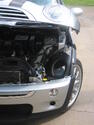

So cars went back to MINI...
We're likely destroyed, except for a few museum piece's....


