When you click on links to various merchants on this site and make a purchase, this can result in this site earning a commission. Affiliate programs and affiliations include, but are not limited to, the eBay Partner Network.
F55/F56/F57 Stock Problems/IssuesDiscussions related to warranty related issues and repairs, or other problems with the OEM parts and software for F55/F56 MINI Cooper AND Cooper S models.
I have a 2018 Mini Coopr S Hardtop 2dr, that at 25K miles started to click and clunk when the steering wheel was turned and felt like something was rubbing. Took it to the dealer and the techs could not duplicate the problem and checked the whole front end, retorqued all the fasteners to spec, top shock nut, balljoint nut, lower wishbone fasteners, and even the CV axle bolts. Pronounced the car fit, safe to drive and fixed. Luckily under warranty. So not two days later the same clicking/clunking and rubbing appeared again. Hmmm, back to the dealer which is 102 miles one-way for me and another tech said the strut mounts were bad and needed to be replaced along with the steering gear. Of course no parts to do the work, 2 weeks to get another steering gear, as no other dealer in the USA had one. Make a long story short, the repairs were done, new strut mounts, and steering gear and the car was back to normal. Also under warranty. Steering gear was over $1500.;.wow!. So about 6 months later, it all started again, another 8000 miles on the car and back to the dealer again. The re-torqueing was done, seemed to solve problem again for another 3 months, then the same clicking and clunking, even worse this time, with very noticeable sound of groaning/grinding. Back to the dealer again, and told by the service manager, that the strut mount bearings on the Gen 3 Mini is the culprit and "we replace a lot of strut mounts on these Gen 3 Minis". The strut mounts again have been replaced. My gut tells me there is something amiss with the design as I asked for the parts (strut mounts) that failed the 2nd time from the dealer and after some heated discussion got the two latest replaced strut mounts from the service manager. "we have to send them back to Mini as all warranty replace parts are analyzed." BS, as the tech who did the work said they throw them in the recycle bin. I am going to look at the returned parts and see what or why these parts keep failing. Luckily my background is in aerospace production and quality engineering, and I am a car guy, even built stock cars in my youth. So might be able to figure out a fix if the design is poor and from just looking at the parts given to me, the top of spring rides in a plastic interface that includes the bearing. Looks really flimsy!
So a question to the members, anyone else have or noticed issues with Gen 3 front strut mounts, clicking.clunking while turning and grinding/groaning. Will attach some photos in a later post.
our 2017 Clubman non S has been ok so far. I have noticed while looking at used F56's S's or Clubman S's looking at the carfax the replacing of strut mounts and motor mounts seem to be quite common
I have a 2018 Mini Coopr S Hardtop 2dr, that at 25K miles started to click and clunk when the steering wheel was turned and felt like something was rubbing. Took it to the dealer and the techs could not duplicate the problem and checked the whole front end, retorqued all the fasteners to spec, top shock nut, balljoint nut, lower wishbone fasteners, and even the CV axle bolts. Pronounced the car fit, safe to drive and fixed. Luckily under warranty. So not two days later the same clicking/clunking and rubbing appeared again. Hmmm, back to the dealer which is 102 miles one-way for me and another tech said the strut mounts were bad and needed to be replaced along with the steering gear. Of course no parts to do the work, 2 weeks to get another steering gear, as no other dealer in the USA had one. Make a long story short, the repairs were done, new strut mounts, and steering gear and the car was back to normal. Also under warranty. Steering gear was over $1500.;.wow!. So about 6 months later, it all started again, another 8000 miles on the car and back to the dealer again. The re-torqueing was done, seemed to solve problem again for another 3 months, then the same clicking and clunking, even worse this time, with very noticeable sound of groaning/grinding. Back to the dealer again, and told by the service manager, that the strut mount bearings on the Gen 3 Mini is the culprit and "we replace a lot of strut mounts on these Gen 3 Minis". The strut mounts again have been replaced. My gut tells me there is something amiss with the design as I asked for the parts (strut mounts) that failed the 2nd time from the dealer and after some heated discussion got the two latest replaced strut mounts from the service manager. "we have to send them back to Mini as all warranty replace parts are analyzed." BS, as the tech who did the work said they throw them in the recycle bin. I am going to look at the returned parts and see what or why these parts keep failing. Luckily my background is in aerospace production and quality engineering, and I am a car guy, even built stock cars in my youth. So might be able to figure out a fix if the design is poor and from just looking at the parts given to me, the top of spring rides in a plastic interface that includes the bearing. Looks really flimsy!
So a question to the members, anyone else have or noticed issues with Gen 3 front strut mounts, clicking.clunking while turning and grinding/groaning. Will attach some photos in a later post.
The grinding/groaning noise when turning mostly was "lower control arms" issue with multiple 3rd gen MINIs. My car had lower control arms replaced because it would have a loud pop when I would brake hard or turn left at 40 MPH speed or more in Sport mode. There was another issue with upper strut mounts as it was making "rubbing rubber" sound at slow parking lot maneuvers when it was cold outside. MINI replaced with new ones. They used my original springs and rubber dust boot and rest was new. Tech told me that at the factory they didn't apply enough grease in the bearing or such and when cold it would get hard...
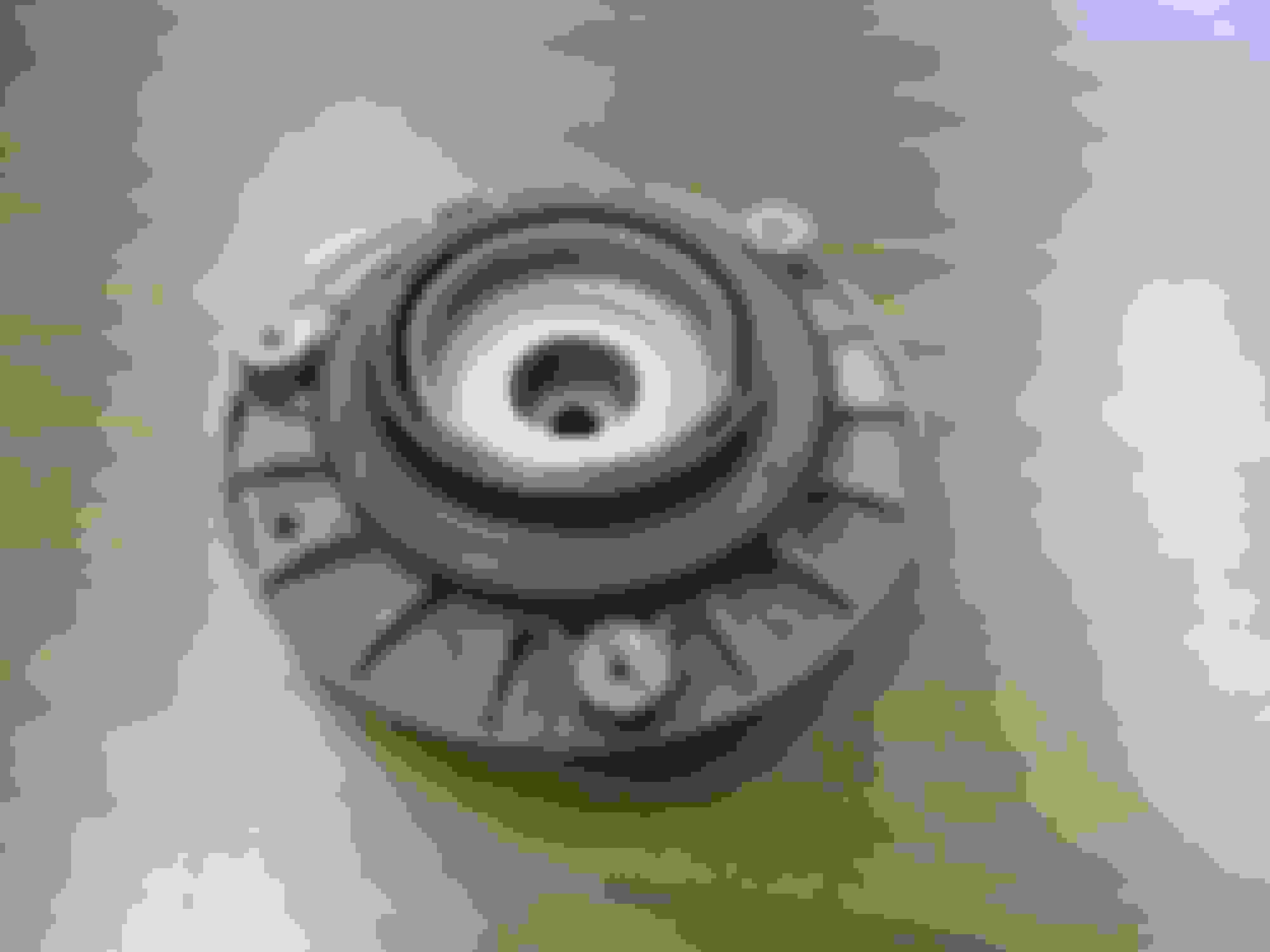
Back again after getting some photos and disassembly of the "plastic bearing carrier/spring interface" pieces. Boy, BMW Mini is cheap, cheap, and this design is absolutely atrocious for a critical suspension part. Bearings are first too small, poorly designed and will fail. If you have these type of strut mounts the bearings and plastic bearing carriers will fail, just depends when. In fact one of the carrier pieces, the sheet metal bearing race fell out of the plastic bearing carrier, upon disassembly. Did some research, on the mounts and these are made by Febi in Germany and sold under various other names, Sachs, etc..... The mount is cast aluminum, but the important part of the mount is plastic (the part that turns when you steer), ie the bearing carrier/spring interface. I understand also from the dealer tech I spoke with is the plastic bearing carrier, gets deformed due to high shock (hitting a pothole or such) and then the bearing is out of alignment and causes binding, clicking, clunking. I have decided to try to re-design the mount, either using the existing cast aluminum piece and replace the bearing carrier.spring interface with a more substantial bearing carrier and a decent bearing. The other option is to buy $450+ strut mounts with adjustable camber from the aftermarket that some Mini enthusiasts go to when putting in coil overs or lowering springs, or design replacements for the OEM junk from scratch. Here is the photos. Take a look! Oh and these are the second set of strut mounts that were replaced by the dealer as noted in my original post.
Strut mount with plastic bearing/spring interface stock OEM Top of strut mount (stock OEM) OEM bearing carrier/spring interface removed from the mount. Top view of OEM C/S interface Spring interface part removed from OEM C/S interface OEM inner bearing carrier and bearing Bearing with ball carrier. approx. 1/8" diameter ***** Closeup of bearing Inner bearing race, that fell out during disassembly Inner bearing carrier plastic piece Upper plastic spring interface/bearing carrier piece Upper spring interface plastic piece with bearing race that also popped out during disassembly Upper spring interface plastic piece with bearing race re-installed
Part 3: Refurbishment for stock OEM strut mount. Decided to attempt to replace the plastic bearing carrier/spring interface with a more robust bearing and bearing support/spring interface. Did all kinds of measurements on the original strut mount and determined a 6915 deep groove ball bearing would be ideal due to it radial and axial thrust load capabilities. Lots of bearings out there that are what they call thin section deep groove ball bearings, but load capability especially in axial thrust load capabilities of 4950 lbs ft for the 6915 bearing have to be considered higher than what the factory bearing pack can take. First order of business, to determine fit of the aforementioned 6915 bearing onto the original strut mount. The 6915 bearing is 75mm bore id x 105mm OD x 16mm thickness, which for those that don't want to figure out through the machinists handbook the fit for the bore of the bearing to the strut mount would have to be machined to 2.9535" diameter. So the first photo is of the original strut mount machined to fit the bearing (light interference fit) along with a .020" facing of the strut mount inner face to provide a flat surface for the bearing to interface with. Took off approx .060" diameter from the original strut mount OD to get to the proper fitment to the 75mm bearing (light interference fit) see the photos. Next designed up the replacement bearing mount/spring interface to match to the original so as not to have problems fitting up to the coil spring and also be able to contain the 6915 bearing along with the proper height from the inner surface face of the strut mount. I would have like to use a 16501 SKF bearing, but cost was over $45 each but the thickness of the bearing was 13mm instead of 16mm. To make a long story short and not bore you with all the particulars the new aluminum bearing mount/spring interface was machined out of 6061-T6511 aluminum bar stock. See the photos. There is a .1875" height difference between the stock plastic bearing mount/spring interface and the new fabricated one with the new bearing mount being .1875" taller than stock. Don't think there will be an issue, but will find out if ride height goes up 3/16" after install. I do want to note I did a prefit of all the parts, first to see if all the criteria was met, do some more measurements, and did find that due to the facing of the strut mount to "level it up" for the bearing, I had to shim the bearing away from the mount.032", with an appropriate steel shim due to interference with the inner and outer faces of the bearing to faced off area on the mount. Next set of mounts will have a slight .030" step machine the width of the inner bearing race area on the mount to provide offset for bearing movement to the inner face of the mount. Gee we all screw up somehow, but correctable. So check out the photos. Tested the mounts with new bearing/ spring interface by applying 1 1/2 ton pressure using fixtures on a hydraulic press and the bearing did not bind and turned freely as if had no load. Did this to simulate install on the strut and probably worst case loading. Was about 60-65 percent of the max bearing axial load as noted above. Really doing this as a way to test bed whether or not to the scrap the stock mounts and design up the better design from scratch or be able to use the OEM mount with just some slight mods to them. Of course not everyone has access to a machine shop like I do or the skills to machine up their own facsimiles like I did. Maybe I should offer up kits or refurbished stock mounts, of course, I would go to the 13mm thick bearing, which would bring the bearing/spring interface back within stock spec height from the mount. So check out the photos. I wlll be doing the install on the actual car the coming weekend, to find out really how they work and will also do a go-by either in photos or maybe video on how to do the strut mount replacements. The E-TIS on the F56 is somewhat disjointed on the replacement of the strut mounts and the tools required are a bit more than what the DIY guy would have in his tool cabinet. Check out the photos and comment.
Original strut mount machined for install of redesigned bearing mount interface Closer look Machined aluminum bearing mount/spring interface Side view Bottom view of bearing mount/spring interface 6915 Deep groove ball bearing with rubber seals both sides Side view (thickness of bearing is 16mm) Bearing installed in bearing mount/spring interface Steel .0325" thick shim as noted in the text Shim installed on strut mount interface area Note: What was not described in the text is that the bearing mount was purposely not machined full depth for the bearing .040" to allow for machining tolerance variations, so bearing mount would not scrape on surrounding surfaces of the mount. Bearing mount/spring interface Mounted onto strut mount Closer view Final photo> Noted, I endeavored to duplicate the dimensions of the original plastic parts. The spring interface diameters are exact as original, inner id is larger as you probably note and done to lighten the part as much as possible.
Part 4: Well finished installation of the refurbished/ re-bearing of the stock strut mounts. The verdict is great. Got some photos during teardown, mostly a go-by for doing a strut mount job, or even a lowered spring installation. will put those up separately. So the big questions, is how did they fit up, and how do they perform. First some background after removal of the struts and prior to replacement of the "old strut mounts". I could not hardly tun the left strut mount by hand before I removed it. from the strut. Took all kinds of effort to move the mount, and it should've freely even under spring pressure. Replaced the old mount (left, with the refurbished mounts I machined up the new interface/bearing mounts, installation was just like putting in a stock replacement (which to my mind are around $180 each now from the dealer). After torqueing up the shock nut to spec, tried rotating the strut mount, boy, big difference in that it rotated freely and I did not need two hands to rotate it. Good sign. Did the right hand strut and the original mount did rotate, with one hands apparently the left mount was the issue. Installed the right refurbished mount and it too after torque of the shock nut was equivalent to the refurbished left side. Much smoother feeling and less effort. Re-insttalled the struts, boy if you ever do this job, the removal of the strut from the wishbone balljoint is a big pain in the butt to do, al the while aligning the CV axle with the wheel bearing. Takes some effort, but got them in. The Mini has the most difficult to change struts I have ever worked on, due to the Cv axle/wheel bearing interface, which is a bear to align. Fit up of the new mounts to the spring was caked and all my work in duplicating the radius of the spring mount interface paid off. Finally got the car on the ground, tightened the CV axle nuts to full torque, which is 156 ft lbs of torque, plus a 90 degree turn once reaching full torque of 156 ft lbs. I understand the additional 90 degree turn is to bring the fastener to 40-50% of yield strength of the bolt to stretch it. Test drive: Wow, just like a new car, steering no longer groans, clicks, or has that rubber on metal growl. Driven the car now for a day, and it feels tight and it seems to take bumps better, maybe my imagination, just feels more solid. So success! Will see how the long term goes on these as this is my daily driver, and a good test bed. Started looking at camber plates as really the only adjustment the car has is toe and some limited camber, but no caster. Saw some designs done in england that use three aluminum plates, but well over $500 fo a set. I could offer to do refurbishment for stock strut mounts as now I have cores and make up another full set, probably for 1/2 the price of those English camber plates. Final analysis is that BMW should be ashamed for using such cheap plastic parts and meager bearing at best in a highly stressed suspension part. Hit a few pot holes and the stock plastic parts fail. It is not surprising to me that these are failures and points of failures in many of the new gen 3 Minis. Also looking at the gearbox mount failures, guess this is a fluid filled rubber conglomeration that fails all the time. Found a place called Direnza that makes a very stout replacement engine mount to replace the $250 BMW junk online. I wa a quality engineer on F-35 program and FMEA (Failure mode Effects analysis) needs to be done by BMW to fix up these failure points (engine mounts and strut mounts). If these parts are being regularly replaced either under warranty or after then should there not be a recall on the vehicles. Questions or comments HMU.
Very impressive project, nice job! 2 months later, how are they holding up?
One question- is the OEM or your bearing designed to move off-axis? I can imagine that while the car is sitting parked and you turn, ok, the bearing rotates. But if you are cornering, and the strut is compressed, doesn't the angle of the strut to the top mount change? Isn't that forcing the bearing to move off-axis? Hopefuly I'm describing that right, not sure the technically correct terms.
The issue with the strut mounts is really two fold. The bearing pack (OEM) is of inadequate design for the radial and axial loads encountered and along with the spring design, which side loads the bearing, not due to the angle of the strut, but the spring only sits on about 40-50% of the upper bearing interface and the lower mount on the shock. The spring does not evenly load the bearing, causing premature wear and deformation of the plastic bearing pack. Not an issue of enough grease or lubrication, just extremely high radial loading of the flimsy plastic bearing pack. The stock springs are of a Mini block design (google it) and really work like an accordion, not straight up and down during compression. The deep groove ball bearings I tried, could not hack the radial loading and due to the partial spring engagement with the bearing mount, the spring would skate on the interface, causing noise and actual spring bind on the design which I term interation 1 as noted above. I am currently finishing the actual fix, which is iteration 4, where the upper mount no longer has the bearing and the bearing has been moved down around the shock body for radial loading and an axial roller bearing for the axial thrust is underneath the lower spring mount on the shock, which required modified spring interfaces on both the shock and upper strut mount, still using the original OEM strut mount plate at the top. That is right, two bearings are used instead of one! I will have photos of the completed setup by January as iteration 3 which is on the car is working fine, but needs a minor tweak of the lower mount on the shock. A lot of work has gone into making the spring and bearing(s) work seamlessly, effectively, quietly, and finally where the the whole system will last the life of the car. Now maybe it would have been easier to just throw in the towel and put coilovers on the car, but coilovers present problems of maintenance and initial cost, but the springs for coilovers don't side load the spring interfaces and engage the interfaces 100%, no side loading and no accordion compression. Lastly, the OEM springs should be replaced as they are progressive rate springs and a Swedish mfg company, Lesfordof makes much better replacements for the OEM springs, which are still of the Mini block design, non progressive rate, and of superior quality to the OEM. $29 for each front spring from Rock Auto. Can't tell the difference between the OEM and the aftermarket springs in use. More to come. I will be marketing a "kit" based on my iteration 4 design, but need to finalize the prototypes and then long term test.
Interesting. I haven’t read about a failure of the strut mounts that didn’t also involve a lowered car. My 2019 F57 is approaching 35,000 miles and the suspension doesn’t make any weird noises or feel odd in any way.
Subscribed for updates. 2015 F55, and the right strut mount has gone out. Because COVID I’m not driving much anyway. If you get a kit ready for sale at some point, count me in. I’d love to replace with parts that are less likely to fail than BMW’s known poor parts.
It seems like it is hit and miss on strut mount failures with some people lucky and a bunch with a myriad of problems. Had my car to the local dealer for oil service last week since I bought the 100K mile maintenance contact and the tech came in an wanted to know what I did to the struts as he was trying to figure out what was going on when he did the comp inspection after the oil service. Told him the story, and he related that he has personally replaced defective strut mounts on at least 30 Gen 3 Minis that were either defective or made weird noises. Was told one customer has had his 2016 F56 in six times within the warranty period for new strut mounts and finally put on coilovers as the dealer and the BMW engineers could not "fix" the problem. OEM strut mounts the design like used on the F56 are used throughout the BMW line, made by Febi in Germany with licenses to other part mfgs in Europe. Tech told me the BMW engineers know these parts are a problem, but don't have a fix. Personally I was going to go to coilovers, but with an engineering background and career in aerospace for 32 yrs, I decided to try to ix the problem instead of throwing out the baby with the bathwater and go to coilovers, which have theirown problems. OEM stock parts should be better than most aftermarket, be designed fo last the life of the car and not marginal. I will keep the thread going with updates and hopefully soon availability of any kit I come up with to retrofit the Gen 3 Mini with decent, well engineered, tested parts. I loath making changes to my car to fix a obvious manufacturer design fault, but really like my Mini enough to improve it and also know that the work I put into it will give me peace of mind that I am driving a car worth the effort.
Just noticed they just updated the part numbers on the front strut mounts from MINI. Usually that happens right after a part comes out that means their was a redesign. I cant see any difference so far but their might be something that changed in the bushing.
2014 Cooper S
49,000 miles
Going to the dealer tmw for the 2nd time with lower control arm / upper strut mount crap.............
Last time was 2 years ago, warranty paid for it then.
Update: The original re-design I did, went south and the noise and clunking came back. Hmm, so I did a complete check of all the front suspension, found the rear wishbone bushings, both sides had gone bad and also the ball joint on the left front. Upgrading to Powerflex bushings this weekend and a new left lower wishbone to fix the ball joint issue and hopefully the clunk issue. Now as far as the upper strut mount and bearing, I did a new design the moved the bearing down around the shock with custom machined lower mount and left the OEM upper mount without a bearing and a new machined spring seat. Photos will be coming in the next update of the new set up. Works great by the way, no noise or steering issues. Actually have two bearings, a needle roller thrust bearing for the axial loads and needle roller cup bearing for the radial loads integrated into the custom lower spring seat. still using the original struts and had to machine off the steel spring mount on the strut (this is not what I had intended to do and well beyond a bolt on type part). Considered going with coilovers, and decent ones are over a grand$$$, so decided to try my new design. The basic problem is the OEM spring design (Mini- block spring design) that side loads the original upper mount bearing, with the spring overloading one side of the spring seat/bearing interface as the part of the spring that sets on the spring seat is not normal to the centerline of the spring. The springs are 10" in length uncompressed and the distance between the OEM upper and lower spring mounts where the spring sets when the spring is installed in the strut is 8 1/4" (no load, before installation in the car), so the spring is compressed 1 3/4" when installed on the strut....that is a lot of pre-load on the spring....wondering why, but maybe to straighten out the out of normal condition my supposition. Knowing that a coil spring is just a torsion bar wound into a coil form, it is going to twist as load is applied and the uneven loading on the part of the spring setting on each spring seat with about 40% of that area under higher load than the other potion setting on the spring seat would overload the bearing near the end of the spring where the higher load is. Hard to describe, but take a spring off your strut and see if it will sit on either end without falling over. These springs I feel are not and I repeat are not designed properly for automotive use. Coilover springs in most cases the ends are ground so the ends are flat so the load from the spring is equally spread across the spring seat, and they will twist just like the OEMS, but due to the more even load transfer onto the spring seats the twist is more evenly transferred. So to use the OEM springs, the bearing would have to be capable of not only accepting the axial loads, but also as much or more radial loading due to the unevenness of the spring loading. The needle roller bearings I am using in my current set up can take over 10, 000 LBS/FT of axial loading static/ 39,000 lbs/ft dynamic load and the radial needle roller bearing can take 3900 lbs/ft static / 9800 lbs feet dynamic. Static loading would be just sitting there without any variable loads (like when your car is sitting in the driveway) and dynamic loads would be when variable loads are experienced by the bearing during use (like when you are driving). The car weighs about 2900lbs wet w/o driver, passengers, or luggage. Front wheels have about 900 lbs weight on each static, so the bearings I am using now have margin factor of over 3 times axially and 1.3 times radially static and over 12 times axially and 3 times radially dynamically. Much, much better than the 75mm x 105mm x 13mm deep groove ball bearing the original design I had. As I said I will update photos with the current set-up once I have "fixed" the bushing and ball joint issues. Lastly, there is another issue that I noticed on the OEM strut lower spring mount, it offsets the spring about 5/8" outboard and 1/4" aft of centerline of the shock. Wonder why???? Oh, does anyone know the spring rate for the OEM non sport suspension F56 springs? That is one thing I don't have in my shop, a coil spring tester to find out the spring rate!
Oh, forgot to ask this question. According to ECS Tuning in a post in this thread the upper strut mounts have been redesigned. I really do not think that any re-design would help that bearing pack BMW has on that strut mount as long as the springs are so screwed up design wise. What do you think? I have a brand new Sachs OEM mount for the car, so I suspect they might have gone to bigger diameter ***** in the bearing pack as the spring seat sits a little higher, maybe so they can get the bearing to accept more loads. Gee, formed sheet metal bearing races with probably slightly bigger diameter *****, and a ton of grease....Don't think that will help.
They changed the part number so iit usually is a redesign or they swap vendors. They did change the design from the Gen1/ Gen 2 to the Gen3 MINIs. Maybe not the best design but the older ones had a huge rubber section between the bearing and the metal. They would crack, mine did.
Update: Well photos coming of the latest design (i know I promised last month, but overcome by personal events, so back to work this week on the project, so photos coming soon). Boy, if I knew What a nightmare this was to reverse engineer a poorly engineered design and improve it...ahhhhhh frustration. Should have just opted for coilovers!!! Okay, latest problem is that the Strut/shock rotates out of true center line up to .050" inch. Gee either the shock makers quality control is crap or it is a common problem. Could live with .010" or .015" rotational "wobble" of the shock, but on one shock I measured over .065" "rotational out of round" to centerline when I indicated it in to remove the stock lower spring mount (B4). Some things I learned in the process moving the bearing down around the strut/shock body, is that OEM shocks were less "wobbly" than aftermarket Bilstien B4. Chucked the shocks in a lathe (Leblond) and spent about and hour just indicating in for each on to machine off the lower steel spring mount on the B4s as they had welded on lower spring mounts, (they had the most wobble right out of the box, brand new). Have the original OEM struts (made in Poland...probably by Bilstien) and a set of Bilstein B4 struts. The lower spring mount on the OEM had been swaged (not welded) on the strut body, so pressed it off in the shop press, took bit over 10000 lbs to press off the swaged mount. Then chucked in the lathe to clean up and check the "wobble", and found both OEMs had an average of about .030" rotational out of centerline. Thought about maybe bent OEMs, but car has gentle use, and my tooling for pressing out was beefy and carefully setup. Oh, if you are wondering what is on the car, OEM struts with the prototype generic(made in China) bearings/mount on the lower strut/body and upper spring is "hard mounted) to the new Aluminum upper strut spring interface to the OEM upper mount, still getting the spring noise...blah! So photos being taken tomorrow and hopefully update this weekend. Lets hope the improvements to the lower spring mount along with inclusion of a spring isolator and non-generic bearings (*** brand made in Germany) eliminate the spring "windup noise". The springs are really the problem with probably a "wear" issue for the OEM upper strut mount/bearing due to the rotational "wobble" of the strut along with the marginal bearing pack. Great idea would be what we used to call a FMEA (failure mode effects analysis) be done as there are at least three, probably more "effects" contributing to the OEM upper strut bearing failures. Gee maybe BMW should do one of those FMEAs, or maybe they have?
Well, still having noise clunk issues, so I dropped the sub frame (what a PITA) and disassembled and inspected every front end suspension component. Found another contributing factor to the noise, sway bar bushings. The sway bar was literally only rotating 1/2" either way due to the OEM bushings being glued to the sway bar..huh! Either the factory did not use grease or mixed grease up with adhesive. What a PITA to remove the OEM bushings which were literally bonded to the sway bar. When I did the inspection of the front end before dropping the subframe, when the swivel bearing/hub rotates it actually raises up and down slightly (about 1/4") when turned as unlike other vehicles I have had the axis of the ball joint and the axis of the strut are offset about an inch instead inline on the same axis. Should not the kingpin axis (ie ball joint and strut axis be coaxial center to center)? Must be the designed in caster maybe. The sway bar link ends were literally worn out and had a bunch of wobble due to the sway bar non-rotational issue. Took a wire brush to the area the sway bar bushings cleaned off all the adhesive, and installed Powerflex sway bar bushings with silicon grease. Re-installed everything and added adjustable sway bar links with no preload as the car sits on the suspension. Guess what.....no noise, gone. So guess I had been chasing a ghost with the bearing, or maybe not as if the sway bar bushings were "stuck" to the bar from the factory, then bearing was seeing a ton of preload from the sway bar not rotating properly in addition to the spring loads. Maybe something to look at if your F series starts having front end noise when you turn. I still feel the OEM bearings are a very weak link and Mini/BMW should have a polyurethane bushings suspension option available. Really the last thing I thought would be bad would be sway bar bushings. Oh, and don't use the Godspeed sway bar links as they are made with right hand thread rod ends on both ends, totally unusable, so I made my own with 7075-T6 bar stock and studded rod ends. Oh and the last info is there is a difference between standard suspension and DDC suspension on these cars, the strut diameters are 54mm for the standard.sport suspension struts and 56mm for the DDC struts. Photos of the completed work is coming next week including photos of my final strut bearing design for the standard suspension cars. After so much frustration and time I decided to go with Ceika coil overs which are on order. You should check their store out (custom built for the f-series cars) and reasonably priced a a bit over a grand. Seika-Store.com
[QUOTE=Davevolved;4585941The sway bar was literally only rotating 1/2" either way due to the OEM bushings being glued to the sway bar..huh! Either the factory did not use grease or mixed grease up with adhesive. What a PITA to remove the OEM bushings which were literally bonded to the sway bar. [/QUOTE]
That is an inherent design.
Sway bars are not supposed to rotate within rubber bushings. Rubber sway bar bushings are not treated as bearings, they are engineered
to be part of the roll resistance, and road noise isolation.
Same theory goes for any OEM rotating component, as in control arm bushings.
If you were to look for OEM bushings alone, you won't find them.
They are part of the sway bar, and glued..
Last edited by TVPostSound; May 16, 2021 at 10:46 AM.













 Here we go again......

