


Smallest wheels for 2009 R56 (Non-S) Hardtop


OVERDRIVE - Racing Champion

Joined: Feb 2003
Posts: 15,262
Likes: 72
From: Mililani, Hawaii
Where are you guys finding Toyo T1R in the 195/45/15 size anyway?
I couldn't find it at Tire Rack (only tire in that size is the Yoko S.drive), Discount Tire, or the Toyo tire website.
The T1R does come in 195/50/15 (22.8" dia.; 1041# max. load), and 195/55/15 (23.5" dia.; 1135# max. load). Both of those sizes are listed at 20#, so a 15.7# 195/45/15 T1R would be extremely light.
Edit: Never mind. I saw them at Online Tires and Tread Depot, so they must exist.
I couldn't find it at Tire Rack (only tire in that size is the Yoko S.drive), Discount Tire, or the Toyo tire website.
The T1R does come in 195/50/15 (22.8" dia.; 1041# max. load), and 195/55/15 (23.5" dia.; 1135# max. load). Both of those sizes are listed at 20#, so a 15.7# 195/45/15 T1R would be extremely light.
Edit: Never mind. I saw them at Online Tires and Tread Depot, so they must exist.
http://www.onlinetires.com/products/...r+78v+bsw.html
The reason why the 195/45-15 tire is light is that it is much smaller than a MINI tire. Yokohama S.drive also comes in this size and weighs about 18 lbs and still has the same 78 load rating.
Toyo T1R is listed as a tire for sports cars.
http://toyotires.com/tires/sports-car-tires
It is an Ultra High Perf Summer tire
http://toyotires.com/tire/pattern/pr...h-performance-
Click on Specifications for more info
Good in dry and wet
Moderate on street ride,comfort,treadlife
Tirerack has very limited Toyo tires although they might be able to order some if asked.
They do have Toyo T1 Sport (ultra High Perf Summer tire)
http://www.tirerack.com/tires/tires....roxes+T1+Sport
Only in 255/35-19
Toyo Proxes R1R (Extreme Summer tire)
http://www.tirerack.com/tires/tires....del=Proxes+R1R
Has some tires in 15" sizes, 140 treadwear

MINIHUME - tire load answeer
1. Minihume - YOU are the tire specialist, I have yet to meet any employee of a tire company who knows more than you and is as logical. "Accessible" (i.e., to us normal mortals in non-race contexts) people basically know very little about non-OE size tires - hence the "we only do OE sizes".
2. Thank you for the load explanation - I still do not totally get it but will read more. BUT - surely, the load ratings are for STATIC loads, so to keep "apples for apples" we need to restrict our discussion to STATIC comparisons (i.e., don't complicate things by mentioning loads while at speed).
To determine if the 195/45R15s can be used safely by me in my context, I need to a) determine the total weight of my car plus occupants and baggage; and b) compare that to the load rating. Correct?
So no spare (-15 lbs.), rear seat delete (-37 lbs.), 195 lb. driver, assume one 170 lb. passenger plus weight of car (2535) = 2848. If we divide this by 4 to get a weight per tire, we get 712.
The Discount Tire load index chart indicates I would need a tire with a load index rating of 69 or above.
The The Toyo 195/45R15s have a load index of 77 and show a maximum load of 937 lbs. It seems to me that the 712 above is WELL within this limit.
In fact the load index of 77 translates to a total car weight of 3632 lbs. (937 x 4) which would mean I could carry a passenger weighing approximately 902 lbs. (without rear seat and spare tire delete).
Am I missing something?
3. As to the lower diameter tires resulting in a drop in ground clearance of 1.25" and axle height - I assume (since the Toyos are out of stock almost everywhere), that there are thousands (???) of cars on the road with a similar axle height (assuming the sold tires were installed and being used).
Specific to the MINI ground clearance, there are hundreds of owners with lowering springs, most with a drop in the .5-1.5" range (???), who deal with this reduced ground clearance - correct?
4. Now your point about the OE struts being designed for a wheel/tire diameter of about 24" is a good one.
This problem would be similar in nature to someone purchasing and installing lowering springs in the 1.25-1.5" range, without purchasing compatible struts. In my defence, I have the OE sport suspension which may mitigate things somewhat.
Will I encounter a road situation where a "bump" will cause the bottom of my MINI to deviate 11" (22" diameter divided by 2) from parallel and hit the axle?
I suspect I will need to take the same precautions that anyone with a "slammed" car would have to take (drive slowly over speed bumps, entering driveways, etc.).
So now I think the only reasonable (i.e., non-safety related) objection that remains is "looks" or cosmetic - the wheel gap created by a 22" diameter wheel in a space designed for a 24" diameter wheel. My argument here is linked to the "retro" nature of the MINI - the original Mini had tiny wheels - they looked small not only in comparison to other cars of the time, but on the Mini itself. I am achieving the same 'look" - thereby being much more "authentic" than those with 17" wheels for example. Concerning the wheel gap directly - the wheel gap on my MINI will still be less than that of many standard "budget" cars (I will have to Google this separately), the Honda Fit base model for example.
Please do not hesitate to correct me if I have messed up on my logic!
Thanks again MINIHUME for you contribution to a logical approach to car modifications!
2. Thank you for the load explanation - I still do not totally get it but will read more. BUT - surely, the load ratings are for STATIC loads, so to keep "apples for apples" we need to restrict our discussion to STATIC comparisons (i.e., don't complicate things by mentioning loads while at speed).
To determine if the 195/45R15s can be used safely by me in my context, I need to a) determine the total weight of my car plus occupants and baggage; and b) compare that to the load rating. Correct?
So no spare (-15 lbs.), rear seat delete (-37 lbs.), 195 lb. driver, assume one 170 lb. passenger plus weight of car (2535) = 2848. If we divide this by 4 to get a weight per tire, we get 712.
The Discount Tire load index chart indicates I would need a tire with a load index rating of 69 or above.
The The Toyo 195/45R15s have a load index of 77 and show a maximum load of 937 lbs. It seems to me that the 712 above is WELL within this limit.
In fact the load index of 77 translates to a total car weight of 3632 lbs. (937 x 4) which would mean I could carry a passenger weighing approximately 902 lbs. (without rear seat and spare tire delete).
Am I missing something?
3. As to the lower diameter tires resulting in a drop in ground clearance of 1.25" and axle height - I assume (since the Toyos are out of stock almost everywhere), that there are thousands (???) of cars on the road with a similar axle height (assuming the sold tires were installed and being used).
Specific to the MINI ground clearance, there are hundreds of owners with lowering springs, most with a drop in the .5-1.5" range (???), who deal with this reduced ground clearance - correct?
4. Now your point about the OE struts being designed for a wheel/tire diameter of about 24" is a good one.
This problem would be similar in nature to someone purchasing and installing lowering springs in the 1.25-1.5" range, without purchasing compatible struts. In my defence, I have the OE sport suspension which may mitigate things somewhat.
Will I encounter a road situation where a "bump" will cause the bottom of my MINI to deviate 11" (22" diameter divided by 2) from parallel and hit the axle?
I suspect I will need to take the same precautions that anyone with a "slammed" car would have to take (drive slowly over speed bumps, entering driveways, etc.).
So now I think the only reasonable (i.e., non-safety related) objection that remains is "looks" or cosmetic - the wheel gap created by a 22" diameter wheel in a space designed for a 24" diameter wheel. My argument here is linked to the "retro" nature of the MINI - the original Mini had tiny wheels - they looked small not only in comparison to other cars of the time, but on the Mini itself. I am achieving the same 'look" - thereby being much more "authentic" than those with 17" wheels for example. Concerning the wheel gap directly - the wheel gap on my MINI will still be less than that of many standard "budget" cars (I will have to Google this separately), the Honda Fit base model for example.
Please do not hesitate to correct me if I have messed up on my logic!
Thanks again MINIHUME for you contribution to a logical approach to car modifications!
OVERDRIVE - Racing Champion
Joined: Feb 2003
Posts: 15,262
Likes: 72
From: Mililani, Hawaii
I think you should talk to or email Alex@tirerack.com (extention 294) about your calculations on what tire load rating the MINI should be able to handle for safe street use.
As for OEM load rating- MINI has already provided their safe recommended minimum load rating for safe use of a MINI on the street under normal driving conditions. It is a different number than what you might expect because you want the driver and passengers to be safe. You do not calculate the load rating of a car based on what you think the car weighs. So for the MINI about 84 load rating is good. Many tire shops will use OEM load rating as a minimum requirement when plus sizing tires.
Using a small tire with stock suspension is not the same as using a stock sized tire with lowered stiffer suspension.
In the case of a stock suspension it is designed to allow for more comfort and more suspension travel so clearance from the ground is usually more. Using a small tire with a small tire diameter reduces ground clearance which can be further reduced either under load or with uneven roads. Risk of scraping is very real. I have lots of experience with scraping.
In the case of a lowered suspension, using lowering springs or coilovers usually means the upgraded product is designed for the lowered ride height often having a stiffer load rating or having adjustable shock settings (dampening and/or rebound). This allows for usually less suspension travel than stock and for some adjustability for fine tuning.
In addition a lowered suspension (street use) is not usually combined with tire diameters much less than about 23.8". You want suspension on the car and tires to work together to provide performance and ride qualities suitable for your needs.
A lowered car is fine if you have smooth roads with no ruts, steep driveways, speed bumps, curb stops, potholes and dips. I drive a lowered car on the street and can tell you there are many risks you may face.
Most owners agree that as far as wheel gap goes, a moderate 1/2" gap or less looks about right (yes it is subjective), not too much like an SUV and not slammed, with a little clearance for the wheels to move and some space for suspension travel under load or over dips. If you like a bigger than stock wheel gap then that's not going to hurt you.
The Honda Fit is designed to have the wheel gap it has due to the desired use of the Fit as a utility carrier of people and cargo. Shocks and springs are rated for comfort so they are soft and compress easily. Under full load, the suspension drops but there is still clearance for the tires and from the ground.
I know this, since I have owned two Fits and have used them for street use and for competitive driving. In addition I regularly compete in events where a lowered Honda Fit does very well using nearly stock sized street race tires.
In any event I think Alex can provide the information you seek.
As for OEM load rating- MINI has already provided their safe recommended minimum load rating for safe use of a MINI on the street under normal driving conditions. It is a different number than what you might expect because you want the driver and passengers to be safe. You do not calculate the load rating of a car based on what you think the car weighs. So for the MINI about 84 load rating is good. Many tire shops will use OEM load rating as a minimum requirement when plus sizing tires.
Using a small tire with stock suspension is not the same as using a stock sized tire with lowered stiffer suspension.
In the case of a stock suspension it is designed to allow for more comfort and more suspension travel so clearance from the ground is usually more. Using a small tire with a small tire diameter reduces ground clearance which can be further reduced either under load or with uneven roads. Risk of scraping is very real. I have lots of experience with scraping.
In the case of a lowered suspension, using lowering springs or coilovers usually means the upgraded product is designed for the lowered ride height often having a stiffer load rating or having adjustable shock settings (dampening and/or rebound). This allows for usually less suspension travel than stock and for some adjustability for fine tuning.
In addition a lowered suspension (street use) is not usually combined with tire diameters much less than about 23.8". You want suspension on the car and tires to work together to provide performance and ride qualities suitable for your needs.
A lowered car is fine if you have smooth roads with no ruts, steep driveways, speed bumps, curb stops, potholes and dips. I drive a lowered car on the street and can tell you there are many risks you may face.
Most owners agree that as far as wheel gap goes, a moderate 1/2" gap or less looks about right (yes it is subjective), not too much like an SUV and not slammed, with a little clearance for the wheels to move and some space for suspension travel under load or over dips. If you like a bigger than stock wheel gap then that's not going to hurt you.
The Honda Fit is designed to have the wheel gap it has due to the desired use of the Fit as a utility carrier of people and cargo. Shocks and springs are rated for comfort so they are soft and compress easily. Under full load, the suspension drops but there is still clearance for the tires and from the ground.
I know this, since I have owned two Fits and have used them for street use and for competitive driving. In addition I regularly compete in events where a lowered Honda Fit does very well using nearly stock sized street race tires.
In any event I think Alex can provide the information you seek.
Last edited by minihune; Aug 6, 2012 at 01:11 AM.
Load Index Calculation for Base Cooper MINI (AKA 195/45R15)
Summary of Research on Load Index
1. The essence of science is description and replicability - we should be able to accurately describe phenomena - including the "formula" for describing the process of determining the "acceptable" (safe?) load for a passenger tire. Any recommendations by "experts" should include an explanation that allows "others" to verify facts. An "opinion" of an expert is just that (so an art not a science), unless it can be verified.
2. Based on the internet research I have done in the last few hours (contained below) it is actually quite simple to determine an appropriate ("safe") load for a Base MINI Cooper. Here is the formula:
Weight of MINI (without passengers) + weight of cargo including passengers divided by 4 (wheels) = maximal load at 36 PSI: this value should be looked up in an appropriate chart to find the load index value.
Calculations for a 2012 Base MINI Cooper (manual):
2535 lbs. + 195 lb. driver + 150 lb. passenger + 50 lb. cargo (estimate) = 2930 lbs.;
2930 divided by 4 = 732.5 lbs.
732.5 lbs. = load index of 74 (rounding UP to 739 using ISO ETRTO Table at 36 PSI)
*I like to inflate my tire pressure to 33 lbs. so the load index needs to be shifted to compensate - to a load of 77 (rounding up to 750 lbs.).
The load index on my desired tires (TOYO Proxes T1-R 195/4515) is 78 - or 827 lbs. per tire (3,308 lbs vs. MINI weight plus cargo of 2,930 lbs. - so a margin of error of 378 lbs. - i.e., I could carry an additional cargo of 377 lbs. safely) - provided I stay under 210 KPH (130 MPH) which should be no problem as the Base Cooper's maximum speed is 126 MPH - or I stay under the speed rating of the tire (which is associated with the load index for safe operation - V = 140 MPH).
3. At this point we can examine the load index of the OE 175/65R15 tires that come with the Base Cooper - 84 -or 981 lbs. per tire - 3,924 lbs. total - so a margin for error of 994 lbs. using our example weights above. This margin appears excessive, but if the MINI was an automatic (77 lbs. heavier) and the cargo included four 200 lb. passengers (plus two 50 lb. suitcases) for a total of an extra 532 lbs., the margin of error is reduced to 412 lbs. seems in line with the U.S. preoccupation with liability/lawsuits/recalls, etc. and therefore not unreasonable.
TireRack refers to manufacturers making adjustments due to the fact that vehicles may be "occasionally overloaded" (but not in my case as I am going to do a rear seat delete - so no extra 400 lbs. of passengers!): "P-metric tires used on passenger cars and station wagons are rated to carry 100% of the load indicated on the tire's sidewall (or listed for the tire in industry load/inflation charts). However, if the same P-metric tires are used on light trucks, (pickup trucks and sport utility vehicles for example), their carrying capacity is reduced to 91% of the load indicated on the tire's sidewall. This reduction in load results in causing light truck vehicle manufacturers to select proportionately larger P-metric sized tires for their vehicles to help offset the forces and loads resulting from a light truck's higher center of gravity and increased possibility of being occasionally "overloaded.""
The statement "Never install tires with a lower load carrying capacity than the tires originally installed on your car in the factory." is of course CRAP. What they are really saying is either "we do not want to make the effort to explain this to you properly" or "we think you are too stupid to understand how to calculate load index" or "we don't trust you not to overload the car stupidly so we will overcompensate for your apparent stupidity".
In my opinion, every Tire Tech person should be able to explain this and also explain the formula and give practical examples (as I have done here) of the process of determining load index for a particular vehicle.
References
Not much use:
"Load Index (from http://www.tireteam.com/info_load_index )
Load index indicates the amount of weight a tire can safely support. The higher the index number, the greater the load-carrying capabilities. In order to calculate your vehicle’s maximum carrying capacity, multiply your tire’s load index grade by four. Average load index scores for passenger cars and light trucks range from 75 to 105."
Better (from http://www.tire-information-world.com/load-rating.html ):
A tire's load rating, sometimes signified by the load index code is the amount of weight that that tire is designed to carry within a maximum speed...
The maximum speed which the tire is designed to operate at it's speed rating and the two are closely linked together --each affecting the other. (Read the linked article to learn how, if you're not certain.)
Usually you even see the two indexes noted together when they're shown on the tire sidewall or written in technical descriptions of specific tires as in
In the above example the three characters at the very end are what interest us. The load rating of that tire is shown by the code 89 which, if you'll look in the table below is 1,279 pounds or 580 kilograms. That is the maximum load, or weight which the tire is designed to be used with when operated at a speed no greater than the "S" speed rating indicates (112 mph).
If your needs are greater than wither of these indexes or ratings state, then you should be shopping for tires with ratings that at least meet what you expect to be using, otherwise you're inviting a problem to happen and, as most problems tend to do, likely at the most inconvenient time.
The load rating you need in a tire is calculated by adding up the total weight that will be carried on each axle and dividing by the number of wheels on that axle. On a passenger vehicle such as a car or truck that's usually 2, but, as you've noted some vehicles will have 4 wheels across (and a very few specialty vehicles have only 1).
When you know the maximum weight that each tire on an axle is expected to carry you can then consult the table below to learn the load index you need. In general terms, there is no harm in using a load rating which is greater because you are left with a larger margin of safety, but if you go far beyond what you normally expect to use on a regular basis, you may end up at least paying more for your tires than you need to since a greater load rating tends to be more costly than a tire with a lower rating.
Read more: http://www.tire-information-world.co...#ixzz22if2YEi5
From Firestone: http://www.firestonecompleteautocare.../loadindex.jsp
"
TIRE LOAD INDEX
The load index indicates the load-carrying capacity of a tire. In other words, it tells you how much weight your tire can support. For example, if a tire has a load index of 92, it can support 1,389 pounds at maximum air pressure. Multiply that by four tires (4 x 1,389 = 5,556 pounds) to get your car's maximum load-carrying capacity. Never install tires with a lower load carrying capacity than the tires originally installed on your car in the factory."
Falken indicates a more refined calculation of load using the actual tire pressure run on the tires (36 psi being the pressure used to calcluate posted load indexes - i.e., if you use 33 you should recalculate the load index): http://www.falkentire.com
/template.php?page=technical&TB_iframe=true&width=7 60&height=400
Their chart only starts at 80 - at 80 the difference between 33 and 36 psi is about 75, so 4 X 75 = 300 - so in our MINI example if you actually inflate tires to only 33 lbs. then load capacity should be reduced by 300 lbs. (total) or 75 per tire.
Although we should not buy tires based solely on load index ratings, this link explains how to simply figure out the load carrying capacity you need: http://www.ehow.com/how_2383883_buy-...d-ratings.html
This Pirelli link affirms that the load index is STATIC - in other words, refers to the car at rest - unless speeds exceed 210 KPH: http://www.pirelli.com/tyre/ww/en/ca...ll_about_tyres
THE LOAD INDEX
The Load Index is a numerical code associated with the maximum load a tyre can carry (except for loads at speeds above 210 Km/h) at a speed indicated its Speed Symbol under service conditions specified by the tyre manufacturer.
1. The essence of science is description and replicability - we should be able to accurately describe phenomena - including the "formula" for describing the process of determining the "acceptable" (safe?) load for a passenger tire. Any recommendations by "experts" should include an explanation that allows "others" to verify facts. An "opinion" of an expert is just that (so an art not a science), unless it can be verified.
2. Based on the internet research I have done in the last few hours (contained below) it is actually quite simple to determine an appropriate ("safe") load for a Base MINI Cooper. Here is the formula:
Weight of MINI (without passengers) + weight of cargo including passengers divided by 4 (wheels) = maximal load at 36 PSI: this value should be looked up in an appropriate chart to find the load index value.
Calculations for a 2012 Base MINI Cooper (manual):
2535 lbs. + 195 lb. driver + 150 lb. passenger + 50 lb. cargo (estimate) = 2930 lbs.;
2930 divided by 4 = 732.5 lbs.
732.5 lbs. = load index of 74 (rounding UP to 739 using ISO ETRTO Table at 36 PSI)
*I like to inflate my tire pressure to 33 lbs. so the load index needs to be shifted to compensate - to a load of 77 (rounding up to 750 lbs.).
The load index on my desired tires (TOYO Proxes T1-R 195/4515) is 78 - or 827 lbs. per tire (3,308 lbs vs. MINI weight plus cargo of 2,930 lbs. - so a margin of error of 378 lbs. - i.e., I could carry an additional cargo of 377 lbs. safely) - provided I stay under 210 KPH (130 MPH) which should be no problem as the Base Cooper's maximum speed is 126 MPH - or I stay under the speed rating of the tire (which is associated with the load index for safe operation - V = 140 MPH).
3. At this point we can examine the load index of the OE 175/65R15 tires that come with the Base Cooper - 84 -or 981 lbs. per tire - 3,924 lbs. total - so a margin for error of 994 lbs. using our example weights above. This margin appears excessive, but if the MINI was an automatic (77 lbs. heavier) and the cargo included four 200 lb. passengers (plus two 50 lb. suitcases) for a total of an extra 532 lbs., the margin of error is reduced to 412 lbs. seems in line with the U.S. preoccupation with liability/lawsuits/recalls, etc. and therefore not unreasonable.
TireRack refers to manufacturers making adjustments due to the fact that vehicles may be "occasionally overloaded" (but not in my case as I am going to do a rear seat delete - so no extra 400 lbs. of passengers!): "P-metric tires used on passenger cars and station wagons are rated to carry 100% of the load indicated on the tire's sidewall (or listed for the tire in industry load/inflation charts). However, if the same P-metric tires are used on light trucks, (pickup trucks and sport utility vehicles for example), their carrying capacity is reduced to 91% of the load indicated on the tire's sidewall. This reduction in load results in causing light truck vehicle manufacturers to select proportionately larger P-metric sized tires for their vehicles to help offset the forces and loads resulting from a light truck's higher center of gravity and increased possibility of being occasionally "overloaded.""
The statement "Never install tires with a lower load carrying capacity than the tires originally installed on your car in the factory." is of course CRAP. What they are really saying is either "we do not want to make the effort to explain this to you properly" or "we think you are too stupid to understand how to calculate load index" or "we don't trust you not to overload the car stupidly so we will overcompensate for your apparent stupidity".
In my opinion, every Tire Tech person should be able to explain this and also explain the formula and give practical examples (as I have done here) of the process of determining load index for a particular vehicle.
References
Not much use:
"Load Index (from http://www.tireteam.com/info_load_index )
Load index indicates the amount of weight a tire can safely support. The higher the index number, the greater the load-carrying capabilities. In order to calculate your vehicle’s maximum carrying capacity, multiply your tire’s load index grade by four. Average load index scores for passenger cars and light trucks range from 75 to 105."
Better (from http://www.tire-information-world.com/load-rating.html ):
A tire's load rating, sometimes signified by the load index code is the amount of weight that that tire is designed to carry within a maximum speed...
The maximum speed which the tire is designed to operate at it's speed rating and the two are closely linked together --each affecting the other. (Read the linked article to learn how, if you're not certain.)
Usually you even see the two indexes noted together when they're shown on the tire sidewall or written in technical descriptions of specific tires as in
225/50R16 89S
In the above example the three characters at the very end are what interest us. The load rating of that tire is shown by the code 89 which, if you'll look in the table below is 1,279 pounds or 580 kilograms. That is the maximum load, or weight which the tire is designed to be used with when operated at a speed no greater than the "S" speed rating indicates (112 mph).
If your needs are greater than wither of these indexes or ratings state, then you should be shopping for tires with ratings that at least meet what you expect to be using, otherwise you're inviting a problem to happen and, as most problems tend to do, likely at the most inconvenient time.
The load rating you need in a tire is calculated by adding up the total weight that will be carried on each axle and dividing by the number of wheels on that axle. On a passenger vehicle such as a car or truck that's usually 2, but, as you've noted some vehicles will have 4 wheels across (and a very few specialty vehicles have only 1).
When you know the maximum weight that each tire on an axle is expected to carry you can then consult the table below to learn the load index you need. In general terms, there is no harm in using a load rating which is greater because you are left with a larger margin of safety, but if you go far beyond what you normally expect to use on a regular basis, you may end up at least paying more for your tires than you need to since a greater load rating tends to be more costly than a tire with a lower rating.
Read more: http://www.tire-information-world.co...#ixzz22if2YEi5
From Firestone: http://www.firestonecompleteautocare.../loadindex.jsp
"
TIRE LOAD INDEX
The load index indicates the load-carrying capacity of a tire. In other words, it tells you how much weight your tire can support. For example, if a tire has a load index of 92, it can support 1,389 pounds at maximum air pressure. Multiply that by four tires (4 x 1,389 = 5,556 pounds) to get your car's maximum load-carrying capacity. Never install tires with a lower load carrying capacity than the tires originally installed on your car in the factory."
Falken indicates a more refined calculation of load using the actual tire pressure run on the tires (36 psi being the pressure used to calcluate posted load indexes - i.e., if you use 33 you should recalculate the load index): http://www.falkentire.com
/template.php?page=technical&TB_iframe=true&width=7 60&height=400
Their chart only starts at 80 - at 80 the difference between 33 and 36 psi is about 75, so 4 X 75 = 300 - so in our MINI example if you actually inflate tires to only 33 lbs. then load capacity should be reduced by 300 lbs. (total) or 75 per tire.
Although we should not buy tires based solely on load index ratings, this link explains how to simply figure out the load carrying capacity you need: http://www.ehow.com/how_2383883_buy-...d-ratings.html
This Pirelli link affirms that the load index is STATIC - in other words, refers to the car at rest - unless speeds exceed 210 KPH: http://www.pirelli.com/tyre/ww/en/ca...ll_about_tyres
THE LOAD INDEX
The Load Index is a numerical code associated with the maximum load a tyre can carry (except for loads at speeds above 210 Km/h) at a speed indicated its Speed Symbol under service conditions specified by the tyre manufacturer.

5th Gear
Joined: Oct 2010
Posts: 772
Likes: 2
From: Blacksburg, VA
The speed ratings/service descriptions/max loads of the various 195/XX/15" tires vary directly with their respective aspect ratios (sidewall dimensions)/tire diameters. Tires in the OEM 175/65/15 size are rated 84H, with a max load of 1102#, so if you want to get back at least to the OEM safety margin, it looks like size 195/55/15 would do it.
195/45/15: Diameter = 21.8"; rated 78W; max load of 937#.
195/50/15: Diameter = 22.7"; rated 82V; max load of 1047#.
195/55/15: Diameter = 23.5"; rated 85V; max load of 1135#.
195/45/15: Diameter = 21.8"; rated 78W; max load of 937#.
195/50/15: Diameter = 22.7"; rated 82V; max load of 1047#.
195/55/15: Diameter = 23.5"; rated 85V; max load of 1135#.
Hi Jim,
My point is that the MINI OE "standard" is unecessarily "conservative" for my particular situation, i.e., when you actually calculate the actual, real weight of my car with cargo, I do NOT need a tire with an 84 load index for safe transport.
Knowing this, I am able to select a tire with better performance characteristics - smaller aspect ratio (45 series), smaller diameter and lighter wheel/tire combo.
Best,
Tim
My point is that the MINI OE "standard" is unecessarily "conservative" for my particular situation, i.e., when you actually calculate the actual, real weight of my car with cargo, I do NOT need a tire with an 84 load index for safe transport.
Knowing this, I am able to select a tire with better performance characteristics - smaller aspect ratio (45 series), smaller diameter and lighter wheel/tire combo.
Best,
Tim
Last edited by irishpunk; Aug 6, 2012 at 10:27 AM. Reason: correction

5th Gear
Joined: Oct 2010
Posts: 772
Likes: 2
From: Blacksburg, VA
Tim:
I don't think the S.drives (the only tire shown in size 195/45/15 at TR) will provide better performance characteristics than the Extreme Performance tires in size 195/55/15. No test; just a guess.
I don't think the S.drives (the only tire shown in size 195/45/15 at TR) will provide better performance characteristics than the Extreme Performance tires in size 195/55/15. No test; just a guess.
OVERDRIVE - Racing Champion
Joined: Feb 2003
Posts: 15,262
Likes: 72
From: Mililani, Hawaii
While I think that if you do use the tires you mentioned and carry as little extra load in your MINI as possible, you could use that setup on the street and get away with it.
However you may have less safe capacity than you might calculate for occasional hauling of cargo or for people that are not as light.
You mention removing the rear seat which is fine as long as you don't load up on cargo.
There are other sources of additional weight which have been discussed in other threads on weight savings- Sunroof, Xenon headlights, extra audio equiptment/amps, weight of gasoline (full tank), etc.
The best way to check your MINI for weight is to weigh it with a full tank of gas and you in it.
The way tires are designed is complex, essentially the ability to carry more weight- enough to meet the needs of your car as it operates on the street is reflected in the tire load rating and tire speed rating as you mentioned.
H speed rated is adequate for the base MINI and is found on OEM 15" tires while Cooper S and JCW MINIs have tires with higher speed ratings. Not just for higher speeds but for tire construction which is more reinforced to take the demands of higher performance driving.
If you were interested in higher performance for your MINI you would have to look at the bigger picture and consider a broader view of how things interact to ensure safety with any improvements desired.
Changing to tires that are much smaller in tire diameter with lower load ratings to save weight and lower cost can get you only so far. Small tires will affect odometer and speedometer readings, you will clock more miles than you actually drive.
I also think that you did not factor in the weight distribution of the MINI.
61% weight is over the front axle.
195/45-15 tire have a max load rating of 78 or 937 lbs.
You prefer to use 33 psi tire pressure cold.
You wrote:
The load index on my desired tires (TOYO Proxes T1-R 195/4515) is 78 - or 827 lbs. per tire (3,308 lbs vs. MINI weight plus cargo of 2,930 lbs. - so a margin of error of 378 lbs.
But 2930 lbs x 61% divided by 2 = weight over each front tire of 894 lbs.
I personally would not drive around on the street with front tires supporting weight so close to the limit. Most tire shops will be hesitant or refuse mounting tires on a car that are so much lower on tire load than OEM. It's a matter of liability and margin of safety as set by MINI. Should anything happen, the shop would be liable for installing tires that did not meet OEM tire specs. Further if you have an accident, your tires with lower load rating would be evidence that you did not meet OEM specs to ensure safety for your car to be used on public roads.
Back to tire weight- saving weight in tires is helpful for acceleration and braking. If two tires are otherwise equal some weight savings is a plus. I try to look at the whole picture, what about tire construction, tread compounds and design, what about tire diameter, how it fits on a given rim, sidewall flex, etc.
As for tire cost- those tires are lower in price for sure, that's a good value. Maybe they are overstocked.
However you may have less safe capacity than you might calculate for occasional hauling of cargo or for people that are not as light.
You mention removing the rear seat which is fine as long as you don't load up on cargo.
There are other sources of additional weight which have been discussed in other threads on weight savings- Sunroof, Xenon headlights, extra audio equiptment/amps, weight of gasoline (full tank), etc.
The best way to check your MINI for weight is to weigh it with a full tank of gas and you in it.
The way tires are designed is complex, essentially the ability to carry more weight- enough to meet the needs of your car as it operates on the street is reflected in the tire load rating and tire speed rating as you mentioned.
H speed rated is adequate for the base MINI and is found on OEM 15" tires while Cooper S and JCW MINIs have tires with higher speed ratings. Not just for higher speeds but for tire construction which is more reinforced to take the demands of higher performance driving.
If you were interested in higher performance for your MINI you would have to look at the bigger picture and consider a broader view of how things interact to ensure safety with any improvements desired.
Changing to tires that are much smaller in tire diameter with lower load ratings to save weight and lower cost can get you only so far. Small tires will affect odometer and speedometer readings, you will clock more miles than you actually drive.
I also think that you did not factor in the weight distribution of the MINI.
61% weight is over the front axle.
195/45-15 tire have a max load rating of 78 or 937 lbs.
You prefer to use 33 psi tire pressure cold.
You wrote:
The load index on my desired tires (TOYO Proxes T1-R 195/4515) is 78 - or 827 lbs. per tire (3,308 lbs vs. MINI weight plus cargo of 2,930 lbs. - so a margin of error of 378 lbs.
But 2930 lbs x 61% divided by 2 = weight over each front tire of 894 lbs.
I personally would not drive around on the street with front tires supporting weight so close to the limit. Most tire shops will be hesitant or refuse mounting tires on a car that are so much lower on tire load than OEM. It's a matter of liability and margin of safety as set by MINI. Should anything happen, the shop would be liable for installing tires that did not meet OEM tire specs. Further if you have an accident, your tires with lower load rating would be evidence that you did not meet OEM specs to ensure safety for your car to be used on public roads.
Back to tire weight- saving weight in tires is helpful for acceleration and braking. If two tires are otherwise equal some weight savings is a plus. I try to look at the whole picture, what about tire construction, tread compounds and design, what about tire diameter, how it fits on a given rim, sidewall flex, etc.
As for tire cost- those tires are lower in price for sure, that's a good value. Maybe they are overstocked.
Jim,
I believe the S-Drives are a better tire than the Toyos I am interested in - BUT - your statement (a 55 series would outperform a 45 series?) flies in the face of all performance tire wisdom, e.g. plus sizing to get a lower aspect ratio, doesn't it?
If I am missing something let me know, but I think that is what you are saying?
Best,
Tim
I believe the S-Drives are a better tire than the Toyos I am interested in - BUT - your statement (a 55 series would outperform a 45 series?) flies in the face of all performance tire wisdom, e.g. plus sizing to get a lower aspect ratio, doesn't it?
If I am missing something let me know, but I think that is what you are saying?
Best,
Tim
Last edited by irishpunk; Aug 6, 2012 at 12:16 PM. Reason: spelling
Minihume,
I definitely did not factor in the 61% weight distribution (you did mention it in an earlier post).
So to clarify, you are referring to the information in one of the links I listed, where "weight per axle" which usually means two tires for passenger cars is used to calculate load? Obviously, I did not find this info, but it seems most assume a 50/50 weight distribution (as for a Miata)?
Here is the info from the link I referenced:
"The load rating you need in a tire is calculated by adding up the total weight that will be carried on each axle and dividing by the number of wheels on that axle. On a passenger vehicle such as a car or truck that's usually 2, but, as you've noted some vehicles will have 4 wheels across (and a very few specialty vehicles have only 1).
When you know the maximum weight that each tire on an axle is expected to carry you can then consult the table below to learn the load index you need. In general terms, there is no harm in using a load rating which is greater because you are left with a larger margin of safety, but if you go far beyond what you normally expect to use on a regular basis, you may end up at least paying more for your tires than you need to since a greater load rating tends to be more costly than a tire with a lower rating.
Read more: http://www.tire-information-world.co...#ixzz22if2YEi5"
I agree one should take a broad picture, and I think you will agree that I have addressed all relevant factors in my previous posts (except for the % distribution).
I will recalculate and see if the my MINI (as it actually weighs with cargo as per my figures above) falls within the load index of the 195/45R15s.
Thanks!
Tim
I definitely did not factor in the 61% weight distribution (you did mention it in an earlier post).
So to clarify, you are referring to the information in one of the links I listed, where "weight per axle" which usually means two tires for passenger cars is used to calculate load? Obviously, I did not find this info, but it seems most assume a 50/50 weight distribution (as for a Miata)?
Here is the info from the link I referenced:
"The load rating you need in a tire is calculated by adding up the total weight that will be carried on each axle and dividing by the number of wheels on that axle. On a passenger vehicle such as a car or truck that's usually 2, but, as you've noted some vehicles will have 4 wheels across (and a very few specialty vehicles have only 1).
When you know the maximum weight that each tire on an axle is expected to carry you can then consult the table below to learn the load index you need. In general terms, there is no harm in using a load rating which is greater because you are left with a larger margin of safety, but if you go far beyond what you normally expect to use on a regular basis, you may end up at least paying more for your tires than you need to since a greater load rating tends to be more costly than a tire with a lower rating.
Read more: http://www.tire-information-world.co...#ixzz22if2YEi5"
I agree one should take a broad picture, and I think you will agree that I have addressed all relevant factors in my previous posts (except for the % distribution).
I will recalculate and see if the my MINI (as it actually weighs with cargo as per my figures above) falls within the load index of the 195/45R15s.
Thanks!
Tim
Last edited by irishpunk; Aug 6, 2012 at 12:18 PM. Reason: added link
OVERDRIVE - Racing Champion
Joined: Feb 2003
Posts: 15,262
Likes: 72
From: Mililani, Hawaii
Yes, the MINI is far from 50/50 weight distribution.
Tire load ratings are for each tire only and usually are pretty close front vs rear axle even with staggered wheel setups. There can be some small differences such as a slightly higher rating for the rear wheels in a rear engine car.
Most times front wheel drive has 60+% of weight over the front axles plus the driver and passenger are closer to the front.
Tire load ratings are for each tire only and usually are pretty close front vs rear axle even with staggered wheel setups. There can be some small differences such as a slightly higher rating for the rear wheels in a rear engine car.
Most times front wheel drive has 60+% of weight over the front axles plus the driver and passenger are closer to the front.
5th Gear
Joined: Oct 2010
Posts: 772
Likes: 2
From: Blacksburg, VA
Tim: I said that I thought the Extreme Performance tires in size 195/55/15 (e.g., the Star Spec or the R1R) would provide better performance than an S.drive (an Ultra High Performance tire) in size 195/45/15.
The 18# 195/45/15 S.drive might weigh a pound or two less than the 195/55/15 EPS tires (at 19# and 20# each), but my guess is that the additional grip of the latter tires would trump the lighter weight of the S.drives. Lighter weight makes a difference, but it's not the only thing that makes a difference.
Tire Rack doesn't test EPS tires against UHPS tires (especially in different sizes), but the user survey performance ratings at TR suggest that my guess may be correct. As I suggested, it's open for testing, but I'd bet on the EPS tires in a head-to-head comparison test..
The 18# 195/45/15 S.drive might weigh a pound or two less than the 195/55/15 EPS tires (at 19# and 20# each), but my guess is that the additional grip of the latter tires would trump the lighter weight of the S.drives. Lighter weight makes a difference, but it's not the only thing that makes a difference.
Tire Rack doesn't test EPS tires against UHPS tires (especially in different sizes), but the user survey performance ratings at TR suggest that my guess may be correct. As I suggested, it's open for testing, but I'd bet on the EPS tires in a head-to-head comparison test..
Going with 195/50R15 Yokos on Konig Backbones
Hi Jim,
I missed the specific tires you were referring to on previous page
Anyway, I have backed off and am going with 195/50R15 Yoko S-Drives (19 lbs.) on Konig Backbones (12.8 lbs.), as:
- better handling and acceleration due to weight reduction of 5.2 lbs. per wheel over my current 16 x 7 Konig Feathers with 215/50R16 Falkens;
- better acceleration with mild speedo error due to reduced tire diameter of 1.7" (22.7" vs. 24.4");
- .85" lower center of gravity of car due to "lowering effect" of smaller tire diameter;
- better wet handling performance - one of my more important objectives, due to reduced tire width (195 vs. 215) - reviews of S-Drives in wet are positive (the Toyo TR1s got mixed reviews);
I try and go with TireRack if I can (5 sets in last 15 years??), but they do not carry Konigs and their alternatives are very pricy to me, so I got a GREAT deal through Discount Tire Direct (Jayden):
Out the door, mounted/balanced, free shipping with center caps and hubcentric rings price of $670 - 2-3 days shipped from Ohio, so they should be on my car this Wednesday.
Appreciate everyone's feedback!
Tim
ps. My winter tires are 185/60R-15 Michelin X-Ice Xi2 on OE Holeys - so total weight of 28.9 lbs. per wheel, with a slightly smaller diameter of 23.7 " - it is winter after all, so you want a taller sidewall and narrower tread.
pss. Now who wants to buy my 16 X 7 Black Konig Feathers (purchased from Alta in 2007) used as summer only tires, so in "average" cosmetic shape and perfectly true
I missed the specific tires you were referring to on previous page
Anyway, I have backed off and am going with 195/50R15 Yoko S-Drives (19 lbs.) on Konig Backbones (12.8 lbs.), as:
- better handling and acceleration due to weight reduction of 5.2 lbs. per wheel over my current 16 x 7 Konig Feathers with 215/50R16 Falkens;
- better acceleration with mild speedo error due to reduced tire diameter of 1.7" (22.7" vs. 24.4");
- .85" lower center of gravity of car due to "lowering effect" of smaller tire diameter;
- better wet handling performance - one of my more important objectives, due to reduced tire width (195 vs. 215) - reviews of S-Drives in wet are positive (the Toyo TR1s got mixed reviews);
I try and go with TireRack if I can (5 sets in last 15 years??), but they do not carry Konigs and their alternatives are very pricy to me, so I got a GREAT deal through Discount Tire Direct (Jayden):
Out the door, mounted/balanced, free shipping with center caps and hubcentric rings price of $670 - 2-3 days shipped from Ohio, so they should be on my car this Wednesday.
Appreciate everyone's feedback!
Tim
ps. My winter tires are 185/60R-15 Michelin X-Ice Xi2 on OE Holeys - so total weight of 28.9 lbs. per wheel, with a slightly smaller diameter of 23.7 " - it is winter after all, so you want a taller sidewall and narrower tread.
pss. Now who wants to buy my 16 X 7 Black Konig Feathers (purchased from Alta in 2007) used as summer only tires, so in "average" cosmetic shape and perfectly true
OVERDRIVE - Racing Champion
Joined: Feb 2003
Posts: 15,262
Likes: 72
From: Mililani, Hawaii
Besides the Yokohama S.Drive (decent choice) I'd also consider-
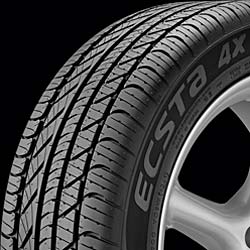
Kumho Ecsta 4X (Ultra High Perf All Season tire)
195/55-15 fits rims 5.5-7" wide, perfect fit for 6" rim, $89 each, 420 treadwear, 18 lbs each, 23.3" tire diameter, 85 load rated, V Speed rated
Good tirerack test results-
http://www.tirerack.com/tires/tests/...y.jsp?ttid=151

Vs Yokohama S.Drive (Ultra High Perf Summer tire)
195/50-15 fits rims 5.5-7" wide, perfect fit for 6" rim, $72 each, 300 treadwear, 19 lbs,
22.7" tire diameter, 82 load rated, V speed rated
Tirerack test result-
http://www.tirerack.com/tires/tests/...y.jsp?ttid=131
Both of these tires are possible and would work. The higher cost of the Kumho is offset by the higher treadwear rating, the Kumho would likely do a little better in the wet and is capable of some cold weather/ light snow that a summer tire would not be happy with. Both are well priced and about as light weight as tires in that size go.
Kumho Ecsta 4X (Ultra High Perf All Season tire)
195/55-15 fits rims 5.5-7" wide, perfect fit for 6" rim, $89 each, 420 treadwear, 18 lbs each, 23.3" tire diameter, 85 load rated, V Speed rated
Good tirerack test results-
http://www.tirerack.com/tires/tests/...y.jsp?ttid=151
Vs Yokohama S.Drive (Ultra High Perf Summer tire)
195/50-15 fits rims 5.5-7" wide, perfect fit for 6" rim, $72 each, 300 treadwear, 19 lbs,
22.7" tire diameter, 82 load rated, V speed rated
Tirerack test result-
http://www.tirerack.com/tires/tests/...y.jsp?ttid=131
Both of these tires are possible and would work. The higher cost of the Kumho is offset by the higher treadwear rating, the Kumho would likely do a little better in the wet and is capable of some cold weather/ light snow that a summer tire would not be happy with. Both are well priced and about as light weight as tires in that size go.

Thread
Thread Starter
Forum
Replies
Last Post
marendt428
MINI Parts for Sale
68
Nov 14, 2015 10:03 AM
thebordella
R56 :: Hatch Talk (2007+)
22
Aug 31, 2015 01:37 PM