


Oil after intercooler!


Thread Starter
|
4th Gear
Joined: Aug 2016
Posts: 490
Likes: 11
From: Durand, Michigan
Oil after intercooler!
Well today I replaced the water pump and friction wheel on my 2011 mcs. During the process I removed the piping or air duct (whatever the technical name is) after the intercooler so I could get access to the motor mount. When I pulled off the 90 degree elbow that connects to the intercooler on the cold side I found oil sitting there. It was enough to cover my finger. I'm sure this is common, but would a catch can fix this? I'm sure it's not good to have oil going through the intercooler.?

Moderator


Joined: May 2012
Posts: 1,782
Likes: 341
From: San Francisco Bay Area
How many miles?
Oil in the intercooler is either coming from the turbo seals or from the valve cover into the turbo inlet. Pull the inlet hose from the turbo and see if there is oil there, if yes it is coming through the valve cover PVC system. Also check to see if there is any play axially (in/out) or radially (side to side, up/down) on the turbo wheel, which could indicate the seals going bad.
Oil in the intercooler is either coming from the turbo seals or from the valve cover into the turbo inlet. Pull the inlet hose from the turbo and see if there is oil there, if yes it is coming through the valve cover PVC system. Also check to see if there is any play axially (in/out) or radially (side to side, up/down) on the turbo wheel, which could indicate the seals going bad.
Thread Starter
|
4th Gear
Joined: Aug 2016
Posts: 490
Likes: 11
From: Durand, Michigan
Alright I'll have to check. I did notice that it was a little wet looking around what I'm assuming is a pvc hose on the valve cover. I don't have a pic but I circled where it looks wet on a pic of one.
Thread Starter
|
4th Gear
Joined: Aug 2016
Posts: 490
Likes: 11
From: Durand, Michigan
Car has 56k miles on it. Well I couldn't wait till morning so I went out ad took a peak at it. I'm thinking it's pvc related. The port on the inlet tube where the pvc line connects to has a good amount of oil lining the inside wall. Even the electrical plug has oil inside of it. I pulled the tube off the turbo and there was oil residue on the inside wall of the tube right before the turbo. I didn't see oil on the aluminum of the turbo, but that could be from the turbo sucking air and just pulling the oil in. Also there was no play in the wheel I put my finger on it and got no movement other than spinning the fins. Also on the inlet tube there is a port that lookes like a hose is supposed to be connected to but there is nothing around that is disconnected. What's it for?


Thread Starter
|
4th Gear
Joined: Aug 2016
Posts: 490
Likes: 11
From: Durand, Michigan
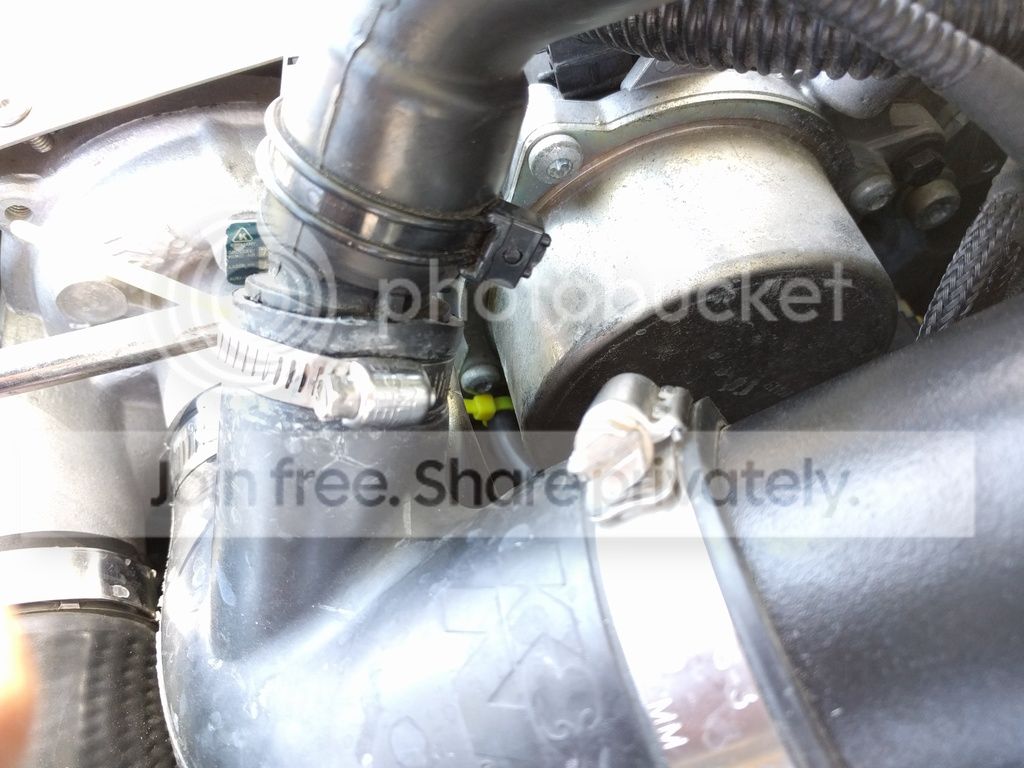
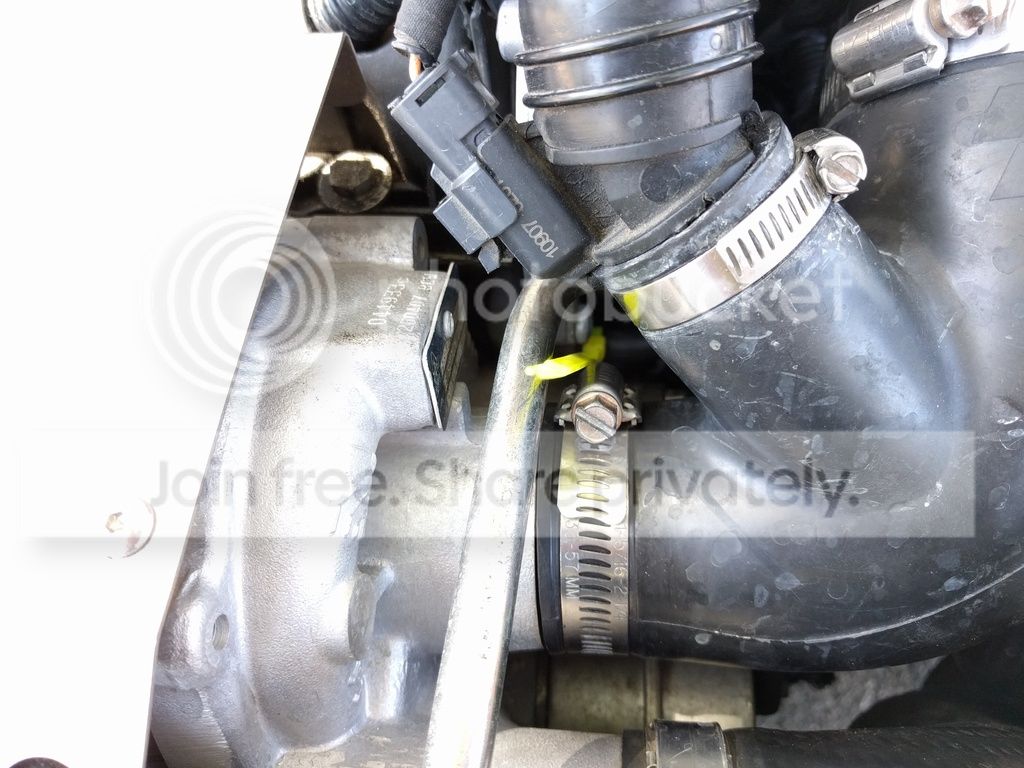
no, in the last pic I posted (with the orange screwdriver) next to my thumb. There is a plug and nipple that lookes like a rubber hose or somthing slips over. But there is nothing disconnected from it around it. I'm not sure what it's for, nore do I remember every seeing it ha.

6th Gear
Joined: May 2008
Posts: 2,007
Likes: 9
From: Houston
I'm currently working on my 2009 JCW and found the same. Two year or so ago I removed my throttle body intake manifold to clean the ports. Did not see this much oil. One of the reasons I started a thread wanting tips on cleaning it. I suspected either the turbo or the vent tube. The intercooler did not have that much oil in it, a little but not a lot. So if it's the coming from the valve cover system is it cleaneable?
https://www.northamericanmotoring.co...-manifold.html
https://www.northamericanmotoring.co...-manifold.html
Trending Topics

6th Gear
Joined: May 2010
Posts: 3,260
Likes: 87
From: Pacific NW
Without an oil catch can, you will see oil at the turbo inlet hose, it is normal.
The purpose of that hose is to provide a path for crankcase vapors to exit the engine when it is under boost. An oil catch can will reduce this, but not eliminate it completely.
The purpose of that hose is to provide a path for crankcase vapors to exit the engine when it is under boost. An oil catch can will reduce this, but not eliminate it completely.
6th Gear
Joined: May 2008
Posts: 2,007
Likes: 9
From: Houston
Might put a catch can on a future addition list then. I'm still puzzled why a few years back I didn't see this much oil.
Thread Starter
|
4th Gear
Joined: Aug 2016
Posts: 490
Likes: 11
From: Durand, Michigan
So I shouldn't have to worry about turbo seals right this second? Since it looks like it's only pvc related?
6th Gear
Joined: May 2010
Posts: 3,260
Likes: 87
From: Pacific NW
Our MINIs turbochargers don't have oil seals, they rely on very close tolerances to prevent oil from getting out of the turbocharger's pedestal bearing.
As Squawskibum suggested; while you have the inlet hose off, give the turbine hub a shake. There should be no play axially or radially.
The amount of oil built up over time, that's why there was less the first time you looked compared to the last time you looked. What is happening is that oil vapor is condensing out of the crankcase gasses at the turbocharger inlet, it will also condense out in the intercooler, that is why you also see oil in your intercooler. Some manufacturers drill a weep hole in their intercoolers to provide a path for the oil to drain out. Others, like Volvo, include an oil catch can in their PCV system from the factory.
As Squawskibum suggested; while you have the inlet hose off, give the turbine hub a shake. There should be no play axially or radially.
The amount of oil built up over time, that's why there was less the first time you looked compared to the last time you looked. What is happening is that oil vapor is condensing out of the crankcase gasses at the turbocharger inlet, it will also condense out in the intercooler, that is why you also see oil in your intercooler. Some manufacturers drill a weep hole in their intercoolers to provide a path for the oil to drain out. Others, like Volvo, include an oil catch can in their PCV system from the factory.

+1 to what Dave said. Normal behavior without an OCC. Personally I recommend moving an OCC towards the top of your list. Oil mist in the intake charge greatly reduces the effective octane of the charge. Which I believe is the most common reason for superknock.
6th Gear
Joined: May 2010
Posts: 3,260
Likes: 87
From: Pacific NW
The passenger side PCV line, that goes to the throttle body, does the bulk of the job venting crankcase gases, the turbocharger side PCV line only operates when the engine is under boost.
If someone blocks off the passenger side PCV hose (to prevent carbon buildup on the exhaust valve) and the valve to the turbocharger is faulty and doesn't open, then there is no way for crankcase gasses to escape and crankcase pressure will force oil out of all the seals on the engine, as well as past the rings. The result is hugely increased oil consumption.
They say that the oil catch can doesn't collect any oil and their oil consumption is way up and think that the oil catch can is causing the problem, because that was the last modification they did, but it isn't, it is a bad headcover.
Thread Starter
|
4th Gear
Joined: Aug 2016
Posts: 490
Likes: 11
From: Durand, Michigan
People often blame high oil consumption on their new oil catch can, when it is really caused by a bad PCV valve in the head cover. Series two MINIs with the N14 engine have two check valves in the head cover. The check valve to the throttle body can be faulty and stay closed all the time, but it will have little effect, if the other one to the turbocharger is operational.
The passenger side PCV line, that goes to the throttle body, does the bulk of the job venting crankcase gases, the turbocharger side PCV line only operates when the engine is under boost.
If someone blocks off the passenger side PCV hose (to prevent carbon buildup on the exhaust valve) and the valve to the turbocharger is faulty and doesn't open, then there is no way for crankcase gasses to escape and crankcase pressure will force oil out of all the seals on the engine, as well as past the rings. The result is hugely increased oil consumption.
They say that the oil catch can doesn't collect any oil and their oil consumption is way up and think that the oil catch can is causing the problem, because that was the last modification they did, but it isn't, it is a bad headcover.
The passenger side PCV line, that goes to the throttle body, does the bulk of the job venting crankcase gases, the turbocharger side PCV line only operates when the engine is under boost.
If someone blocks off the passenger side PCV hose (to prevent carbon buildup on the exhaust valve) and the valve to the turbocharger is faulty and doesn't open, then there is no way for crankcase gasses to escape and crankcase pressure will force oil out of all the seals on the engine, as well as past the rings. The result is hugely increased oil consumption.
They say that the oil catch can doesn't collect any oil and their oil consumption is way up and think that the oil catch can is causing the problem, because that was the last modification they did, but it isn't, it is a bad headcover.
Thread Starter
|
4th Gear
Joined: Aug 2016
Posts: 490
Likes: 11
From: Durand, Michigan
Also yes I know the engine bay is covered with dust, I live in the country surrounded by farms field. I don't have a garage, it's so hard to keep this thing clean. Thought about covering all plugs and computer with a bag and spraying out the engine bay, not sure if that's safe. I hear mixed reviews about Doing that.
6th Gear
Joined: May 2010
Posts: 3,260
Likes: 87
From: Pacific NW
The N18 engine has a different head and head cover, the PCV passages to the intake valves are internal, so a hose is not required on N18 engines. They also have variable valve timing on both the intake and exhaust valves, plus the valve timing is different from the N14 engines to minimize carbon build up on the intake valves so N18 engines don't have carbon build up problems like N14 engines do.
The oil leak around your PCV hose is probably just a leaky "O" ring.
The oil leak around your PCV hose is probably just a leaky "O" ring.