When you click on links to various merchants on this site and make a purchase, this can result in this site earning a commission. Affiliate programs and affiliations include, but are not limited to, the eBay Partner Network.
My 2008 Justa's engine lost cylinder #4 at 119,000 miles. After weighing the pros and cons, I have decided to buy a rebuilt motor and replace it (in my own garage). I have found a motor and begun to gather up a list of gaskets, seals, and hardware I'll need for this procedure.
Has anyone out there done a like-for-like swap? Any tips or pointers? Any special tools or tricks I might benefit from?
I plan to document the process (with frustrations and inquiries along the way) on here. Wish me luck, and I hope to hear from any of you that have some experience to shine in my direction.
Quig HERE did a swap, a bit more complex than yours, but he just finished it recently. I'd suggest you shoot him a PM as he may have some great input for you.
Never had anything shipped by freight before. Very nicely packed.
Quite a bit lighter than I expected. Only about 150 lbs.
The new engine looks clean. The next step is to remove the front of the car. I also bit the bullet and bought the Bentley shop manual. Wow! What a resource! I am grateful to those who highly suggested it.
Looks super clean! Almost like you don't want to install it and just keep it as a table stand. The Bentley Manual will help you a lot during this process. You can also check out our articles on our site if you need another resource for anything. Good luck and be sure to update us with your progress.
Any idea what failed on the original motor? Any plans for a teardown to find out?
I was having idling trouble, lags at takeoff, and other weird things happening. I took it to Best Motor Werks in Columbus, Ohio for diagnostics with the assumption that a new timing set was in order. He scoped the engine and determined that something came loose in cyl 4 and did a good bit of damage to that cylinder and piston. I'm pretty sure it was the electrode of the spark plug.
I do plan to tear down the old block and see for myself what went wrong. I will include pics of that on here, too.
I began tearing down the front of the car for engine removal. If you take your time, this isn't a terrible endeavor.
Grille and fender liners/arches removed.
Headlights and bumper removed.
A/C condenser lowered (not disconnected!), radiator support removed.
Exhaust heat shields removed.
After disconnecting all other hoses and wire connectors, engine/transmission prepared for removal. Note: I didn't remove the fuel injector line -- I just pulled the whole rail out of the intake. Even though I took precautions to discharge the system, I still ended up with a puff of pressurized fuel all over my hands.
It's FREE!
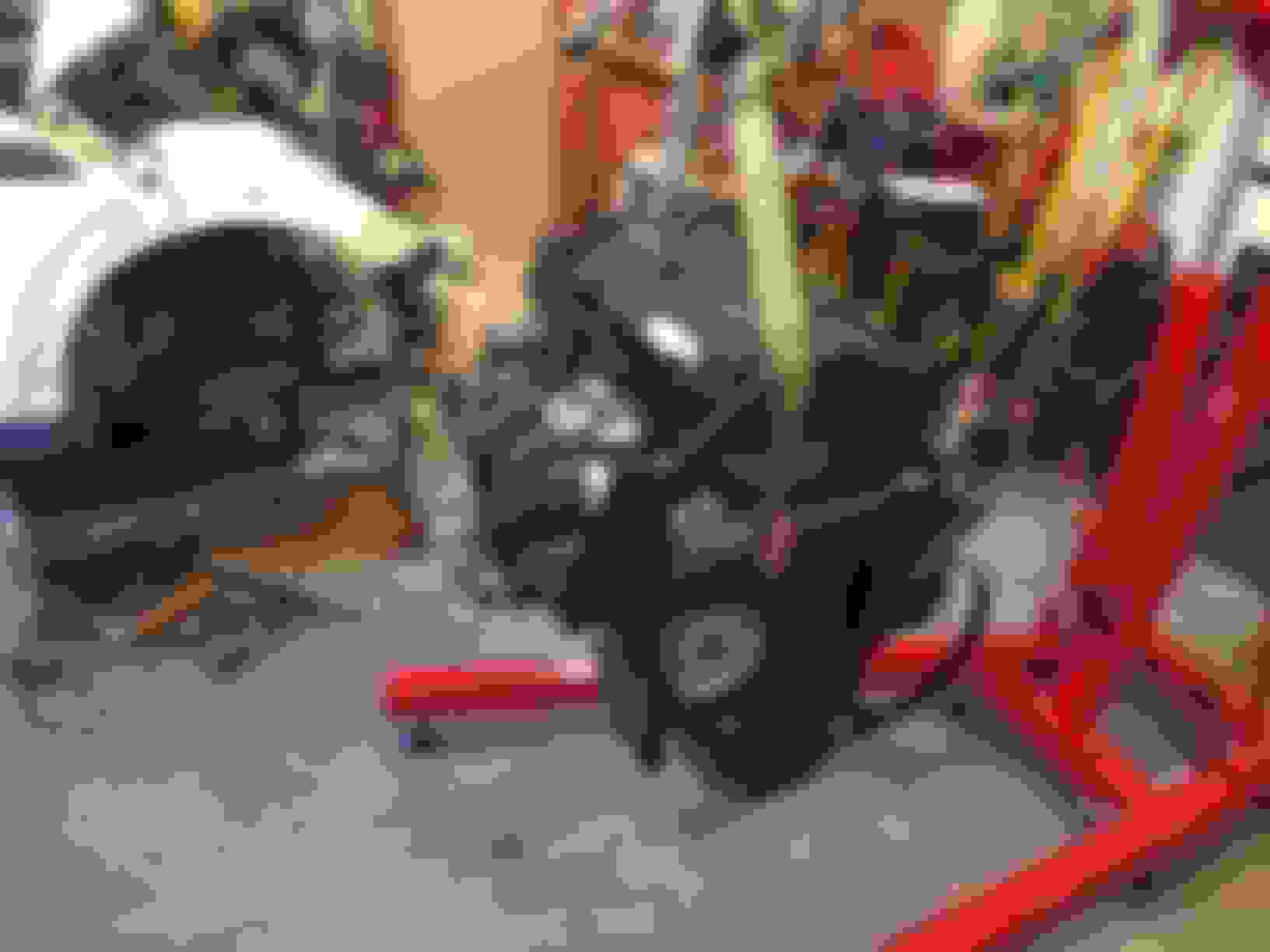
View of the other side, including transmission.
Poor fella looks empty.
Next is changing over all the engine components from the old engine to the rebuilt one. I have also ordered a new clutch kit. The old one didn't look too bad when I separated the transmission, but it seems silly not to replace it while I have the whole thing out -- I don't really want to pull the engine again anytime soon.
Does anyone have any pointers on removing/installing the Valvetronic unit? I hear it can be tricky...
Valvetronic unit was a cinch to remove and install. I just used an Allen key to reverse the worm drive when pulling it from the old head, and spun it clockwise to pull it into the new one. Hopefully no trouble at all. From what I've read, the vehicle's computer should automatically "home" the servo when I power it back up.
New clutch kit installed and transmission reattached to the block.
In fact, everything is complete except the water pipe connecting the pump to the thermostat housing. When pulling the original one from the mounting ear on the old block, it broke off the pipe's mounting flange. Rather than risk a coolant system leak, I ordered a new pipe ($80!!). It has not arrived yet, so once it does I can install it and drop the new motor in the car. I could probably drop in the motor now, but that pipe is situated beneath the intake on the firewall side of the engine; I think it would be a tough thing to install with the engine in the car. Much easier with the engine out of the car, hanging on a stand. I'll just have to be patient.
nice work..i replaced/swapped engines quite a lot. some parts will DO fail once you take them like that water pipe and in the case of turbo engine, the feed line is a mess. After all, it is not a bad job.
You are making GREAT progress !!!... slow and steady wins this race ... keep the Bentley close at hand and you will be fine ...also an extra set of hands will be of great help when you are ready to put the motor back in its hole on the mounts
Water pipe arrived (finally!) and installed. I am glad I waited for it before re-mounting the engine.
The engine went back in, with an extra set of helping hands, without much trouble. I didn't really take any photos of that process, but it is essentially the same as removal, just in reverse.
After bolting the engine assembly back in place, it was hard to contain my excitement. I wanted to pull an all-nighter to get all the hoses and connections hooked up, but in the end, reason won out and I got some good sleep and approached it rested and with a clear head.
I spent most of yesterday getting all the hoses and connections reattached. Before long, it was time to replace the coolant, gearbox oil, and motor oil. I reconnected the battery and hit "Start."
It took maybe 3 or 4 pushes of the button before it took off. At first, the idle was pretty rough, but it got smoother. I let it run for a little while before declaring that a successful day.
Today, I finished whatever front end body reassembly I had remaining, and took it for its maiden voyage. Again, it didn't really want to idle on its own. If I kept the revs around 1200, it was fine. But if I let off, it would stall. I took it for a spin around the block. It stalled out at every stop sign unless I kept it revved. When I pulled back into the driveway, it started idling quite smoothly right at 750 RPM! I took it for a short drive and it was really quite well behaved. If it sits for more than a minute or two, it doesn't want to idle when started. But once you get it going, it seems ok.
I am throwing a variety of CEL codes: Intake Cam Over Retard and misfires on all four cylinders. I'd love to hear suggestions on how to solve those issues. Any help is much appreciated.
All in all, I was quite happy with the process. Like those of you who chimed in with words of encouragement, it just took patience, lots of money, and a little bit more patience. The major takeaways and suggestions I would tell someone who is considering doing an at-home swap are:
1. Buy the Bentley manual. Expensive, yes, but a necessity.
2. Label all your hoses and electrical connectors when you disconnect them. All of them. Even if you think you'll remember where they go.
3. Put bolts back in the holes they came out, and/or in baggies with labels.
4. Make a list of items in the order you disassembled them. When it comes time to put things back together, just follow your list from bottom to top. That way you won't forget or miss anything.
I have learned a LOT during this process. I could probably do another one in about half the time. Now that the manual labor part is done, I just need to get it tuned up and running smoothly without any CEL warnings.
So good to see it out of the garage! I took this opportunity to remove the roof rack (I never used it anyway) and spruce up a few things such as a stubby antenna and missing/broken trim pieces, etc.
Last edited by yeahdog31; Apr 3, 2016 at 06:26 PM.
Water pipe arrived (finally!) and installed. I am glad I waited for it before re-mounting the engine.
The engine went back in, with an extra set of helping hands, without much trouble. I didn't really take any photos of that process, but it is essentially the same as removal, just in reverse.
After bolting the engine assembly back in place, it was hard to contain my excitement. I wanted to pull an all-nighter to get all the hoses and connections hooked up, but in the end, reason won out and I got some good sleep and approached it rested and with a clear head.
I spent most of yesterday getting all the hoses and connections reattached. Before long, it was time to replace the coolant, gearbox oil, and motor oil. I reconnected the battery and hit "Start."
It took maybe 3 or 4 pushes of the button before it took off. At first, the idle was pretty rough, but it got smoother. I let it run for a little while before declaring that a successful day.
Today, I finished whatever front end body reassembly I had remaining, and took it for its maiden voyage. Again, it didn't really want to idle on its own. If I kept the revs around 1200, it was fine. But if I let off, it would stall. I took it for a spin around the block. It stalled out at every stop sign unless I kept it revved. When I pulled back into the driveway, it started idling quite smoothly right at 750 RPM! I took it for a short drive and it was really quite well behaved. If it sits for more than a minute or two, it doesn't want to idle when started. But once you get it going, it seems ok.
I am throwing a variety of CEL codes: Intake Cam Over Retard and misfires on all four cylinders. I'd love to hear suggestions on how to solve those issues. Any help is much appreciated.
All in all, I was quite happy with the process. Like those of you who chimed in with words of encouragement, it just took patience, lots of money, and a little bit more patience. The major takeaways and suggestions I would tell someone who is considering doing an at-home swap are:
1. Buy the Bentley manual. Expensive, yes, but a necessity.
2. Label all your hoses and electrical connectors when you disconnect them. All of them. Even if you think you'll remember where they go.
3. Put bolts back in the holes they came out, and/or in baggies with labels.
4. Make a list of items in the order you disassembled them. When it comes time to put things back together, just follow your list from bottom to top. That way you won't forget or miss anything.
I have learned a LOT during this process. I could probably do another one in about half the time. Now that the manual labor part is done, I just need to get it tuned up and running smoothly without any CEL warnings.
So good to see it out of the garage! I took this opportunity to remove the roof rack (I never used it anyway) and spruce up a few things such as a stubby antenna and missing/broken trim pieces, etc.
Good to know that you did it. Good job
1- I think it would be good to log/provide us with the codes you are getting.
2- How sure are you with the timing, how did you set the timing?
3- did you replace the spark plugs?
4- did you make sure that your oil is clean and nothing is getting into the vanos (responsible for advancing or retarding the timing of the engine)
I'd be curious about the timing as well, as stated above. Is the cam code P0012? For the misfires, I'd probably start with the plugs, especially if they came with the new motor.
I didn't personally check to see that the timing was spot on, but I relied on the shop that built the motor. It came to me "in time."
I believe I had two issues.
1. Vacuum leak at the throttle body - This was causing the rough idle until it got warm.
2. Plugged/clogged VANOS solenoids - not allowing the VVT to do its job and giving me the misfires and P0012 cam code.
I removed, cleaned, and reseated the TB. Then I pulled both solenoids. Each one had a small amount of metal on the screens. I cleaned that off and blew them out with compressed air. Then I swapped their positions. This was to determine whether I had a faulty solenoid. If the code went from "intake" side to "exhaust" side, I knew it would have been a bad unit.
However...
It fired right up, no misfires, great idle, and no CEL! I gave it a nice spin around town and out on the freeway, and I don't think it has ever run so well since I've owned it.
Again, thank you all so much for your assistance and advice along the way. NAM is a great community very willing to share experience and expertise. I most definitely couldn't have attempted this project without your help.
I will be posting more questions in some other areas of the forum to iron out a few other nagging issues I have.
2010 Base N12
Bought a remanufactured engine and like you, I relied on the shop to rebuild correctly including timing. Got P0015 code, replace all other possible components (vanos solenoids, etc.) and kept getting code. Then I checked timing (lock flywheel, cam codes not pointing up) and it was off... readjusted cams, locked in place, tightened cam sprockets with new bolts, cleared codes, reset vanos adaptation and she fired up normally. Very disappointed in the shop that remanufactured the engine. The good news is I essentially have a new car (engine and parts-wise). aloha
I think I spoke too soon...
After properly setting the timing (lock flywheel, loosen cams and turn then stamp codes pointing up, then lock cams and replace/tighten sprocket bolts), the car sounded good - seemed to be running/idling normal, no engine warning lights, no codes showing. This morning, started up car (was going to do the new engine break-in) and noticed engine icon warning light. got code reader out and now shows P0015. Have re-cleared Vanos adaptations, codes, learnings, etc. restarted car and now the engine sounds off (not smooth, sometimes hesitating, a few times almost stalling. This is obviously frustrating. What else could it be?? Have brand new Vanos solenoids too. THOUGHTS APPRECIATED
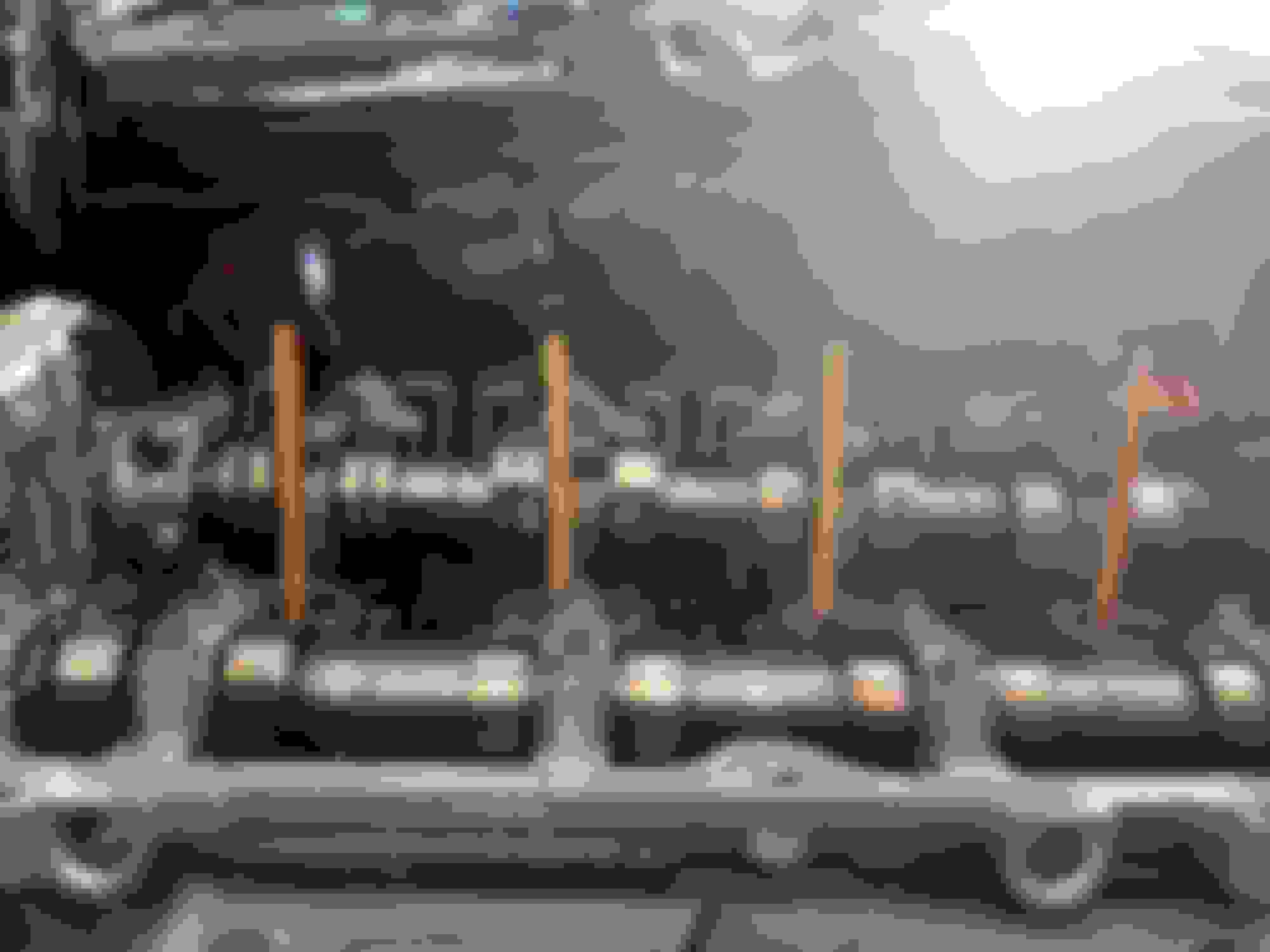
(edit) adding pics to show flywheel hole that was locked, intake/exhaust cams locked with code labels pointed upward, and chopsticks in spark plug holes showing all level, though I believe these are at the "bottom" of the piston range (not the top)... could this be the problem??
Last edited by Keahiloa; Aug 15, 2023 at 09:02 AM.
Reason: adding pictures










 The Bentley Manual will help you a lot during this process. You can also check out our articles on our site if you need another resource for anything. Good luck and be sure to update us with your progress.










 )
)