


Drivetrain $16 Catch Can


Just as a Postscript, I'm now using a replacement separator filter, unmodified, with the flow through it as designed. After all, it is designed to do exactly what I'm asking of it - separate the oil from the air.
The volume I get is quite small, even after a hard day in the twisties. I use the built-in drain valve, to remove a half-ounce every 2-3 months.
I have the feeling from others' posts that the earlier cars may have had much more blow-by than my `05.
The volume I get is quite small, even after a hard day in the twisties. I use the built-in drain valve, to remove a half-ounce every 2-3 months.
I have the feeling from others' posts that the earlier cars may have had much more blow-by than my `05.

So this mod is just a smaller, less expensive way to have a oil catch can like the m7 and Alta ones? Would this also work if two if the catch can/bowl's were used? Have the intake go to the first catch, then into the 2nd catch can and then back out?

Shadetree Modder
iTrader: (1)
Joined: Feb 2006
Posts: 145
Likes: 0
From: Kittery, ME (The Bitter Cold New England)
Yes!, and No...
The short answer is, yes, this is a cheaper mod than M7 or ALTA. But no, it's not, because most (I won't say ALL, here) install theirs right in line between the PCV and SC. Those of us who do it that way tend to get less oil, but seem to have better overall usage. Others install it like M7 or ALTA, where they cap off the SC inlet and run it through to the TB.
Without going into a Flailex about Vacuum vs Pressurized Crankcases in Internal Combustion Engines (also known as ICE), the basic idea is that the Engines we currently make do better if the Crankcase is maintained in Vacuum. You'll see that with Marine Diesels, especially older ones which use a Upper Crank mounted Scavenging Air Blower (or SuperCharger! ) use a line/pipe running from the upper crank to the SC inlet. Similar setup with newer Marine Turbo-Diesels. These, usually, also have an inline OCC.
My concern has always been that the OCCs currently on the market create a false 'Happy Customer' and could cause issues down the road. By taking a suction prior to the TB vs After the TB/before the SC you allow yourself a weaker suction path. Coupled with the TB/BPV as designed (TB will nearly fully close whereas the BPV (unless you have the DT BPV or equal) never really fully shuts) creates the possibility of a Loss of Vacuum situation. In that case, oil vapor will always go out the top as the PCV does it's job (it's supposed to provide POSITIVE CRANKCASE VENT to maintain a VACUUM in the ICE). This vapor coalesces in the OCC, and Viola, Happy Customer.
For what it's worth, another mechanic tried to install the current Silicone made OCCs inline as the OEM setup, and it collapsed upon startup.
For the second part, well, depending on your setup, it won't hurt, but it won't help, either. Plus, you run into the issue of too much inline stopping /clogging the natural flow of things. You want to catch the oil to prevent the oil coating the IC, yes, but creating an obstruction in the flow path can lead to problems, too.
Without going into a Flailex about Vacuum vs Pressurized Crankcases in Internal Combustion Engines (also known as ICE), the basic idea is that the Engines we currently make do better if the Crankcase is maintained in Vacuum. You'll see that with Marine Diesels, especially older ones which use a Upper Crank mounted Scavenging Air Blower (or SuperCharger!
) use a line/pipe running from the upper crank to the SC inlet. Similar setup with newer Marine Turbo-Diesels. These, usually, also have an inline OCC.My concern has always been that the OCCs currently on the market create a false 'Happy Customer' and could cause issues down the road. By taking a suction prior to the TB vs After the TB/before the SC you allow yourself a weaker suction path. Coupled with the TB/BPV as designed (TB will nearly fully close whereas the BPV (unless you have the DT BPV or equal) never really fully shuts) creates the possibility of a Loss of Vacuum situation. In that case, oil vapor will always go out the top as the PCV does it's job (it's supposed to provide POSITIVE CRANKCASE VENT to maintain a VACUUM in the ICE). This vapor coalesces in the OCC, and Viola, Happy Customer.
For what it's worth, another mechanic tried to install the current Silicone made OCCs inline as the OEM setup, and it collapsed upon startup.
For the second part, well, depending on your setup, it won't hurt, but it won't help, either. Plus, you run into the issue of too much inline stopping /clogging the natural flow of things. You want to catch the oil to prevent the oil coating the IC, yes, but creating an obstruction in the flow path can lead to problems, too.
Last edited by QandElf; Mar 24, 2008 at 02:53 AM.
After reading up on all the options, I hooked this one up to the PCV circuit and plan to install a second one on the valve cover breather circuit. I think running two “cans” is the way to go after reviewing all the discussions. Just posting photos to help others looking into this topic. 


Just as a Postscript, I'm now using a replacement separator filter, unmodified, with the flow through it as designed. After all, it is designed to do exactly what I'm asking of it - separate the oil from the air.
The volume I get is quite small, even after a hard day in the twisties. I use the built-in drain valve, to remove a half-ounce every 2-3 months.
I have the feeling from others' posts that the earlier cars may have had much more blow-by than my `05.
The volume I get is quite small, even after a hard day in the twisties. I use the built-in drain valve, to remove a half-ounce every 2-3 months.
I have the feeling from others' posts that the earlier cars may have had much more blow-by than my `05.
Jay

4th Gear
Joined: Dec 2002
Posts: 551
Likes: 1
From: Santa Ana, CA
There is another thread which discusses routing of OCC's and cheap ones, here:
https://www.northamericanmotoring.co...ighlight=depot
My cheap HD-OCC (Home Depot oil catch can) is post 141 and in my gallery
https://www.northamericanmotoring.co...ighlight=depot
My cheap HD-OCC (Home Depot oil catch can) is post 141 and in my gallery

Rick-
I have the same setup using the Campbell-Hausfield filter. I didn't cut the filter or run the lines backwards though.
BTW-you can pick this filter up at Wal-Mart for $11.00 minus the fittings.

After installing it I drove to Portland (300 miles) to have a 15% pulley installed at mini-madness.
We noticed that the OCC had about an ounce of oil in it so I decided I would dump it when I got back home.
So 300 miles later, approx 600 miles round trip, I went to dump the can and it still had the same amount of oil vapors in it (I expected twice as much).

I went to S. Cal for a week following that and drove about 2000 miles at freeway speeds and never dumped the can.
I went to dump it when I returned home and the level was the same as the PDX trip.
I have a feeling the excess is being sucked back up into the outlet tube. I can't believe after 2000 miles it only accumalates the same amount as 300 miles.
What do you think? What's happening to the excess if any?
George at Min-Madness did suggest that the size of the bowl was insufficient and that the occ would fill up pretty quick.
I have the same setup using the Campbell-Hausfield filter. I didn't cut the filter or run the lines backwards though.
BTW-you can pick this filter up at Wal-Mart for $11.00 minus the fittings.
After installing it I drove to Portland (300 miles) to have a 15% pulley installed at mini-madness.
We noticed that the OCC had about an ounce of oil in it so I decided I would dump it when I got back home.
So 300 miles later, approx 600 miles round trip, I went to dump the can and it still had the same amount of oil vapors in it (I expected twice as much).
I went to S. Cal for a week following that and drove about 2000 miles at freeway speeds and never dumped the can.
I went to dump it when I returned home and the level was the same as the PDX trip.
I have a feeling the excess is being sucked back up into the outlet tube. I can't believe after 2000 miles it only accumalates the same amount as 300 miles.
What do you think? What's happening to the excess if any?
George at Min-Madness did suggest that the size of the bowl was insufficient and that the occ would fill up pretty quick.
Has or can anybody else try looking at the catch can while the motor is running to see how much pressure it creates ? I think I will install one on the valve and intake boot line since I know that has much less pressure and stick with a bigger catch can on the intercooler line.
Last edited by user 7082082; May 28, 2008 at 01:40 AM.

While this puppy does the job, its small size limits its capabilities. Clearly you need to monitor and empty more often. A larger can in theory should trap a bit more and require less monitoring and less frequent cleaning. Adding filtration material be it steel wool or other increases the performance of any can.


4th Gear
Joined: Jul 2009
Posts: 385
Likes: 4
After reading up on all the options, I hooked this one up to the PCV circuit and plan to install a second one on the valve cover breather circuit. I think running two “cans” is the way to go after reviewing all the discussions. Just posting photos to help others looking into this topic.
Thanks!


Since the OP's original source link is dead I'll chime in. The parts can be found at your local Home Depot,Lowes. Head on over to the power tool supply section and look for air compressor moisture filters. They come in a few sizes and are easy to fab up as an OCC. I had one on my R53 and it prevented alot of oil from passing through. Here's a good writeup on the process:
http://www.pbase.com/rsrock/oil_catch_can
http://www.pbase.com/rsrock/oil_catch_can
4th Gear
Joined: Jul 2009
Posts: 385
Likes: 4
Thanks
These seem to be fairly small and like many others have posted before, it requires a good amount of monitoring and emptying. Have you found any larger HD OCC filters of this type? Also, if steel wool were placed in the catch can, what is preventing the wool from separating and getting sucked into the engine? What does ALTA and M7 use as a filter in their catch cans?
These seem to be fairly small and like many others have posted before, it requires a good amount of monitoring and emptying. Have you found any larger HD OCC filters of this type? Also, if steel wool were placed in the catch can, what is preventing the wool from separating and getting sucked into the engine? What does ALTA and M7 use as a filter in their catch cans?
4th Gear
Joined: Jul 2009
Posts: 385
Likes: 4
No problem....go to the tools (drills, circ. saws, etc) area in HD. There you will find air compressors. They are near the Air compressors. Just ask.
Yeah, apparently they only sell the ones that start to drip after they contain water. I found a bigger one at Lowe's that has a complete metal casing, I took the drip out and added a stop valve so I can just turn it to empty it! I will post pics once I install it!
EDIT:
3/8" Kobalt Air Filter - Part #221014
Two 3/8" Barb x 3/8" FIP Hose Barb Adapter - Part #A-298
Two 3/8" x 3/8" Flare To Male Pipe Elbow - Part #A-186
1/8" Brass Cap (Had to go to Ace Hardware)
About 3 ft of 3/8" tubing (Autoparts store)
Or Lowe's sell's 3/4" OD red tubing with a inside layer of 3/8" ID
3" clamp
Scrap Metal
Made a bracket myself and just used a bolt to go through the plastic wall. Clamped it and that was that! Ran the lines, put hose clamps on all of them, and it works great! It's also right above my oil filter, that way I always remember to empty it when I do an oil change!
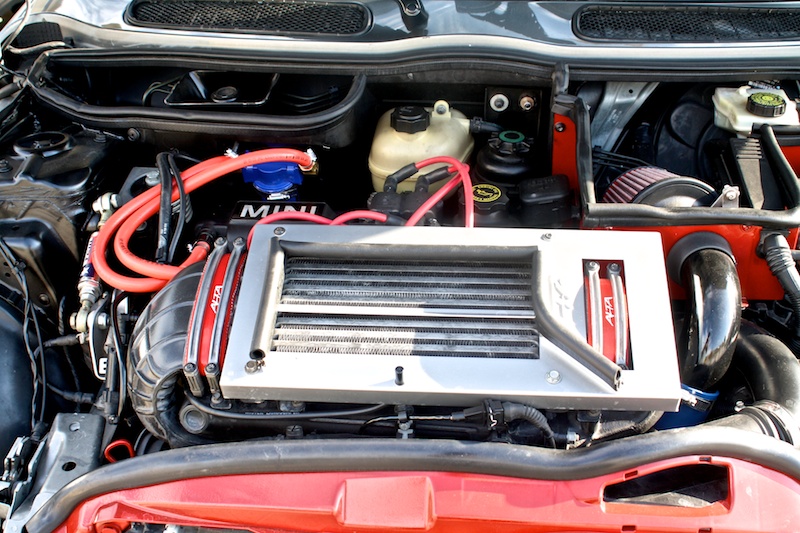
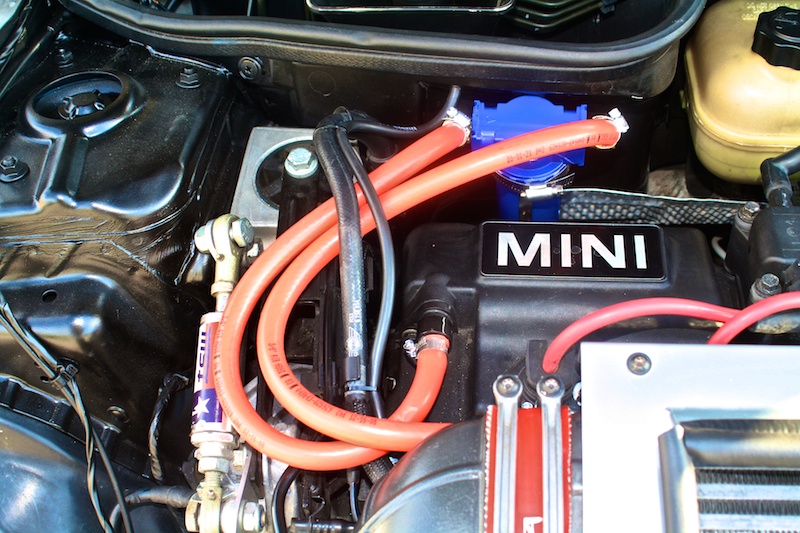
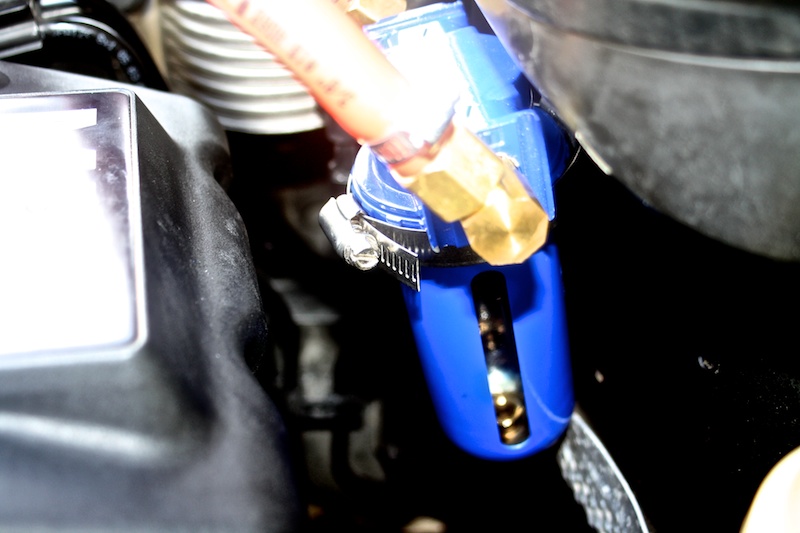
3/8" Kobalt Air Filter - Part #221014
Two 3/8" Barb x 3/8" FIP Hose Barb Adapter - Part #A-298
Two 3/8" x 3/8" Flare To Male Pipe Elbow - Part #A-186
1/8" Brass Cap (Had to go to Ace Hardware)
About 3 ft of 3/8" tubing (Autoparts store)
Or Lowe's sell's 3/4" OD red tubing with a inside layer of 3/8" ID
3" clamp
Scrap Metal
Made a bracket myself and just used a bolt to go through the plastic wall. Clamped it and that was that! Ran the lines, put hose clamps on all of them, and it works great! It's also right above my oil filter, that way I always remember to empty it when I do an oil change!
Last edited by GumbyLara; May 25, 2010 at 05:08 PM.


I have no idea, bought the car used and it came on it??! I will take a closer picture and find out! I have an 03' maybe my model came with that?
