


Drivetrain Stock CAI vs aftermarket CAI's - request for data


1st Gear
Joined: Aug 2009
Posts: 43
Likes: 0
That video is crap!! That guy driving the matte black mini doesn't know how to drive and they are both lying!! :P
I saw the thread then the youtube link and I was like ....hmm a wonder if this is the video I did back in the day.
Yeah the dynolicious is legit for sure.
Here's a clean link for those that can't handle the mess above.
http://www.youtube.com/watch?v=0-DFbJQbeSY
-Gene
I saw the thread then the youtube link and I was like ....hmm a wonder if this is the video I did back in the day.
Yeah the dynolicious is legit for sure.
Here's a clean link for those that can't handle the mess above.
http://www.youtube.com/watch?v=0-DFbJQbeSY
-Gene


Here you go for your intake question about data. I will give it to you in a nutshell because one I am just not willing to look this stuff up and really this is not as big of a deal that it has become. Alright brace yourself here we go.
A true CAI which many companies state that they make is only a CAI if it receaves cooler air then before. So basically it needs to be outside of the engine bay. Being that the MINI does not have a lot of room for this to be accomplished a lot of companies have stuck with the short air intake design and there is soem ram air intakes. When you sit hear and ask that companies give you numbers over their intakes what are you expecting to see? Are you expecting numbers that are ridiculously high? I am sorry to tell you no matter what these companies claim you might be lucky if you see 1-10hp gain(and this can be extremely optimistic in some cases). Is it worth getting all bent out of shape over it? Heck no, enjoy modding your car. You don't have to have the best all the time. If you get a product unless it blows your car up or breaks then be happy with it. You are acting like an intake is going to make or break you or that if it is a few degrees warmer you are going to run an 11 sec 1/4 instead of a sub 10. Man I just can't believe this went on for 3 pages. Ahhh crap now I am all mad about it. Check I'm out!
A true CAI which many companies state that they make is only a CAI if it receaves cooler air then before. So basically it needs to be outside of the engine bay. Being that the MINI does not have a lot of room for this to be accomplished a lot of companies have stuck with the short air intake design and there is soem ram air intakes. When you sit hear and ask that companies give you numbers over their intakes what are you expecting to see? Are you expecting numbers that are ridiculously high? I am sorry to tell you no matter what these companies claim you might be lucky if you see 1-10hp gain(and this can be extremely optimistic in some cases). Is it worth getting all bent out of shape over it? Heck no, enjoy modding your car. You don't have to have the best all the time. If you get a product unless it blows your car up or breaks then be happy with it. You are acting like an intake is going to make or break you or that if it is a few degrees warmer you are going to run an 11 sec 1/4 instead of a sub 10. Man I just can't believe this went on for 3 pages. Ahhh crap now I am all mad about it. Check I'm out!
Last edited by Porthos; May 26, 2010 at 08:38 AM.

1st Gear
Joined: Oct 2008
Posts: 20
Likes: 0
From: Palm Beach County, FL
If the open intakes i.e. Alta, K&N, etc. are admittedly drawing in hotter air than the factory intake (stock or JCW) but still claiming a HP increase, then is the increase in airflow the open intakes supposedly provide more than making up for the increased intake air temperature they have over the stock intakes? 
What's the correlation between horsepower and IAT? I've read widely varying information.
So far, based on my read of this thread, the many other related threads, and the limited data we have it seems many forum members are saying that the JCW intake and the DOS are the best intakes.
What's the correlation between horsepower and IAT? I've read widely varying information.
So far, based on my read of this thread, the many other related threads, and the limited data we have it seems many forum members are saying that the JCW intake and the DOS are the best intakes.

4th Gear
Joined: Aug 2007
Posts: 376
Likes: 1
From: Miami, FL
Here you go for your intake question about data. I will give it to you in a nutshell because one I am just not willing to look this stuff up and really this is not as big of a deal that it has become. Alright brace yourself here we go.
A true CAI which many companies state that they make is only a CAI if it receaves cooler air then before. So basically it needs to be outside of the engine bay. Being that the MINI does not have a lot of room for this to be accomplished a lot of companies have stuck with the short air intake design and there is soem ram air intakes. When you sit hear and ask that companies give you numbers over their intakes what are you expecting to see? Are you expecting numbers that are ridiculously high? I am sorry to tell you no matter what these companies claim you might be lucky if you see 1-10hp gain(and this can be extremely optimistic in some cases). Is it worth getting all bent out of shape over it? Heck no, enjoy modding your car. You don't have to have the best all the time. If you get a product unless it blows your car up or breaks then be happy with it. You are acting like an intake is going to make or break you or that if it is a few degrees warmer you are going to run an 11 sec 1/4 instead of a sub 10. Man I just can't believe this went on for 3 pages. Ahhh crap now I am all mad about it. Check I'm out!
A true CAI which many companies state that they make is only a CAI if it receaves cooler air then before. So basically it needs to be outside of the engine bay. Being that the MINI does not have a lot of room for this to be accomplished a lot of companies have stuck with the short air intake design and there is soem ram air intakes. When you sit hear and ask that companies give you numbers over their intakes what are you expecting to see? Are you expecting numbers that are ridiculously high? I am sorry to tell you no matter what these companies claim you might be lucky if you see 1-10hp gain(and this can be extremely optimistic in some cases). Is it worth getting all bent out of shape over it? Heck no, enjoy modding your car. You don't have to have the best all the time. If you get a product unless it blows your car up or breaks then be happy with it. You are acting like an intake is going to make or break you or that if it is a few degrees warmer you are going to run an 11 sec 1/4 instead of a sub 10. Man I just can't believe this went on for 3 pages. Ahhh crap now I am all mad about it. Check I'm out!
I have my before/after dyno with my intake and notice my gains on the dyno, barely noticeable on road. I think this whole intake thing is blown out of proportion, its all about preference IMO. 1-2 hp difference isnt something worth this much commotion.
Last edited by richi0207; May 27, 2010 at 03:26 PM.

2nd Gear
Joined: Apr 2010
Posts: 63
Likes: 0
Here are my 2 cents and I may be way off here but here goes.
WRT to intake temps by the time the air passes through the whole forced induction process i would imagine most of the variant temperatures between intakes stock or aftermarket would be normalized. 4 degrees warmer or cooler before the turbo more than likely doesn't not equal much of a delta after it. I would than assume the main gains come from the less restrictive airflow of a new filter and ducting which all aftermarket intakes provide.
The only benefit of the stock box that I can see is its sealed nature. Being sealed would decrease the air pressure inside the airbox and as a result would suck more air in an attempt to equalize the internal and external pressures.
Combining my above inferences the best solution would be to drop in a new high flow filter into the existing air box and run a smooth air duct from the air box to the turbo. You could also ad an additional inlet to the air box by drilling a small 1" hole on the back of it if you wanted to draw even more air in.
WRT to intake temps by the time the air passes through the whole forced induction process i would imagine most of the variant temperatures between intakes stock or aftermarket would be normalized. 4 degrees warmer or cooler before the turbo more than likely doesn't not equal much of a delta after it. I would than assume the main gains come from the less restrictive airflow of a new filter and ducting which all aftermarket intakes provide.
The only benefit of the stock box that I can see is its sealed nature. Being sealed would decrease the air pressure inside the airbox and as a result would suck more air in an attempt to equalize the internal and external pressures.
Combining my above inferences the best solution would be to drop in a new high flow filter into the existing air box and run a smooth air duct from the air box to the turbo. You could also ad an additional inlet to the air box by drilling a small 1" hole on the back of it if you wanted to draw even more air in.

Just to add to the conversation, it is not always good to make it to free flowing. it can lower your torque greatly although it may raise your hp. (I am asking not telling)
Last edited by chakraj; May 27, 2010 at 04:54 PM. Reason: clarrified that I was asking not telling :)

2nd Gear
Joined: Feb 2010
Posts: 115
Likes: 0
From: Takoma Park, MD
Yeah, I'm pretty sure that's completely wrong.
...but I'm not an engineer.
...but no race car engineerI've ever known has ever put more restrictive tubing anywhere.
yes I was thinking of the intake and yes a turbo, and yes I may be completely wrong.
It was more of a question than a statement. I love all of these in depth answers we have been getting in the last few days.
It was more of a question than a statement. I love all of these in depth answers we have been getting in the last few days.
2nd Gear
Joined: Feb 2010
Posts: 115
Likes: 0
From: Takoma Park, MD
...except you wrote it as a statement, left off a question mark, and went back and edited the post to add the parenthetical disclaimer.
What other statements have you made on the subject were meant as questions?
Honestly, your limited credibility with me just nose dived.
What other statements have you made on the subject were meant as questions?
Honestly, your limited credibility with me just nose dived.
Just that one,  I thought it best to go back and correct so that it was more clear. I am sorry if it offended you.
I didnt know I had any cred built up with you, wow. I have cred with someone I have never met or talked to. Hmmm, this is a forum, if I where you I would take everything with a grain of salt, thats what I do.
and when I make a statement I am only giving my best interpritation of the event that I was either involved in or witnessed or was interpreted to me. The only way for you to be sure of anything is to actually do it or be there yourself. and even if you do witness something it is only your view that you are giving. Truth is a very hard thing to see, or prove or know....
To be fair it was more of a hypothesis on my part due to personal trial and error with many intakes. The first one I purchased was an open filter (a good company, I see no need to knock them) and there was a markable loss in low end torque. So I guess I was giving my experience, and asking if it was backed up by anyone who could quantify what I was experiencing. To be fair to you, I did not make it clear, and even worst in a thread asking specifically for data. I hope this has cleared it up. and I am still hoping to find out if that is a valid hypothesis.
I thought it best to go back and correct so that it was more clear. I am sorry if it offended you.I didnt know I had any cred built up with you, wow. I have cred with someone I have never met or talked to. Hmmm, this is a forum, if I where you I would take everything with a grain of salt, thats what I do.
and when I make a statement I am only giving my best interpritation of the event that I was either involved in or witnessed or was interpreted to me. The only way for you to be sure of anything is to actually do it or be there yourself. and even if you do witness something it is only your view that you are giving. Truth is a very hard thing to see, or prove or know....
To be fair it was more of a hypothesis on my part due to personal trial and error with many intakes. The first one I purchased was an open filter (a good company, I see no need to knock them) and there was a markable loss in low end torque. So I guess I was giving my experience, and asking if it was backed up by anyone who could quantify what I was experiencing. To be fair to you, I did not make it clear, and even worst in a thread asking specifically for data. I hope this has cleared it up. and I am still hoping to find out if that is a valid hypothesis.
Last edited by chakraj; May 27, 2010 at 05:15 PM. Reason: wow, I have cred :)

5th Gear
Joined: Jun 2009
Posts: 663
Likes: 12
From: Maryland
Actually, "restriction" is a small part. Velocity, disturbance, temps, are all important. Probably not as much on a turbo as normally aspirated. The inlet system is part of an acoustic problem, not just simple fluid dynamics. (reference Morrison and Smith). Bigger is not always be better.
In my last car, "everybody" made cai's. Almost every one of them DECREASED performance. The OEM usually understands the overall system. They usually don't throw away too much peeformance if they don't have to. I have seen many comments that the airbox is under negative presure at boost. DUH! The turbo is sucking through it even harder than a normal engine, which is always under negative too. Physics works that way. Is it excessive? Maybe.
So, understand the OEM design constraints, and consider what to do better. Many cai's do help at the very top end. The same ones usually hurt the bottom end. What are you doing and why? Then pick the solution. If you are racing, you may only care about top end. Street, smoothness of the curves and low RPM may be more important.
Of course, one of the costraints they deal with are noise standards, which are pretty strict in the EU. Mufflers on the intake, by definition, are restrictive. Might be a good place to start. Changes in cross-section are restrictive. Sharp corners are restrictive. Shape of the ends of tubes into space are restrictive.
A little bit of understanding does help in picking which cool looking bling parts will improve performance, and which are only boosts in ego. Vendors serve both markets.
In my last car, "everybody" made cai's. Almost every one of them DECREASED performance. The OEM usually understands the overall system. They usually don't throw away too much peeformance if they don't have to. I have seen many comments that the airbox is under negative presure at boost. DUH! The turbo is sucking through it even harder than a normal engine, which is always under negative too. Physics works that way. Is it excessive? Maybe.
So, understand the OEM design constraints, and consider what to do better. Many cai's do help at the very top end. The same ones usually hurt the bottom end. What are you doing and why? Then pick the solution. If you are racing, you may only care about top end. Street, smoothness of the curves and low RPM may be more important.
Of course, one of the costraints they deal with are noise standards, which are pretty strict in the EU. Mufflers on the intake, by definition, are restrictive. Might be a good place to start. Changes in cross-section are restrictive. Sharp corners are restrictive. Shape of the ends of tubes into space are restrictive.
A little bit of understanding does help in picking which cool looking bling parts will improve performance, and which are only boosts in ego. Vendors serve both markets.
5th Gear
Joined: Jun 2009
Posts: 663
Likes: 12
From: Maryland
Yes they have. Might read some of David Vizzard. That is why it is called "tuning".

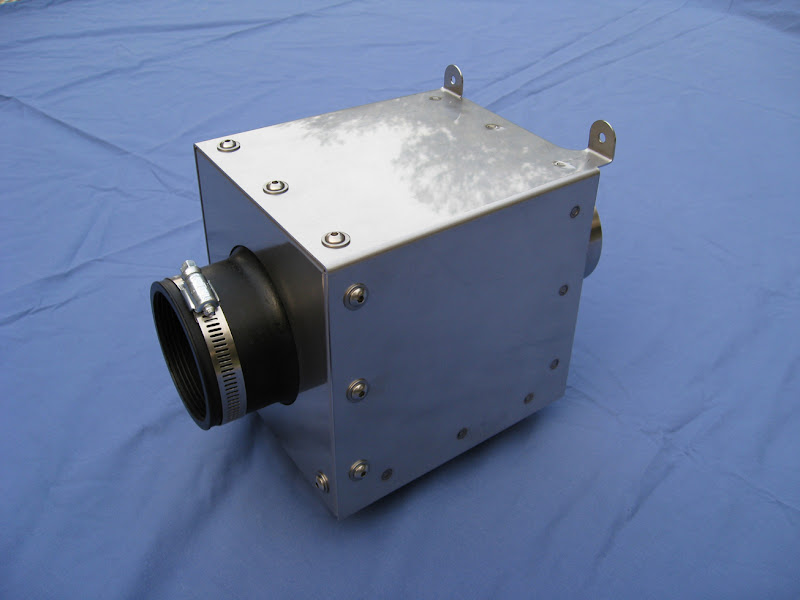
Obviously this idea never saw production because it sucked. However, this is a good example of how using a properly sized filter and having a section of consistent diameter (mildly restrictive) tubing before the MAF is beneficial for the R56 MCS and other MAF-based ECU systems. Sometimes a little restriction promotes laminar flow. This assures that the MAF is providing accurate data instead of trying to pull readings from turbulent air. An easily accessible book for the layperson and experienced tuner alike that also references this is "Engine Management: Advanced Tuning" by Greg Banish.
Unfortunately, it looks like this thread is going downhill fast. Mellanor started this thread as a quest for data and challenging spotty data/heresay. Maybe we can avoid the typical NAM temptation of trying to all out bust someone's cojones instead of having an actual discussion. If this thread remains relatively civil, Mellanor and others will have a platform to show some of their independent intake/CAI findings. It would be cool if they can do just that instead of having things needlessly shut down by the mods.

3rd Gear
Joined: Feb 2010
Posts: 186
Likes: 0
There's some good info in this thread (including your own post above)...and the potential for a lot more.
5th Gear
Joined: Jun 2009
Posts: 663
Likes: 12
From: Maryland
On tubing size:
It is not just "flow" but an acoustic problem. Tube length and the mass of the air in the tube effect the resonant frequency of the system. Sometimes this is advantageous. It can also affect the speed the turbo responds. Good or bad I leave to those who have a dyno to play with. One can use this to tune to a specific RPM, or spread around to even out other peaks and dips. Even with a turbo, inlet system will still have resonances that can be used to advantage in a specific application. Unfortunately, street cars are required to work over such an wide power band, there is usually no "right" answer, but a set of trade-off's, one must pick for their individual taste. The OEM has given us two sets of trade-off's. The after market several more.
I again refer to Smith and Morrison or David Vizzard's published works. These are not new concepts. Morrison started doing his work after WWI. I will look up Mr. Banish's work. Hugh McLeans old standby is a bit outdated as it was pre EFI days.
I notice on several of the dyno charts, the peak HP and peak torque is greater, but the low RPM torque is usually less. This is exactly what I saw in most of the better cai's form my last car, (a few were worse everywhere). Fortunatlly it was a very popular car and a magazine could afford to test a dozen or so, with and without ECU tuning. Unfortunately on that car, there was no good place to grab cold air like DoS or DDM have achieved for our Mini's.
I am sure we can all agree heat is bad. ( as at least now we don't have to worry about pooling gas in the bottom of our manifolds)
As I have mentioned, figuring out how you want to use the car is an important first step. I no longer race, so I am all about low end torque. Above 5000 is totally useless for me. If you are doing road racing, below 5000 is totally useless to you. Pick the correct part for the correct job.
Mini-Mon reminded me of a bolt-on EFI kit being sold for Cobras that had the hotwire totally exposed above an modified carb/throttle body inside the air cleaner. As one would guess, it worked about as well as it sounds. Lesson is to use sensors they way ther were designed.
It is not just "flow" but an acoustic problem. Tube length and the mass of the air in the tube effect the resonant frequency of the system. Sometimes this is advantageous. It can also affect the speed the turbo responds. Good or bad I leave to those who have a dyno to play with. One can use this to tune to a specific RPM, or spread around to even out other peaks and dips. Even with a turbo, inlet system will still have resonances that can be used to advantage in a specific application. Unfortunately, street cars are required to work over such an wide power band, there is usually no "right" answer, but a set of trade-off's, one must pick for their individual taste. The OEM has given us two sets of trade-off's. The after market several more.
I again refer to Smith and Morrison or David Vizzard's published works. These are not new concepts. Morrison started doing his work after WWI. I will look up Mr. Banish's work. Hugh McLeans old standby is a bit outdated as it was pre EFI days.
I notice on several of the dyno charts, the peak HP and peak torque is greater, but the low RPM torque is usually less. This is exactly what I saw in most of the better cai's form my last car, (a few were worse everywhere). Fortunatlly it was a very popular car and a magazine could afford to test a dozen or so, with and without ECU tuning. Unfortunately on that car, there was no good place to grab cold air like DoS or DDM have achieved for our Mini's.
I am sure we can all agree heat is bad. ( as at least now we don't have to worry about pooling gas in the bottom of our manifolds)
As I have mentioned, figuring out how you want to use the car is an important first step. I no longer race, so I am all about low end torque. Above 5000 is totally useless for me. If you are doing road racing, below 5000 is totally useless to you. Pick the correct part for the correct job.
Mini-Mon reminded me of a bolt-on EFI kit being sold for Cobras that had the hotwire totally exposed above an modified carb/throttle body inside the air cleaner. As one would guess, it worked about as well as it sounds. Lesson is to use sensors they way ther were designed.

Manufacturer
Joined: Dec 2002
Posts: 995
Likes: 0
From: Oregon
Why do intakes make power? Generally intake make more power than the stock airbox because of the filter being less restrictive. The other factor in intakes making power gains over stock intakes, is when the design of the intake effects the MAF signal and causes the car to run leaner, or change timing. While this does gain HP, its doing it in a way that is tricking the ECU. We can verify the ALTA intake isn't tricking the ECU because we log Air Fuel Ratio and Ignition timing before and after and they are the same. AFR is the same because your R56 uses a very accurate Wide Band type 02 sensor and follows a target Lambda/AFR map in the ECU. So we feel very confident about our claimed 10WHP being gained because of the better filter and better intake design.
Maybe its our fault that people call all R56 intakes Cold Air Intakes when some of them are just a "Short Ram/ Shorty" intake, or don't require the removal of the hood scoop cover. When we did testing long ago we decided to call the ALTA R56 Intake a Cold air intake because when installed properly you get fresh cold air from the scoop feeding the intake cold air. In our testing (dyno and street proving) we installed air temp sensors everywhere (ambient, on filter, pre and post IC) we never saw intake temps go 10-15ish degrees above ambient with the hood closed. In our eyes this is good enough to call our intake the ALTA R56 Cold Air intake, not just the ALTA R56 Intake. (All our data is backed with forum posts, and data acquired with our Innovate Data Logging hardware/software)
There seem to be lots of guys concerned about their IAT(Intake Air Temp) readings and concerned they are loosing power because they go too high. Definitely something to worry about! If we have proven our intake makes 10WHP with a slight increase to the IAT, at what point does high intake temps start to kill power?? Two things about IAT that can effect power is how the ECU handles IAT temp readings, and the other is the engine itself becoming less efficient because of higher temps. The easy one to answer is the ECU side of things. Intake air temps up to 122F do not effect HP. Above this point is where the ECU starts to pull timing. At 131F (normal coolant temps) the ECU pulls .75 degrees of timing, and then the hotter it goes the more it pulls. So as long as people are not seeing these, temps the ECU is not pulling timing or if they are its not much. Even at 140F its only pulling 1.5 degrees of timing. Only when your car stops and the intake is sucking in hot air might this really take effect. But who cares if the ECU is pulling 2-4 degrees of timing under light load off idle stuff, you will never notice it. Once moving the recovery time to getting that cold air back into the intake is just a few seconds. If the intake temps stayed this high (way higher than i have seen) under load, you might be loosing 5-7ish HP(base on experience). You may be asking how do i know this.............. In do time.....
The other aspect is does this slight increase in IAT cause the engine be less efficient and loose power? Our dyno graphs and testing show this to be untrue with a 10-20F increase. Realistically we can guess HP starts to suffer when the intake temps get to 131F (base on the map in the ECU). If nothing but the IAT goes up, lets says its 20F over ambient, by the time it goes through the turbo and intercooler, the change at the engine is going to be only 8F warmer. (using basic calcs and constants) So realistically even 20F increase beyond ambient isn't going to do much. During our Dyno testing we saw nothing but increases in power with anywhere from 10-20F higher IAT over ambient. People can try argue about the methods we used with fans and what not, but the fact is our before and after runs are done with the same testing methods of hood closed and same fans. Our dyno graphs we use to sell the CAI show 10WHP gain from 5000 on up. This is verified by many runs before then swaping out the intake in 5 minutes and doing 5 more runs. The graph we use is not the peak gains we saw, but its a perfect example of what to expect from your car.
Anyway hope that helps answer some of these questions that people are asking and comments/guesses people are making.
And here is our dyno graph we use to this day.

Maybe its our fault that people call all R56 intakes Cold Air Intakes when some of them are just a "Short Ram/ Shorty" intake, or don't require the removal of the hood scoop cover. When we did testing long ago we decided to call the ALTA R56 Intake a Cold air intake because when installed properly you get fresh cold air from the scoop feeding the intake cold air. In our testing (dyno and street proving) we installed air temp sensors everywhere (ambient, on filter, pre and post IC) we never saw intake temps go 10-15ish degrees above ambient with the hood closed. In our eyes this is good enough to call our intake the ALTA R56 Cold Air intake, not just the ALTA R56 Intake. (All our data is backed with forum posts, and data acquired with our Innovate Data Logging hardware/software)
There seem to be lots of guys concerned about their IAT(Intake Air Temp) readings and concerned they are loosing power because they go too high. Definitely something to worry about! If we have proven our intake makes 10WHP with a slight increase to the IAT, at what point does high intake temps start to kill power?? Two things about IAT that can effect power is how the ECU handles IAT temp readings, and the other is the engine itself becoming less efficient because of higher temps. The easy one to answer is the ECU side of things. Intake air temps up to 122F do not effect HP. Above this point is where the ECU starts to pull timing. At 131F (normal coolant temps) the ECU pulls .75 degrees of timing, and then the hotter it goes the more it pulls. So as long as people are not seeing these, temps the ECU is not pulling timing or if they are its not much. Even at 140F its only pulling 1.5 degrees of timing. Only when your car stops and the intake is sucking in hot air might this really take effect. But who cares if the ECU is pulling 2-4 degrees of timing under light load off idle stuff, you will never notice it. Once moving the recovery time to getting that cold air back into the intake is just a few seconds. If the intake temps stayed this high (way higher than i have seen) under load, you might be loosing 5-7ish HP(base on experience). You may be asking how do i know this.............. In do time.....
The other aspect is does this slight increase in IAT cause the engine be less efficient and loose power? Our dyno graphs and testing show this to be untrue with a 10-20F increase. Realistically we can guess HP starts to suffer when the intake temps get to 131F (base on the map in the ECU). If nothing but the IAT goes up, lets says its 20F over ambient, by the time it goes through the turbo and intercooler, the change at the engine is going to be only 8F warmer. (using basic calcs and constants) So realistically even 20F increase beyond ambient isn't going to do much. During our Dyno testing we saw nothing but increases in power with anywhere from 10-20F higher IAT over ambient. People can try argue about the methods we used with fans and what not, but the fact is our before and after runs are done with the same testing methods of hood closed and same fans. Our dyno graphs we use to sell the CAI show 10WHP gain from 5000 on up. This is verified by many runs before then swaping out the intake in 5 minutes and doing 5 more runs. The graph we use is not the peak gains we saw, but its a perfect example of what to expect from your car.
Anyway hope that helps answer some of these questions that people are asking and comments/guesses people are making.
And here is our dyno graph we use to this day.
5th Gear
Joined: Jun 2009
Posts: 663
Likes: 12
From: Maryland
Jeff,
Looking at yours, and others, dyno runs, and at cat-back dyno results, what would you assess is the primary cause for disturbance to the torque curve at 3000? I an guessing it is on the intake side as the cat-back systems do not seem to have much effect in that range, again, mostly at higher RPM.
I do feel some unevenness as I pull through the range, even in my automatic.
Nit-pick. I don't see what gear the runs were made in. I do not know if the Mini varies its maps based on gear. I am assuming second.
Looking at yours, and others, dyno runs, and at cat-back dyno results, what would you assess is the primary cause for disturbance to the torque curve at 3000? I an guessing it is on the intake side as the cat-back systems do not seem to have much effect in that range, again, mostly at higher RPM.
I do feel some unevenness as I pull through the range, even in my automatic.
Nit-pick. I don't see what gear the runs were made in. I do not know if the Mini varies its maps based on gear. I am assuming second.
Manufacturer
Joined: Dec 2002
Posts: 995
Likes: 0
From: Oregon
Nope not an intake thing at all, its boost. The OEM TQ curve is setup like that, to have a dip right there. Because of the scaling of our dyno, it make it look worse than it really it. But most people feel it, and those with boost boost gauges see it. Here is a graph of boost

Its hard to see because the scaling of boost is small compared to the TQ graph, but its very roller coaster like.
So far we find boost is a function of requested Torque and not gear based. There are some other things that come into play that will show different boost in different gears, lower load in lower gears creates slightly less boost, and then the overboost thing does play into the boost in higher gears. MEaning the over boost is very noticable in 5th gear, where as in 1st or 2nd its not because it comes on so quick and less overall load.
Its hard to see because the scaling of boost is small compared to the TQ graph, but its very roller coaster like.
So far we find boost is a function of requested Torque and not gear based. There are some other things that come into play that will show different boost in different gears, lower load in lower gears creates slightly less boost, and then the overboost thing does play into the boost in higher gears. MEaning the over boost is very noticable in 5th gear, where as in 1st or 2nd its not because it comes on so quick and less overall load.
1st Gear
Joined: Oct 2008
Posts: 20
Likes: 0
From: Palm Beach County, FL
Stock MCS Intake Data
For anyone who's interested, I have some stock MCS intake data provided via Scangauge. At cruise on the highway the IAT is about 2-4F above ambient. Around town (40-50 MPH) it's about 4-8F above ambient. In stop and go city traffic, it's about 8-15F above ambient. Pulling in a garage after city driving I've seen it go 20F above ambient. I'm still new to watching the data, so over time I may have some more accurate figures.
Compared to previously posted data about the K&N Typhoon system, the stock intake, in general, runs a few degrees cooler, and is less prone to heat soak.
I'll leave to to more knowledgeable people to determine whether or not the alleged increased flow of an aftermarket system negates the increased IAT that comes with an open element filter.
If anyone has additional IAT data from the JCW, JCW stage one, and DoS intakes then we could begin to narrow down at least the temperature factor in which intake is the best.
Compared to previously posted data about the K&N Typhoon system, the stock intake, in general, runs a few degrees cooler, and is less prone to heat soak.
I'll leave to to more knowledgeable people to determine whether or not the alleged increased flow of an aftermarket system negates the increased IAT that comes with an open element filter.
If anyone has additional IAT data from the JCW, JCW stage one, and DoS intakes then we could begin to narrow down at least the temperature factor in which intake is the best.
Manufacturer
Joined: Dec 2002
Posts: 995
Likes: 0
From: Oregon
We have been burning up the dyno lately and really what makes a difference on the cold air intake is the scoop!! We say to remove this or drill it out. But some of you have the newer scoop where there are already some holes in it and may think they don't need to modify it. YOU STILL NEED TO MODIFY IT!!
On two different cars we recently did, after base runs we went to our intake for some tests. One car has the scoop removed and the other has the one with a few holes. There is a huge difference between the two as far as intake temps go. Even with a fan blowing on the front of the (not directly on the scoop) the difference in intake temps between the two were huge! The car with the scoop removed IAT would get to 130-ish and the other was getting to 150-ish. Anything above 140 the ECU is pulling 3 degrees of timing which is going to kill the 10WHP you gained from installing the intake!
While this is on the dyno with less airflow than seen on the road, it does show that removing the scoop or drilling out all the holes is really important to keeping fresh air on the intake.
Just something to keep in mind when installing our Intake system. REMOVE THE SCOOP!!
On two different cars we recently did, after base runs we went to our intake for some tests. One car has the scoop removed and the other has the one with a few holes. There is a huge difference between the two as far as intake temps go. Even with a fan blowing on the front of the (not directly on the scoop) the difference in intake temps between the two were huge! The car with the scoop removed IAT would get to 130-ish and the other was getting to 150-ish. Anything above 140 the ECU is pulling 3 degrees of timing which is going to kill the 10WHP you gained from installing the intake!
While this is on the dyno with less airflow than seen on the road, it does show that removing the scoop or drilling out all the holes is really important to keeping fresh air on the intake.
Just something to keep in mind when installing our Intake system. REMOVE THE SCOOP!!
I am glad you guys are producing some useful info but I thought this thread died already. I would love to see an intake that runs into the fender that would be sweet or maybe out the engine compartment.

Thread
Thread Starter
Forum
Replies
Last Post
igzekyativ
MINIs & Minis for Sale
34
Jul 16, 2020 12:54 PM
ltjpunk7
MINI Parts for Sale
2
Sep 6, 2015 07:32 AM