


R50 TURBO KIT


Thread Starter
|
Turbius Maximus
Joined: Mar 2004
Posts: 4,416
Likes: 0
From: Infinity and beyond
R50 TURBO KIT
I thought I would make this into it's own thread since more people need to know what has been done in the past... yet never released persay... thanks to our NOOB friend MEGAmini LOL

USING R53 INTAKE MANIFOLD AND WATER/AIR INTERCOOLER.
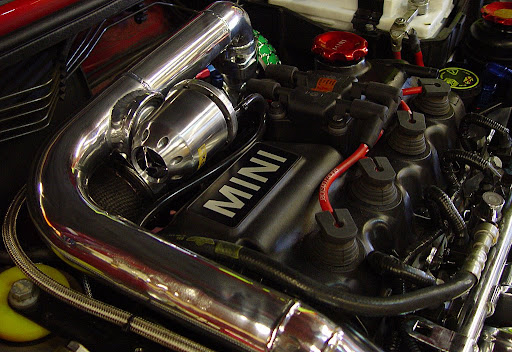
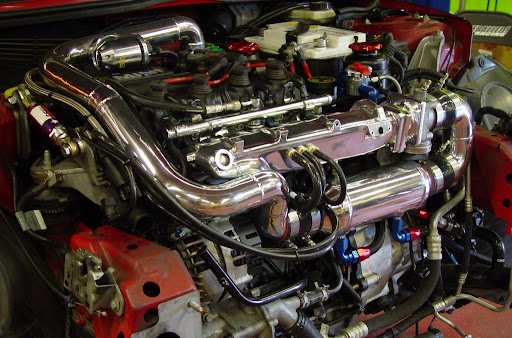
USING R53 INTAKE MANIFOLD AND WATER/AIR INTERCOOLER.


Trending Topics

4th Gear
Joined: Dec 2002
Posts: 551
Likes: 1
From: Santa Ana, CA
internal engine differences R50 vs R53
A Technical article which has been posted before discusses the changes made to the R50 to permit it to withstand the added stresses of supercharging. An excerpt follows. Absent some work on the R50, I wonder how well it would stand up to Turbocharging.
Design of the Basic Engine:
The basic engine in the Cooper S, Title Figure,
is based on the 1.6 litre four-cylinder
unit familiar from the Mini One and the
Mini Cooper. This engine is made by
TRITEC, a BMW Group and DaimlerChrysler
joint venture. Owing to the new version’s
high specific power output, however, a
number of modifications were required,
and these will be discussed later. The technical
data for the engine in the Mini Cooper
S are shown in Table 1.
4.1.1 Combustion Chamber,
Pistons
A bore/stroke ratio of 77/85.8 mm has been
retained, in other words a long-stroke configuration.
The pistons are made from the
high-temperature alloy AL 142 by the
Mahle company. The piston groove for the
compression ring is anodised and the
height of the piston’s top land is only 4 mm,
a very low figure for a supercharged engine.
To avoid piston overheating even in continuous
full-load operation, the engine has
an oil cooling system for the pistons. The
technology for this was adopted from BMW
engines. Essentially, it consists of nozzles
that spray the pistons with oil from below,
thereby cooling them. These nozzles open
at an oil pump pressure of about 2.5 bar and
have a maximum oil delivery rate of 2.2
l/min. Oil cooling reduces the temperature
of the pistons in the zone around the centre
of the crown by as much as 50 degrees to a
maximum of 250 degrees.
4.1.2 Reciprocating Elements
Because of the significantly higher peak
combustion pressures compared with the
basic naturally aspirated engine, considerable
modifications have had to be made to
the crank mechanism as well. Whereas the
basic version is fitted with a cast crankshaft,
a drop-forged steel crankshaft is used
on the Cooper S. There is no need to harden
the crankpins and main bearing journals,
but three-layer bearings are used to cope
with the higher bearing forces involved.
The crankshaft is supported at five points
and has 8 counterweights, which provide
80 % balancing. This configuration minimises
free vibration and bearing loads.
The connecting rods have also been fundamentally
modified. The basic engine is
fitted with sintered rods, but the Mini
Cooper S uses a forged version with computer
optimised geometry. As with the basic
sintered version, these rods are
“cracked”.
4.1.3 Oil Pump
The oil pump has been modified to meet
the higher volumetric flow requirements
imposed by the oil spray nozzles. It is a
“gerotor” gear-type pump driven directly
from the crankshaft and is an integral part
of the timing drive cover. The only modification
required was to optimise the flow
characteristics of the control lips at the inlet
and outlet sides of the pump. This yielded
an increase of about 15 % in the flow rate.
The pressure-regulating system has also
been reconfigured to ensure that the required
supply pressure of at least 3 bar is
available even at critical engine speeds.
This made it possible to avoid the alternative
of widening the gearwheels in the
pump, which is associated with an increase
in friction.
4.1.4 Cylinder Head and Valve
Gear
The cylinder head has also been redesigned
to increase power output. The main emphasis
here was on adapting the passages
to the higher gas flow. In particular, the
maximum flow rate on the exhaust side
has been increased by 30 % by optimising
the geometry of both the passages and the
valves. It also involved reducing the valve
stem diameter below the guide to 5 mm.
The valve timing for the 85-kW engine
proved to be ideal for the supercharged unit
as well. The spread is 111 degrees of crankshaft
rotation on the inlet side and 109 degrees
on the exhaust side.
The geometry of the valve gear has to a
large extent been taken over from the basic
version. It is a compact valve timing system
with an overhead camshaft, aluminium
roller rockers and integral hydraulic valve
lash adjusters. There are three rockers per
cylinder: two for the inlet valves and a tandem
rocker for actuating the exhaust
valves. Since the exhaust valves for the supercharged
engine have to open against a
higher cylinder pressure, the forces in the
valve gear increase accordingly. In addition,
the engine’s governed speed limit has
been raised to 6,950 rpm. The tandem rockers
for the exhaust valves have therefore
been modified to accommodate the higher
loads with additional material and tighter
tolerances between the roller shaft and the
rocker.
As a departure from the basic version,
the exhaust valves are manufactured from
Inconel to take account of the significantly
higher temperatures involved.
Design of the Basic Engine:
The basic engine in the Cooper S, Title Figure,
is based on the 1.6 litre four-cylinder
unit familiar from the Mini One and the
Mini Cooper. This engine is made by
TRITEC, a BMW Group and DaimlerChrysler
joint venture. Owing to the new version’s
high specific power output, however, a
number of modifications were required,
and these will be discussed later. The technical
data for the engine in the Mini Cooper
S are shown in Table 1.
4.1.1 Combustion Chamber,
Pistons
A bore/stroke ratio of 77/85.8 mm has been
retained, in other words a long-stroke configuration.
The pistons are made from the
high-temperature alloy AL 142 by the
Mahle company. The piston groove for the
compression ring is anodised and the
height of the piston’s top land is only 4 mm,
a very low figure for a supercharged engine.
To avoid piston overheating even in continuous
full-load operation, the engine has
an oil cooling system for the pistons. The
technology for this was adopted from BMW
engines. Essentially, it consists of nozzles
that spray the pistons with oil from below,
thereby cooling them. These nozzles open
at an oil pump pressure of about 2.5 bar and
have a maximum oil delivery rate of 2.2
l/min. Oil cooling reduces the temperature
of the pistons in the zone around the centre
of the crown by as much as 50 degrees to a
maximum of 250 degrees.
4.1.2 Reciprocating Elements
Because of the significantly higher peak
combustion pressures compared with the
basic naturally aspirated engine, considerable
modifications have had to be made to
the crank mechanism as well. Whereas the
basic version is fitted with a cast crankshaft,
a drop-forged steel crankshaft is used
on the Cooper S. There is no need to harden
the crankpins and main bearing journals,
but three-layer bearings are used to cope
with the higher bearing forces involved.
The crankshaft is supported at five points
and has 8 counterweights, which provide
80 % balancing. This configuration minimises
free vibration and bearing loads.
The connecting rods have also been fundamentally
modified. The basic engine is
fitted with sintered rods, but the Mini
Cooper S uses a forged version with computer
optimised geometry. As with the basic
sintered version, these rods are
“cracked”.
4.1.3 Oil Pump
The oil pump has been modified to meet
the higher volumetric flow requirements
imposed by the oil spray nozzles. It is a
“gerotor” gear-type pump driven directly
from the crankshaft and is an integral part
of the timing drive cover. The only modification
required was to optimise the flow
characteristics of the control lips at the inlet
and outlet sides of the pump. This yielded
an increase of about 15 % in the flow rate.
The pressure-regulating system has also
been reconfigured to ensure that the required
supply pressure of at least 3 bar is
available even at critical engine speeds.
This made it possible to avoid the alternative
of widening the gearwheels in the
pump, which is associated with an increase
in friction.
4.1.4 Cylinder Head and Valve
Gear
The cylinder head has also been redesigned
to increase power output. The main emphasis
here was on adapting the passages
to the higher gas flow. In particular, the
maximum flow rate on the exhaust side
has been increased by 30 % by optimising
the geometry of both the passages and the
valves. It also involved reducing the valve
stem diameter below the guide to 5 mm.
The valve timing for the 85-kW engine
proved to be ideal for the supercharged unit
as well. The spread is 111 degrees of crankshaft
rotation on the inlet side and 109 degrees
on the exhaust side.
The geometry of the valve gear has to a
large extent been taken over from the basic
version. It is a compact valve timing system
with an overhead camshaft, aluminium
roller rockers and integral hydraulic valve
lash adjusters. There are three rockers per
cylinder: two for the inlet valves and a tandem
rocker for actuating the exhaust
valves. Since the exhaust valves for the supercharged
engine have to open against a
higher cylinder pressure, the forces in the
valve gear increase accordingly. In addition,
the engine’s governed speed limit has
been raised to 6,950 rpm. The tandem rockers
for the exhaust valves have therefore
been modified to accommodate the higher
loads with additional material and tighter
tolerances between the roller shaft and the
rocker.
As a departure from the basic version,
the exhaust valves are manufactured from
Inconel to take account of the significantly
higher temperatures involved.

Banned
iTrader: (1)
Joined: Feb 2005
Posts: 4,054
Likes: 0
From: As far away from Florida as I can get.
I like it. I don't think I could pass smog with it, but I like it.
Thread Starter
|
Turbius Maximus
Joined: Mar 2004
Posts: 4,416
Likes: 0
From: Infinity and beyond
ha ha ha true, but that's why I live in a free country... you know that thing outside that bubble you living in LOL
Thread Starter
|
Turbius Maximus
Joined: Mar 2004
Posts: 4,416
Likes: 0
From: Infinity and beyond
ok no offence but that's not an excerpt.... and done properly it stands up just fine to turocharging... this thread isnt about WHAT IF... it's about... it was done long ago... the first cooper fully turboed by MEGAmini was back in 03.... but no one knows this stuff cuase it was all UNPOSSIBLE!
Last edited by Tüls; Apr 9, 2008 at 05:23 PM.


There was another MINI back in the day that had a turbo. I think it was in NEWMINI mag or one of the others. It was a yellow MINI out of California I believe.
Will this ever be a kit, or is it just a custom job if you have the cash to pay for it? And do you have any more pics of the car finished and put back together?
Will this ever be a kit, or is it just a custom job if you have the cash to pay for it? And do you have any more pics of the car finished and put back together?
4th Gear
Joined: Dec 2007
Posts: 555
Likes: 0
From: North Hollywood, California
 .
.

Former Vendor
Joined: Jan 2004
Posts: 8,337
Likes: 8
From: oh10
......and a change to the 6 speed from an MCS. 
Diamond Racing Group....turbo'd CVT Cooper

6th Gear
Joined: Oct 2004
Posts: 3,673
Likes: 2
From: Marsala, Sicily
As I remember it...it was a BLUE Cooper....at least that was the color that blew by me like I was standing still @ WOT 5th gear. That was like 5 years ago.....never heard a peep from the dude since. And no it wasn't Tuls..that dood is long gone now that I stole his identity....
Thread Starter
|
Turbius Maximus
Joined: Mar 2004
Posts: 4,416
Likes: 0
From: Infinity and beyond
you are correct, it was designed with the hood it had in mind

Manufacturer
Joined: Mar 2008
Posts: 43
Likes: 0
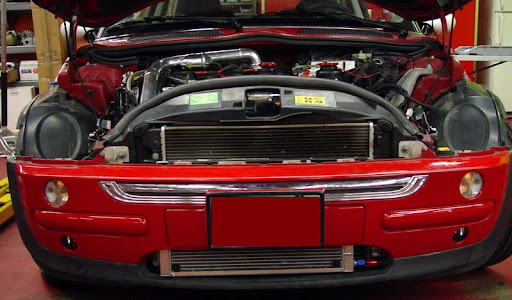
the design goal was to create a R50 that would look understated, but have some "*****" under the hood. picture of completed car before installation of front grill to cover heat exchanger for water to air. all components fit nicely under the factory cooper hood.
Banned
iTrader: (1)
Joined: Feb 2005
Posts: 4,054
Likes: 0
From: As far away from Florida as I can get.


6th Gear
Joined: Oct 2002
Posts: 1,731
Likes: 0
From: Anaheim, CA
Totally awesome. R53 hotshoes better watch their mirrors!

5th Gear
Joined: Mar 2006
Posts: 644
Likes: 0
From: Herndon, VA

Manufacturer
Joined: Mar 2008
Posts: 43
Likes: 0
I believe TULS is just pointing out that there is a tremendous library of work done by various individuals and companies in developing innovative products and technologies for the MINI platform. The community has been slow in accepting the wide range of performance that can be achieved with the R50/R53 and now R56. Nothing wrong with that, just the normal maturation process for a new platform. There is a wealth of information that has never been posted for public consumption.
Back in 2002, my first modification to my R53 was a turbo - not an intake, pulley, exhaust, or IPOD holder....
I was rolling around with 250-300whp when everyone thought 200whp was "UNPOSSIBLE". This is what keeps me in the industry, the process of development and education of the community to what can be achieved.
btw, the cooper kit was a developmental project that was started last year. purpose was to test components and develop flexible engine management. we are in final testing and will release information when completed.