


PCV, Seafoam, and you.


Thread Starter
|
1st Gear
Joined: Jul 2009
Posts: 38
Likes: 0
From: Midwest
PCV, Seafoam, and you.
1. I think I found my PCV valve on my 2005 MC, but not sure. Any pictures anyone?
2. Tips for the Seafoaming / your experiences?
3. Should I do 1 can in the gas tank and a half can in the PCV valve? Or just one of those?
Thanks!
2. Tips for the Seafoaming / your experiences?
3. Should I do 1 can in the gas tank and a half can in the PCV valve? Or just one of those?
Thanks!
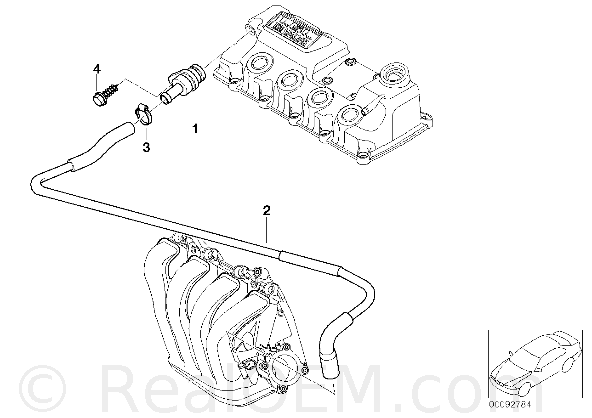
Pic is of an R50 but the PCV is in the same place on an R53:
Item #1 is the PCV, pull the hose and do the deed.

2nd Gear
Joined: May 2010
Posts: 51
Likes: 0
Strange. I did it right the first time and got no smoke. This time I used a little more and still no smoke. Left the car run a little longer after the treatment than last time, then decided if there was gonna be a smoke plume I didn't want to have it envelope my house... So I drove a little away from it and on the drive hit WOT. Holy smokes. Check engine light came on and it felt like a cylinder went out for a few seconds. Shut the engine off, turned it back on, and everything was back to normal except for a little lingering smoke and the lingering SES. Gonna try to check the code later today and see what's up, probably nothing though (hopefully at least).
Strange. I did it right the first time and got no smoke. This time I used a little more and still no smoke. Left the car run a little longer after the treatment than last time, then decided if there was gonna be a smoke plume I didn't want to have it envelope my house... So I drove a little away from it and on the drive hit WOT. Holy smokes. Check engine light came on and it felt like a cylinder went out for a few seconds. Shut the engine off, turned it back on, and everything was back to normal except for a little lingering smoke and the lingering SES. Gonna try to check the code later today and see what's up, probably nothing though (hopefully at least).
 .
.

2nd Gear
Joined: Apr 2009
Posts: 117
Likes: 0
Yup, mine has 90K and I recently did the seafoam thing for the first time
Actually I did it four times ... until the smoke was waaaaaaay less than the first time.
Make sure you let it sit for at least 30 mins. Unplug the hose at the PCV valve and slowly pour the seafoam into the hose. Have someone at the accelerator in case they need to rev it up to avoid it stopping, Once you've got what you want in there, turn off the engine and wait at least 30 mins.
Start her up, and then run it around the block a few times. Smoke is fun!
In got a Check engine light the first time, but it went away in a day or so.
Actually I did it four times ... until the smoke was waaaaaaay less than the first time.
Make sure you let it sit for at least 30 mins. Unplug the hose at the PCV valve and slowly pour the seafoam into the hose. Have someone at the accelerator in case they need to rev it up to avoid it stopping, Once you've got what you want in there, turn off the engine and wait at least 30 mins.
Start her up, and then run it around the block a few times. Smoke is fun!
In got a Check engine light the first time, but it went away in a day or so.
Trending Topics

CE light could have been a dirty O2 sensor after seafoam treatment.
Dont forget to change the enginw oil/filter now. Next few hundred miles is preferred and definately before you reach 500 miles.
Dont forget to change the enginw oil/filter now. Next few hundred miles is preferred and definately before you reach 500 miles.

Caffeine Junkie
Joined: Jan 2008
Posts: 444
Likes: 0
From: Montgomery Village, MD
EDIT: duh. nevermind.
Last edited by Claymore; May 30, 2010 at 11:43 AM.

No need to change oil as the Seafoam has no adverse effects. Check with Seafoam for more info please.
http://www.seafoamsales.com/gasoline-engine-faqs.html

4th Gear
Joined: Dec 2008
Posts: 525
Likes: 1
If you fill up with top-tier gas, you don't need to add this to your gas tank, they already have all the detergents you need in there. As for the air system, I would use caution.
I heard a guy used it in his R56 and it worked great, but a piece of carbon or metal was deposited on his impellers and the imbalance shredded his turbo...I'm sure it depends where you suck up the seafoam and R53 vs R56, but it's still scary to me...
I heard a guy used it in his R56 and it worked great, but a piece of carbon or metal was deposited on his impellers and the imbalance shredded his turbo...I'm sure it depends where you suck up the seafoam and R53 vs R56, but it's still scary to me...
I did it. Amazing. My idle is smooth now and I can even run the A/C while I'm stopped now. If you are looking at your engine, the top that says "Mini" has a black vacuum hose plugged in right below the "Mini" sign. Take it off while the car is running and put your finger over it quickly! Then tilt your can of seafoam a little, slowly move your finger and let it suck it out of the can. I did about 1/3 a can. Let it sit (the longer the better!) start it up and start smashing on the gas! (after warmed up of course) just keep it in high revs until the smoke has cleared up a bit. Take it for a spin and stay in high revs while you are driving! I ran another 1/3 through it the next day as well. Made a very very big difference in how my car performs. Just take your time and it won't be a problem! Good luck! And you only have to change the oil if you put it in the oil. The PCV/Gas treatment DO NOT require an oil change.
Last edited by GumbyLara; Jun 1, 2010 at 05:52 PM.

SEA-FOAM sells the same stuff in an aerosol can.....at the CT tune a few days ago, several folks used it on their cars with great results.
There are 2 different aerosol cans...the one that DOES NOT SAY "DEEP CREEP" seems to work better...using the aerosol can so you can spray it into the PCV line makes it much simpler too!! The one with hose on the car is the preferred one by folks at the CT tune.


Some Pics are very slow loading...but you can see the different products at the Manufactures web-site, along with full instructions www.seafoamsales.com
There are 2 different aerosol cans...the one that DOES NOT SAY "DEEP CREEP" seems to work better...using the aerosol can so you can spray it
Some Pics are very slow loading...but you can see the different products at the Manufactures web-site, along with full instructions www.seafoamsales.com
Last edited by ZippyNH; Jun 1, 2010 at 07:31 PM. Reason: added info
No need to change oil as the Seafoam has no adverse effects. Check with Seafoam for more info please.
http://www.seafoamsales.com/gasoline-engine-faqs.html
http://www.seafoamsales.com/gasoline-engine-faqs.html
Do what you want. Doubt Seafoam will buy you a new engine for your MINI, and right now MINIUSA officially does not recognize this as a solution for Carbon buildup removal....my 2 cents.
If you add it to your oil then yes, I would change it within 200-500 miles NO MATTER WHAT! But since the PCV/Gas method don't come in contact with the oil, it's not required. Couldn't hurt to do one though! And I tried the areasol can and found the the liquid one worked better for me. Seemed like the air ran out of the can and it wasn't spraying at all.
There was a new thread posted on Seafoam about a week ago, I posted a video and so did the guy who started the thread, big difference once again!
https://www.northamericanmotoring.co...h-seafoam.html
There was a new thread posted on Seafoam about a week ago, I posted a video and so did the guy who started the thread, big difference once again!
https://www.northamericanmotoring.co...h-seafoam.html
Last edited by GumbyLara; Jun 2, 2010 at 08:09 AM. Reason: R
Deposits in our oil is from three sources Gumby
- debris that comes in through the air intake. Once it makes it through the air filter, it ends up in your oil. Once in your oil, it starts damaging your engine.
- metal shavings from the inside of your engine such as engine gaskets.
- Combustion by-products such as the crap Seafoam removes will generally raise the acidity of your oil, which causes corrosion in your engine. In addition, they will be left behind as the engine oil burns off and will collect on the inside of your engine as deposits.
So change the oil !
I have also heard of concerns relative to this stuff removing the coating on the supercharger fins for those built after 2004. And that coating making it's way to the engine.
And carbon build up on the back side of the valves is not a real issue for the 1st gen MINI's. I ran seafoam thru my gas, and then we removed the intake manifold. The back side of the valves were pristine, shiny like new.
- debris that comes in through the air intake. Once it makes it through the air filter, it ends up in your oil. Once in your oil, it starts damaging your engine.
- metal shavings from the inside of your engine such as engine gaskets.
- Combustion by-products such as the crap Seafoam removes will generally raise the acidity of your oil, which causes corrosion in your engine. In addition, they will be left behind as the engine oil burns off and will collect on the inside of your engine as deposits.
So change the oil !
I have also heard of concerns relative to this stuff removing the coating on the supercharger fins for those built after 2004. And that coating making it's way to the engine.
And carbon build up on the back side of the valves is not a real issue for the 1st gen MINI's. I ran seafoam thru my gas, and then we removed the intake manifold. The back side of the valves were pristine, shiny like new.
Ah ha, got ya. Well I appreciate that information! As I said, It definitely couldn't hurt to do it but I guess I got my facts wrong! I have noticed I have a lot of oil in my OCC after the Seafoam treatment though! But after the treatment, overall my car is in wayyyy better condition than it was!

4th Gear
Joined: Dec 2008
Posts: 525
Likes: 1
Deposits in our oil is from three sources Gumby
- debris that comes in through the air intake. Once it makes it through the air filter, it ends up in your oil. Once in your oil, it starts damaging your engine.
- metal shavings from the inside of your engine such as engine gaskets.
- Combustion by-products such as the crap Seafoam removes will generally raise the acidity of your oil, which causes corrosion in your engine. In addition, they will be left behind as the engine oil burns off and will collect on the inside of your engine as deposits.
So change the oil !
I have also heard of concerns relative to this stuff removing the coating on the supercharger fins for those built after 2004. And that coating making it's way to the engine.
And carbon build up on the back side of the valves is not a real issue for the 1st gen MINI's. I ran seafoam thru my gas, and then we removed the intake manifold. The back side of the valves were pristine, shiny like new.
- debris that comes in through the air intake. Once it makes it through the air filter, it ends up in your oil. Once in your oil, it starts damaging your engine.
- metal shavings from the inside of your engine such as engine gaskets.
- Combustion by-products such as the crap Seafoam removes will generally raise the acidity of your oil, which causes corrosion in your engine. In addition, they will be left behind as the engine oil burns off and will collect on the inside of your engine as deposits.
So change the oil !
I have also heard of concerns relative to this stuff removing the coating on the supercharger fins for those built after 2004. And that coating making it's way to the engine.
And carbon build up on the back side of the valves is not a real issue for the 1st gen MINI's. I ran seafoam thru my gas, and then we removed the intake manifold. The back side of the valves were pristine, shiny like new.
How does debris from your air system get to your oil?
Gumby, what is OCC?
Thanks
My Oil Catch Can! I just emptied it like a week ago and it's already got a good amount in it again. I'm not quite sure how this works but from how I first understood it, it's not required if you do the PCV/Gasoline method because the Seafoam does not come in contact with the oil. I do understand that debris could possibly get into the oil but I didn't think the Seafoam would contribute to that. Like I said once again, an oil change couldn't hurt and I would do one!
This is my OCC I got from Lowe's for 20 bones! And I got the vacuum hose there too!
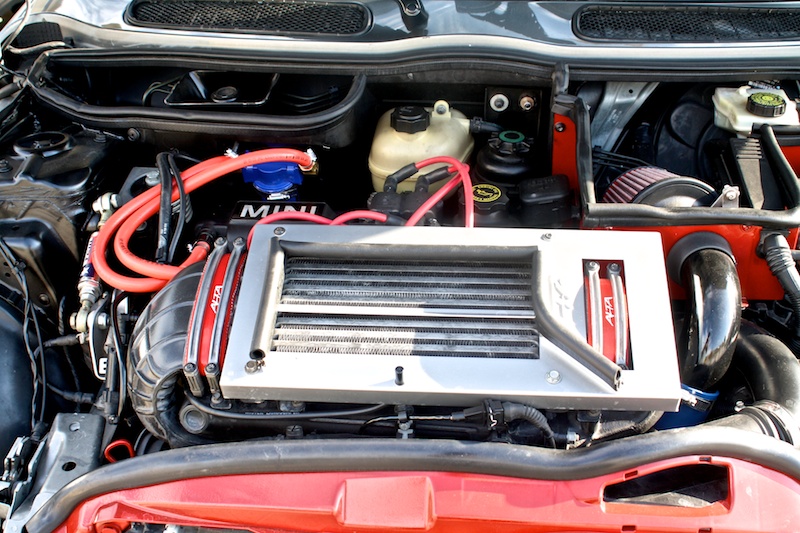
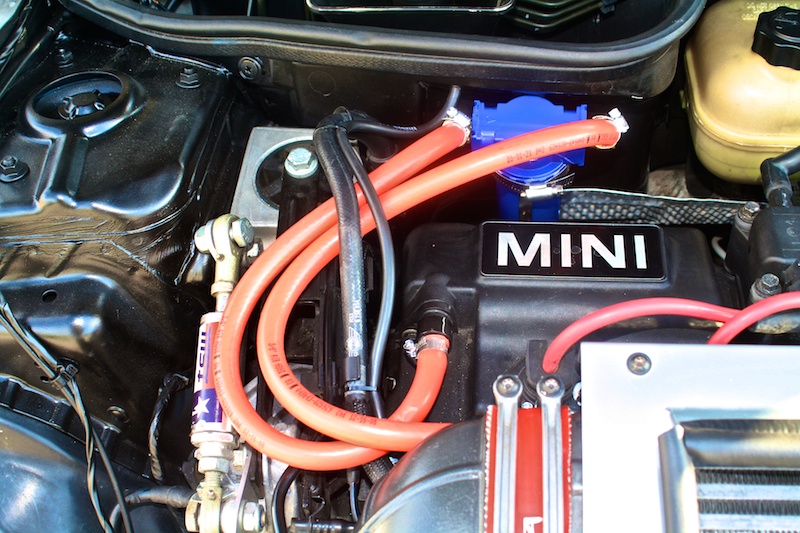
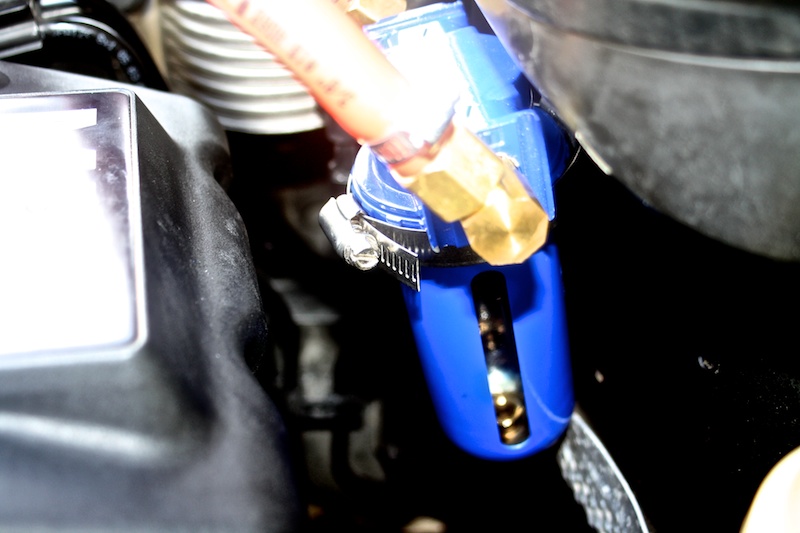
This is my OCC I got from Lowe's for 20 bones! And I got the vacuum hose there too!
Last edited by GumbyLara; Jun 2, 2010 at 01:00 PM.
I think what GrayRaven is saying is that when you do use the SEA-FOAM to clean your motor, while it is induced into the car by spraying/pouring it into the PVC system, it is bound in some way to make the oil a bit more dirty (even though it is MOSTLY burned off after soaking into the carbon, and dissolving varnish), and it might be a good idea to do the Sea-Foam treatment right before you do an oil change. That way you can ensure your car is as clean as possible, inside, and out!! If you have ever seen  his supper clean car, you would understand!
Anybody giving advise is simply expected to give the MOST concerative course of action...if you choose to be more aggressive, fine, but the giver of the advise will have no worries! Sea-Foam does say if it is added to the oil to change it, but if the motor is cleaned with the intake/PCV induction method, an oil change is not REQUIRED (but that does not mean it is not a good idea or would be inconsistent with best practices!)!
Most folks understand that any extra chemicals added to your oil/intake can have unexpected/unintended consequences....simply changing you oil after cleaning you intake/motor makes sense IMO. It may not be REQUIRED, but if you can pick WHEN to do the treatment, then do it just before your oil change!!
As to the question "How does debris from your air system get to your oil?"
............Lets see....Air+anything in the intake tract goes into the combustion chamber, gets mixed with fuel, in the presence of oil (the cylinder walls, etc), it is burned, the resulting gas is expelled...some of the contaminants in the gas getting expelled will get stuck to the oil/walls and be re-circulated in the oil system till it is filtered out.....That is WHY and air-filter is SO IMPORTANT!!!
his supper clean car, you would understand!Anybody giving advise is simply expected to give the MOST concerative course of action...if you choose to be more aggressive, fine, but the giver of the advise will have no worries! Sea-Foam does say if it is added to the oil to change it, but if the motor is cleaned with the intake/PCV induction method, an oil change is not REQUIRED (but that does not mean it is not a good idea or would be inconsistent with best practices!)!
Most folks understand that any extra chemicals added to your oil/intake can have unexpected/unintended consequences....simply changing you oil after cleaning you intake/motor makes sense IMO. It may not be REQUIRED, but if you can pick WHEN to do the treatment, then do it just before your oil change!!
As to the question "How does debris from your air system get to your oil?"
............Lets see....Air+anything in the intake tract goes into the combustion chamber, gets mixed with fuel, in the presence of oil (the cylinder walls, etc), it is burned, the resulting gas is expelled...some of the contaminants in the gas getting expelled will get stuck to the oil/walls and be re-circulated in the oil system till it is filtered out.....That is WHY and air-filter is SO IMPORTANT!!!
Well I think that was described perfect, lol! I wouldn't say anyone is right or wrong here, really it's about how YOU take care of YOUR car. If you want to actually make the treatment useful, do the oil change and run it through all three ways as reccommended. Or don't do it at all! It's up to you! We all appreciate the input and information given from everyone!

1st Gear
Joined: Jun 2010
Posts: 46
Likes: 0
I'm kinda new, but I gotta say this.
The air filter is to stop debris from entering your cylinder and destroying your rings, thus causing engine failure. There are multiple rings on each piston, one ring's job is to scrap the oil on the down stroke otherwise the oil would soak the spark plug and cause fouling and again...engine failure.
In a good engine, there should be no leakdown at all. This is EXTREMELY important as to keep fuel from entering your oil. If any type of fluid gets into the oil, guess what could happen. Engine failure.
The air filter is to stop debris from entering your cylinder and destroying your rings, thus causing engine failure. There are multiple rings on each piston, one ring's job is to scrap the oil on the down stroke otherwise the oil would soak the spark plug and cause fouling and again...engine failure.
In a good engine, there should be no leakdown at all. This is EXTREMELY important as to keep fuel from entering your oil. If any type of fluid gets into the oil, guess what could happen. Engine failure.

if you think that fuel does not get into the oil then you don't understand what the PCV is for. Before the PCV system was installed on all cars hydrocarbons which is unburned fuel was vented to the atmosphere. The PCV is used to re-introduce the hydrocarbons from blow by (fuel that gets past the piston rings) back into the combustion chamber and burn them to help prevent pollution.
If you live in California it is recommended to get an oil change before getting a Smog Test. This will help the car pass the test. But basic preventive maintenance will help you keep your car in tip top shape.
To get the best results from using SeaFoam you want to intruduce it slowly through a small vacuum line (the PCV hose is to large of of a vacuum line). Run the Engine around 2000-2500 RPM and let it do its job. Then completely submerge the vacuum line into the seafoam bottle to let it kill the motor (Stall it out) let it sit for about 15-30 mins. then restart. You do not want to exceed the 2000-2500 RPM limit or your just waiting your money. You may see alot of smoke but that does not effectively clean the system if you are just burning through bottles really quickly.
If you live in California it is recommended to get an oil change before getting a Smog Test. This will help the car pass the test. But basic preventive maintenance will help you keep your car in tip top shape.
To get the best results from using SeaFoam you want to intruduce it slowly through a small vacuum line (the PCV hose is to large of of a vacuum line). Run the Engine around 2000-2500 RPM and let it do its job. Then completely submerge the vacuum line into the seafoam bottle to let it kill the motor (Stall it out) let it sit for about 15-30 mins. then restart. You do not want to exceed the 2000-2500 RPM limit or your just waiting your money. You may see alot of smoke but that does not effectively clean the system if you are just burning through bottles really quickly.
Last edited by jimzbobs; Jun 21, 2010 at 12:22 AM.