


R56 Webb Motorsports R56 testing starts!


6th Gear
Joined: Feb 2007
Posts: 1,542
Likes: 0
From: Central Texas
http://www.turbobricks.com/resources...uartermiledyno
http://www.turbomustangs.com/turbotech/main.htm
So turbo-charged means smaller altitude correction factor.
CORRECTING FOR ALTITUDE
If we were dealing with non-turbo cars, this would be easy and we'd publish a formula. But with pressurized cars, the correction factor for altitude depends on the boost you run.
For instance, Sea Level air pressure is 14.7 psi. If you go to a track in Boise, Idaho (2850 feet above sea level) the air pressure is now around 13.25 psi. That's 90.1% of sea level pressure. If the temperature doesn't change and you have an normally aspirated car, your power output will now be 90.1% of what it used to be, so I'd tell you to correct by multiplying your calculated HP by an extra 10.9% (1/.901, or 1.109).
However, (and this is the beauty of turbo cars!!) Let's say you were running 10 psi of boost in the first place. So at sea level, your car was really getting 24.7 psi (14.7 + 10). Now you leave the wastegate at 10 psi and race at Boise. Your manifold pressure is now 23.25 psi (13.25 + 10). Note that YOUR power isn't down as much.. it's down to 94.1% of what it is at sea level. So you should correct with an extra 6.2% (1/.941, or 1.062).
If you wish to calculate your own correction factor, here is a handy table of elevation (feet above sea level) vs. standard day atmospheric pressure (psi):
If we were dealing with non-turbo cars, this would be easy and we'd publish a formula. But with pressurized cars, the correction factor for altitude depends on the boost you run.
For instance, Sea Level air pressure is 14.7 psi. If you go to a track in Boise, Idaho (2850 feet above sea level) the air pressure is now around 13.25 psi. That's 90.1% of sea level pressure. If the temperature doesn't change and you have an normally aspirated car, your power output will now be 90.1% of what it used to be, so I'd tell you to correct by multiplying your calculated HP by an extra 10.9% (1/.901, or 1.109).
However, (and this is the beauty of turbo cars!!) Let's say you were running 10 psi of boost in the first place. So at sea level, your car was really getting 24.7 psi (14.7 + 10). Now you leave the wastegate at 10 psi and race at Boise. Your manifold pressure is now 23.25 psi (13.25 + 10). Note that YOUR power isn't down as much.. it's down to 94.1% of what it is at sea level. So you should correct with an extra 6.2% (1/.941, or 1.062).
If you wish to calculate your own correction factor, here is a handy table of elevation (feet above sea level) vs. standard day atmospheric pressure (psi):
The high-altitude performance of a turbocharged engine is significantly better. Because of the lower air pressure at high altitudes, the power loss of a naturally aspirated engine is considerable. In contrast, the performance of the turbine improves at altitude as a result of the greater pressure difference between the virtually constant pressure upstream of the turbine and the lower ambient pressure at outlet. The lower air density at the compressor inlet is largely equalized. Hence, the engine has barely any power loss.

Banned
Joined: Jul 2002
Posts: 7,756
Likes: 0
From Wikipedia
FWIW:
Altitude effects
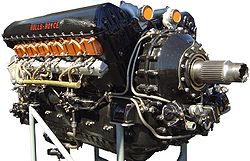

A Rolls Royce Merlin engine
A supercharger remedies this problem by compressing the air back to sea-level pressures, or even much higher. This inevitably requires some energy to be bled from the engine to drive the supercharger. On the single-stage single-speed supercharged Rolls Royce Merlin engine for instance, the supercharger uses up about 150 horsepower (110 kW). Yet the benefits outweigh the costs, for that 150 hp (110 kW) lost, the engine is delivering 1000 hp (750 kW) when it would otherwise deliver 750 hp (560 kW), a net improvement of 100 hp. And while the supercharged engine delivers as much or more thrust as it did at sea level, the airframe only experiences half the aerodynamic drag due to the low atmospheric pressure at high altitude. For this reason supercharged planes are able to fly much faster at higher altitudes.
A supercharger is only able to supply a limited amount of pressure because the compression increases the air temperature, and the engine is limited in maximum charge-air temperature before engine knock occurs. Intercoolers and aftercoolers are often used to get around this problem. The boost is typically measured at the altitude at which the supercharger can still supply sea level pressure (101 kPa or 1013 mbar) and is referred to as the critical altitude.
[edit] Altitude efficiency
Below the critical altitude the supercharger is capable of delivering too much boost and must therefore be restricted lest the engine be damaged. Unless other measures are taken, this means that at least some of the power driving the supercharger is wasted. Also, due to the denser air at lower altitudes, the supercharger is not operating at its best efficiency, and this can cause an additional load on the engine.
For the early years of the war this was simply how it was, and this led to the seemingly odd fact that many early-war engines actually delivered less power at lower altitudes. This was because the supercharger was still using up power to compress air that was not delivering any power back. As the war progressed two-speed superchargers were introduced using better controllers and, notably, hydraulic clutches, that allowed the boost to be managed over a wide range of altitudes by operating at low rpm down low and at high rpm at higher altitudes. This generally "flattened out" the power below the critical altitude.
Throughout WWII British superchargers generally had higher critical altitudes than their German counterparts and, when combined with the higher octane fuels that the Americans supplied, this allowed far higher boost levels, which meant that British airplane engines were generally able to outperform German ones in most situations.
Altitude effects

A Rolls Royce Merlin engine
A supercharger remedies this problem by compressing the air back to sea-level pressures, or even much higher. This inevitably requires some energy to be bled from the engine to drive the supercharger. On the single-stage single-speed supercharged Rolls Royce Merlin engine for instance, the supercharger uses up about 150 horsepower (110 kW). Yet the benefits outweigh the costs, for that 150 hp (110 kW) lost, the engine is delivering 1000 hp (750 kW) when it would otherwise deliver 750 hp (560 kW), a net improvement of 100 hp. And while the supercharged engine delivers as much or more thrust as it did at sea level, the airframe only experiences half the aerodynamic drag due to the low atmospheric pressure at high altitude. For this reason supercharged planes are able to fly much faster at higher altitudes.
A supercharger is only able to supply a limited amount of pressure because the compression increases the air temperature, and the engine is limited in maximum charge-air temperature before engine knock occurs. Intercoolers and aftercoolers are often used to get around this problem. The boost is typically measured at the altitude at which the supercharger can still supply sea level pressure (101 kPa or 1013 mbar) and is referred to as the critical altitude.
[edit] Altitude efficiency
Below the critical altitude the supercharger is capable of delivering too much boost and must therefore be restricted lest the engine be damaged. Unless other measures are taken, this means that at least some of the power driving the supercharger is wasted. Also, due to the denser air at lower altitudes, the supercharger is not operating at its best efficiency, and this can cause an additional load on the engine.
For the early years of the war this was simply how it was, and this led to the seemingly odd fact that many early-war engines actually delivered less power at lower altitudes. This was because the supercharger was still using up power to compress air that was not delivering any power back. As the war progressed two-speed superchargers were introduced using better controllers and, notably, hydraulic clutches, that allowed the boost to be managed over a wide range of altitudes by operating at low rpm down low and at high rpm at higher altitudes. This generally "flattened out" the power below the critical altitude.
Throughout WWII British superchargers generally had higher critical altitudes than their German counterparts and, when combined with the higher octane fuels that the Americans supplied, this allowed far higher boost levels, which meant that British airplane engines were generally able to outperform German ones in most situations.

6th Gear
Joined: Sep 2004
Posts: 3,821
Likes: 6
From: Mililani,Hawaii
 ??
??
Originally Posted by c4
FWIW: *snip*


It appears that the take home for our "altitude" cars is a substantial increase in horsepower/torque compared to our handicapped supercharged Mini's. The difference for us is huge, greatly noticed and much welcomed!
The sea level folk won't notice the substantial horsepower difference because there is not one to any great degree. However, the torque number will still come into play at sealevel and one should feel that to some degree.
In the end I think Per's numbers of 174/198 are the most correct if the above posts regarding turbochargers hold true. It would seem that although the SAE correction factor is not correct at altitude we would still need some "minor" correction factor applied at altitude as the turbocharger is not 100% effecient (at least according to the article posted by dwjj above)...but just don't try to take me on the track in your '05-'06 at 5280 ft because your gonna lose.

The sea level folk won't notice the substantial horsepower difference because there is not one to any great degree. However, the torque number will still come into play at sealevel and one should feel that to some degree.
In the end I think Per's numbers of 174/198 are the most correct if the above posts regarding turbochargers hold true. It would seem that although the SAE correction factor is not correct at altitude we would still need some "minor" correction factor applied at altitude as the turbocharger is not 100% effecient (at least according to the article posted by dwjj above)...but just don't try to take me on the track in your '05-'06 at 5280 ft because your gonna lose.

6th Gear
Joined: Sep 2004
Posts: 3,821
Likes: 6
From: Mililani,Hawaii
I had assumed it was meant to be a joke. It was just so unrelated to the post as to be meaningless.
except that it talks about the supercharger performing better at altitude on an airplane due to not being able to use its boost at sea level.
except that it talks about the supercharger performing better at altitude on an airplane due to not being able to use its boost at sea level.


5th Gear
Joined: May 2005
Posts: 836
Likes: 0
From: Los Angeles
209 hp
238 lb/ft
Equals approx. 235 bhp. If you believe Milltek's claims regarding their new exhaust gain of 27 bhp we have a stock R56 + Milltek exhaust producing 262 bhp!!! Holy Sh** - My modded R53 may be a lot better looking than an R56 but you don't get #'s like that on a R53 until you have spent some serious $$$$.
238 lb/ft
Equals approx. 235 bhp. If you believe Milltek's claims regarding their new exhaust gain of 27 bhp we have a stock R56 + Milltek exhaust producing 262 bhp!!! Holy Sh** - My modded R53 may be a lot better looking than an R56 but you don't get #'s like that on a R53 until you have spent some serious $$$$.
6th Gear
Joined: Sep 2004
Posts: 3,821
Likes: 6
From: Mililani,Hawaii
209 hp
238 lb/ft
Equals approx. 235 bhp. If you believe Milltek's claims regarding their new exhaust gain of 27 bhp we have a stock R56 + Milltek exhaust producing 262 bhp!!! Holy Sh** - My modded R53 may be a lot better looking than an R56 but you don't get #'s like that on a R53 until you have spent some serious $$$$.
238 lb/ft
Equals approx. 235 bhp. If you believe Milltek's claims regarding their new exhaust gain of 27 bhp we have a stock R56 + Milltek exhaust producing 262 bhp!!! Holy Sh** - My modded R53 may be a lot better looking than an R56 but you don't get #'s like that on a R53 until you have spent some serious $$$$.
actually Miltek claimed ~202hp and based the hp gain on the factory stated hp... so you'd be losing power if randy's dyno was correct.


5th Gear
Joined: Dec 2006
Posts: 1,082
Likes: 1
From: merchantville, nj
C4 - your quote from Wikipedia is relevant to aircraft, is not so relvent to Webb's results.
That discussion is about aircraft superchargers that are designed for the altitude where they will operate - much higher than Denver. So much so they had to bleed off boost at lower altitudes. A Mini is designed to perform at near sea level, and the supercharger is always going to suffer a degradation in performance as altitude increases.
A turbo charger basically is going to be able to spin faster in thinner air, hence enabling it to build pressures nearly equal to sea level. The exhaust side of the turbo gets its spin from the exhaust and works against the intake air compressing it. When the intake air is thinner, the exhaust air can spin the turbo faster, and pressure levels approach nearly the same as sea level.
So leaving airplanes by the side, all else being equal (and all else is more or less equal with these two cars) the supercharger will take a hit at altitude and the turbo will not.
That discussion is about aircraft superchargers that are designed for the altitude where they will operate - much higher than Denver. So much so they had to bleed off boost at lower altitudes. A Mini is designed to perform at near sea level, and the supercharger is always going to suffer a degradation in performance as altitude increases.
A turbo charger basically is going to be able to spin faster in thinner air, hence enabling it to build pressures nearly equal to sea level. The exhaust side of the turbo gets its spin from the exhaust and works against the intake air compressing it. When the intake air is thinner, the exhaust air can spin the turbo faster, and pressure levels approach nearly the same as sea level.
So leaving airplanes by the side, all else being equal (and all else is more or less equal with these two cars) the supercharger will take a hit at altitude and the turbo will not.


4th Gear

Joined: Aug 2006
Posts: 454
Likes: 5
From: Williamsburg, VA
Hard for me to see, the green line is 3rd gear then. I was thinking it was the 3rd run and you used the fan to cool things back down. But it was the 3rd run that gave you the best number. I had 1 out of 3 correct!

4th Gear
Joined: Dec 2006
Posts: 385
Likes: 0

Banned
Joined: Jul 2002
Posts: 7,756
Likes: 0
Interesting because I have read other sources denying these rumors.
