When you click on links to various merchants on this site and make a purchase, this can result in this site earning a commission. Affiliate programs and affiliations include, but are not limited to, the eBay Partner Network.
Great, supposed to pretension chain to .6 nm, that’s a super low value, I don’t have access to a wrench that low
Same here. I went finger tight with the pretensioner plus ~1/8th turn with the wrench. Timing tools fell right back into place after torquing sprocket bolts, installing tensioner, and rotating the engine a couple of turns.
Made me nervous, but I couldn't justify the $$$ for a torque wrench I'd probably never use again...
I hate saying this but by torquing it ALL the way down before tightening the cam gear / VANOS bolts all the spring adjustment in the tensioner is gone. By using the tool and just going finger tight plus a smidge (sorry not on the torque wrench settings) before locking the cam gear / VANOS down it allows the tensioner spring to do its job, keeping tension in the chain as the VANOS varies the cam position, everything wears, and the chain "stretches". I predict early chain/guide failure. I recommend getting new bolts and resetting the timing correctly. Please somebody chime in and say I am wrong.
Last edited by mildensteve; Sep 17, 2020 at 07:16 PM.
I just successfully replaced the valve stem seals on my 2009 JCW using the same tool as CtWeber, a leak down tester, and a helper. Everything went as planned. It was good advice to start on cylinder 2 or 3, thank you to who recommended that.
Also, this method of installing the valve keepers with a small flat head screwdriver and some grease was helpful.
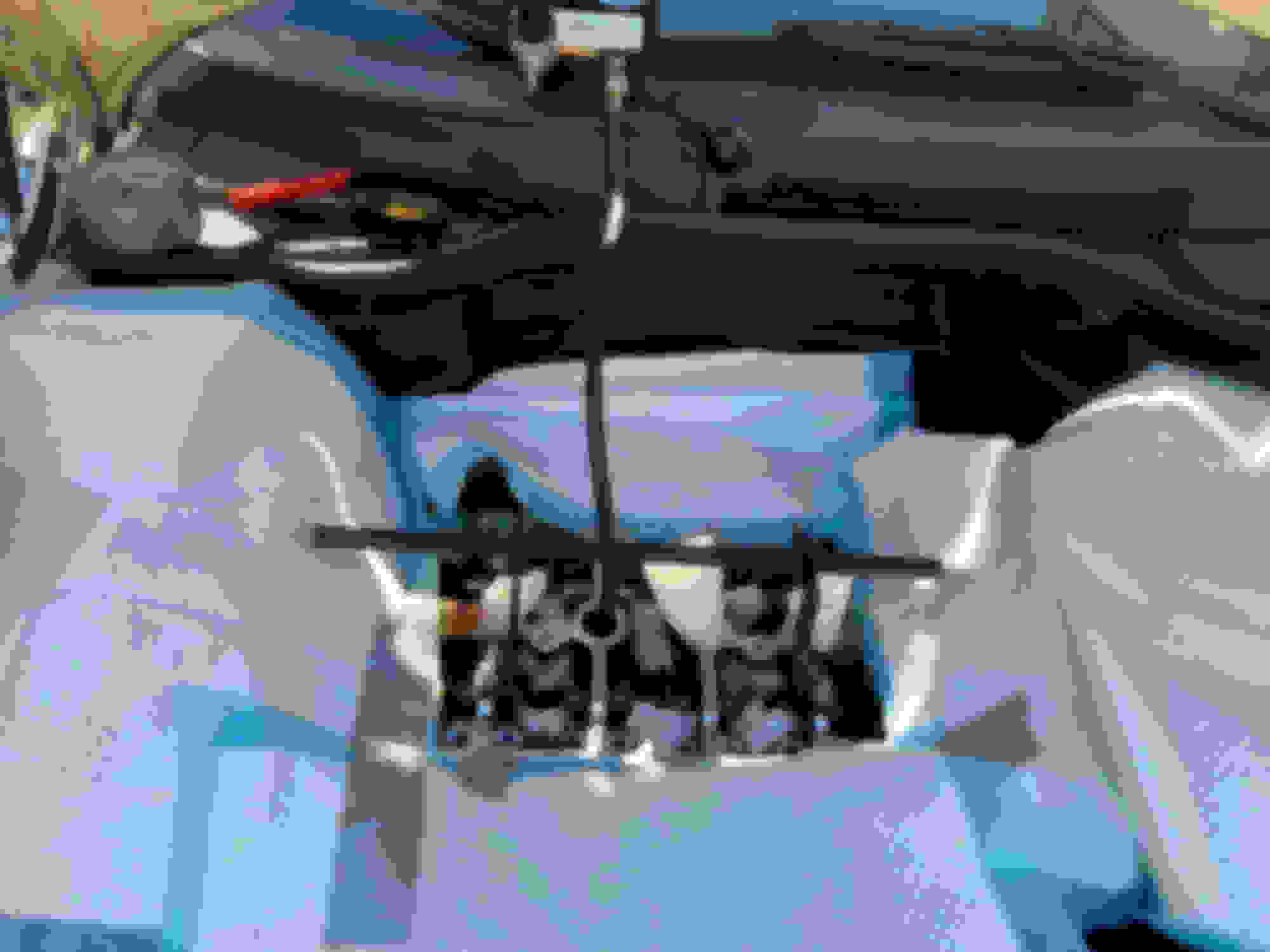
One thing I forgot, the cross-bar on the tool I received was a little too long. it was hitting the engine lift bracket on one side, and an intake pipe on the other. We decided to take off 2 inches from the bar.
Here it is mounted to the cylinder head using the bearing cap holes. The lever is in the back there. I used paper towels to plugs up the spark plug holes and a few other holes that made me nervous.
Oh and use the "stuff a rope into the cylinder" method to keep the valves up.
Hey everyone. So I'm about to do this job as well, and came across this thread. Thanks for all of the information provided by everyone here, by the way. I did have a quick, possibly dumb question about the 'rope method' in this particular instance. As I've always understood it (on simpler cam-in-block applications) you stuff the chamber with rope btdc and then rotate and compress the rope against the valves before releasing the collets. Is this the same process you guys are using here, i.e. removing the crank lock tool, rotating as needed to do each cylinder, then re-positioning and re-locking the crank before reassembly? Or are you able to do this by just stuffing enough rope into each cylinder, without rotating/compressing it? Thanks for the clarification, and again for the information.
Hey everyone. So I'm about to do this job as well, and came across this thread. Thanks for all of the information provided by everyone here, by the way. I did have a quick, possibly dumb question about the 'rope method' in this particular instance. As I've always understood it (on simpler cam-in-block applications) you stuff the chamber with rope btdc and then rotate and compress the rope against the valves before releasing the collets. Is this the same process you guys are using here, i.e. removing the crank lock tool, rotating as needed to do each cylinder, then re-positioning and re-locking the crank before reassembly? Or are you able to do this by just stuffing enough rope into each cylinder, without rotating/compressing it? Thanks for the clarification, and again for the information.
You got it right. Stuff the rope in the cylinder and then rotate towards that piston TDC till it won't go any more.
Sorry for reviving an old thread, but this seemed like the only one on the topic. I was going to do the valve stems but some issues with my kit caused me to back out and put everything back together. Only had the inlet camshaft off, putting it back on (caps and bolts in the exact same locations), I snapped two of the cap bolts. I thought they were to be torqued to 24nm. I couldn't make out what the bolt head said (thought it said 8.8). What is the proper spec when torquing them?
FWIW, I did this job last year and one detail left out was that the oil dipstick goes through the timing chain guide. If you don’t pull the dipstick, you cannot remove the chain guide.
Sorry for reviving an old thread, but this seemed like the only one on the topic. I was going to do the valve stems but some issues with my kit caused me to back out and put everything back together. Only had the inlet camshaft off, putting it back on (caps and bolts in the exact same locations), I snapped two of the cap bolts. I thought they were to be torqued to 24nm. I couldn't make out what the bolt head said (thought it said 8.8). What is the proper spec when torquing them?
Make sure to clean up all the metal shavings. Better yet, pull the head and have it washed. There were still some metal shavings and they got trapped under the cam and did this
Not sure either of those will work. I used this one. Worked great. You are stuck taking the cams out since the rockers are UNDER the cams. Also, do NOT mix the cam caps. I believe they are line bored. Also make sure you get the right stem seals. Some suppliers don't know the difference between the W11 and N14 engines. You will also need the timing tool set if you don't have
salve, per favore ho bisogno di sapere le misure standard dei cuscinetti cammes e sedi su testata. Con clearance. Sono danneggiati e voglio lavorarli. La mini r56 cooper s n14 anno 2007, in italia. Grazie.
msgaft