When you click on links to various merchants on this site and make a purchase, this can result in this site earning a commission. Affiliate programs and affiliations include, but are not limited to, the eBay Partner Network.
Helix 3rd Gen Mini DDC Intercoolers are ready to ship!
Hey everyone! My name is Ryan and I am the engineer at Helix Motorsports. Typically, I stay behind the scenes developing new products for 1st, 2nd and 3rd Gen MIINIs (I've got some interesting stuff coming down the pipeline), but I want to briefly go over some of the steps we took to ensure that our intercoolers stand alone in engineering and performance.
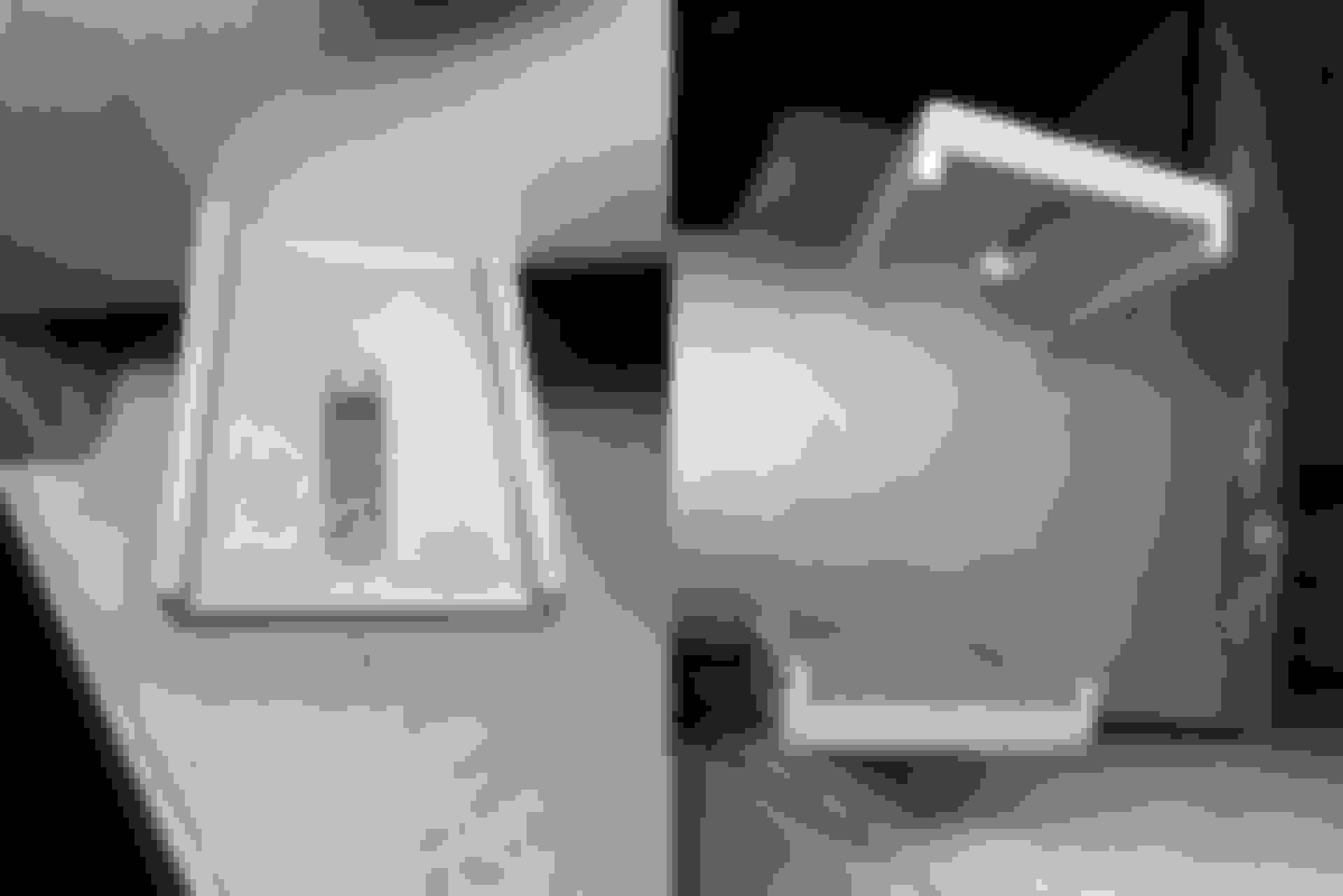
There are two major parts to an intercooler: the end tanks and the core. Our end tanks are computer-designed cast aluminum (see our blog for more on the design process), which we carefully inspect and manually shape when necessary, to ensure a smooth surface for airflow. If you look at the photo below, you can see how our end tanks have uniform walls with no lips or rough edges to ensure airflow enters and exits our core smoothly.
Our basic premise in designing this cooler was to get a significant, repeatable temperature drop, without having a huge loss in boost pressure as a side-effect. The core of an intercooler utilizes two sections, the charge air and the ambient air. The charge air comes from the turbos, pressurized, through the inside of the intercooler, and into the engine. The ambient air flows crosswise through the core, and as the car moves, it cools the charge air through heat exchange. To get the best heat exchange, you need maximum surface area. This is done with corrugated fins, both on the ambient side (what you see when you look at the face of the intercooler), and through the core. The smaller and denser the fins are, the better heat exchange you get. Unfortunately, it's not quite that easy. There are two negatives with high fin density: it's expensive and it reduces boost pressure, like an aerodynamic drag on the charge. To balance cooling efficiency with pressure drop, we decided to use two different fin densities. The ambient side has a very high fin density, where the charge side has lower density. The Dual Density core helps ensure there is minimal pressure drop through the core while maintaining maximum cooling efficiency.
When designing this intercooler, I wanted to minimize the overall complexity of the mounting tabs without compromising strength. The OEM design had extra bracing and supports due to the plastic material used. Our aluminum end tanks have much greater strength and additional bracing was not needed. Not only does this save weight, but it allows for an easier casting and installation process.
For our 3rd Gen Mini intercoolers, we decided to go with non-polished end tanks. While the polished tanks are shiny, there is less surface area, so it actually has a slight negative effect on heat exchange. With any type of thermal exchange system, surface area is key in maximizing the efficiency of heat exchange. Turbulent airflow actually helps increase heat exchange efficiency and having a slightly rough surface will help aid in thermal transfer. You can read more about how turbulent airflow aids in forced convection scenarios here (Bahrami, M. Forced Convection. SFU). Although the end tanks are just a fraction of the total heat exchange, we decided to go for maximum performance over shiny tanks.
You can place your order for a Helix 3rd Gen Mini DDC Intercooler here.
If you have any questions please let us know by sending us an email at sales@helix13.com or by calling us at 267-335-4337.