

6th Gear
OceanMini2, you mentioned that you have seen several gen 2 motors fail and that it looked like more frequent oil changes would have made a difference. What exactly failed in each one, how many miles were on each engine, and what made you think the cause was the oil change interval (rather than, for example, running the engine with not enough oil in it)? Thanks.
6th Gear
Oceanmini2, one more question on your post. You mentioned that "direct injection does not clean the valves so keeping your Mini's oil cleaner can help prevent some dirt build up from the PCV gas."
What do you mean when you say that direct injection does not clean the valves? I assume you mean the intake valves? I'm not knowledgable about direct injection, but I've been assuming that it includes an injector that squirts fuel under pressure directly into the combustion chamber similar to a diesel injector. Is that correct?
If yes, wouldn't it be true that with direct injection the valves would never be getting deposits to begin with as the fuel is not flowing into each cylinder (through each intake valve) with the air?
If yes, why would the intake valves need to be cleaned? And what would clean oil have to do with that?
Not sure what you mean by "PCV gas". Do you mean that dirty oil would cause dirt to get past the PCV valve (do Mini's even have PCV valves?) and onto the intake valves?
Sorry for all the questions...just trying to understand.
What do you mean when you say that direct injection does not clean the valves? I assume you mean the intake valves? I'm not knowledgable about direct injection, but I've been assuming that it includes an injector that squirts fuel under pressure directly into the combustion chamber similar to a diesel injector. Is that correct?
If yes, wouldn't it be true that with direct injection the valves would never be getting deposits to begin with as the fuel is not flowing into each cylinder (through each intake valve) with the air?
If yes, why would the intake valves need to be cleaned? And what would clean oil have to do with that?
Not sure what you mean by "PCV gas". Do you mean that dirty oil would cause dirt to get past the PCV valve (do Mini's even have PCV valves?) and onto the intake valves?
Sorry for all the questions...just trying to understand.

4th Gear
Quote:
The most common failures on second gen Minis are timing chain breaking or timing chain tensioner and chain guides failing. Turbo failure can happen due to clogged oil lines or coolant issues or pump failure. Note the N18 motors are still new and are not suffering in large numbers yet. Originally Posted by shark715
OceanMini2, you mentioned that you have seen several gen 2 motors fail and that it looked like more frequent oil changes would have made a difference. What exactly failed in each one, how many miles were on each engine, and what made you think the cause was the oil change interval (rather than, for example, running the engine with not enough oil in it)? Thanks.
Running low on oil creates so much heat that the plastic parts of the motor look like they burned in a fire. You can see melted parts inside. Old oil makes the motor gold from resin. Oil suspends dirt in it and the additives breakdown with heat but the oil still works even when it is dark. The other thing that happens is that the PH changes. The longer the oil sits in the block the more it becomes a problem. When oil oxidizes numerous decomposition products are formed, including acids. Heat and the presence of metals such as iron or copper particles accelerate the process. Eventually, the oil's viscosity begins to increase and the dense oxide suspensions can no longer be held in a stable oil-dissolved state. It is at this point when the oil is said to "throw sludge" leading to the formation of deposits and varnish.
If you have ever rebuilt a motor you know about golden brown varnish and sludge. Varnish is a tough adherent oxide or carbonaceous material that coats surfaces. Hot surfaces and/or time will often cure varnish to a hard/brittle consistency. Sludge, which is sometimes a precursor to varnish, is soft and sticky and can move about the crankcase until finally coming to rest at sump bottoms, troughs, strainers, filters, and narrow fluid passages. Other common words for varnish and sludge include deposits, lacquer, tars, pigments, gums, and resins.
Air bubbles begin circulating in oil due to overfilling, low levels or high revving (over-agitated). Air bubbles can cause failure of the oil due to the condition known as Pressure-induced Thermal Degradation (PTG). This can both introduce air into the oil and inhibit efficient detrainment of the air (degassing). Also, aged and water-contaminated fluids lose surface tension over time, resulting in air bubbles reducing in size when agitated. The smaller the air bubble, the slower its trip to the surface.
Cleaning out your crankcase will help prevent varnish and sludge and your clean motor will work better and I think it will last longer.
Question.... "How does your Mini know when it needs an oil change?"
The answer is: Your car's computer has no idea if the oil is bad or good. The oil change log is a combination of a set distance and MPG. The more MPG you get the longer the computer waits to say, it is OK to change the oil. If you see an oil light that is an indicator that your pump has stopped moving oil due to over filling your crankcase with oil or you have a very low level of oil. The light is connected to the pump and if it is illuminated it is telling you that you have no oil pressure. That is the only oil related smarts your Mini has.
Learning how to properly check your Mini's oil is very important and much more difficult than most think. Confusion when checking can cause people to overfill and in most cases not add oil when it is needed. I have seen people at the dealership tell the SA that they checked the level and made sure it was OK but in reality the motor was three quarts low because the dipstick tricked the owner into thinking the level was OK.
As far as how far you can drive on oil goes, I am never surprised that oil analyse reports say that oil can be driven for as much as 20,000 miles. Oil needs to work much longer than your oil use interval. You need tolerance in case your cooling system is compromised (like a hose leek, thermostat or pump failure). Dirty oil is still better than no oil. The problem with dirty older oil is the greater chance of sludge and resin that attaches to all the moving parts (like the chain). One major variable is how you use the car. Short trips are more taxing on your oil than long trips. Cold temp starts are harder on the motor. I am perfectly happy disposing of oil that could be used for more miles given the Mini turbo is a small motor that has relatively high horsepower and an oil cooker turbo. Most of the Mini owners that care about the life of the motor and do testing believe that 7000 miles is the longest you should ever drive between changes. Now that Mini recommends changing at 9-10K you could change at 4,500 to 5,000 depending on your driving style. Keep in mind the first changes on a new motor should be done very early (500 - 1200).
Quote:
Several factory/ Mini trained mechanics feel strongly and insist that changing your Mini's oil every 4,500 miles will help prolong the motor's life. Most of the problems show up after the warranty ends. The mechanics that are now independent have more work than they can handle replacing Mini motors due to low oil levels and or long change intervals. Many Mini drivers don't check oil levels for very long periods and find that oil has vanished in the crank case.
__________________Originally Posted by OceanMini2
..............Several factory/ Mini trained mechanics feel strongly and insist that changing your Mini's oil every 4,500 miles will help prolong the motor's life. Most of the problems show up after the warranty ends. The mechanics that are now independent have more work than they can handle replacing Mini motors due to low oil levels and or long change intervals. Many Mini drivers don't check oil levels for very long periods and find that oil has vanished in the crank case.
4th Gear
Quote:
What do you mean when you say that direct injection does not clean the valves? I assume you mean the intake valves? I'm not knowledgable about direct injection, but I've been assuming that it includes an injector that squirts fuel under pressure directly into the combustion chamber similar to a diesel injector. Is that correct?
If yes, wouldn't it be true that with direct injection the valves would never be getting deposits to begin with as the fuel is not flowing into each cylinder (through each intake valve) with the air?
If yes, why would the intake valves need to be cleaned? And what would clean oil have to do with that?
Not sure what you mean by "PCV gas". Do you mean that dirty oil would cause dirt to get past the PCV valve (do Mini's even have PCV valves?) and onto the intake valves?
Sorry for all the questions...just trying to understand.
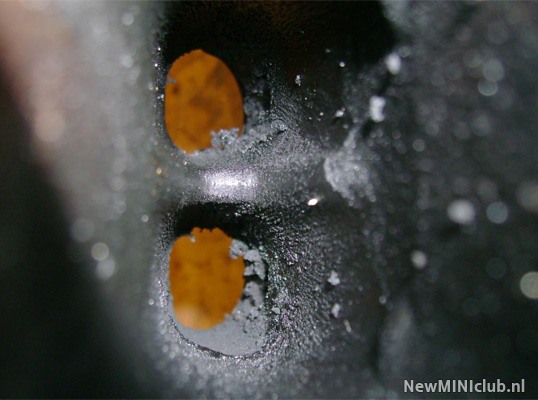
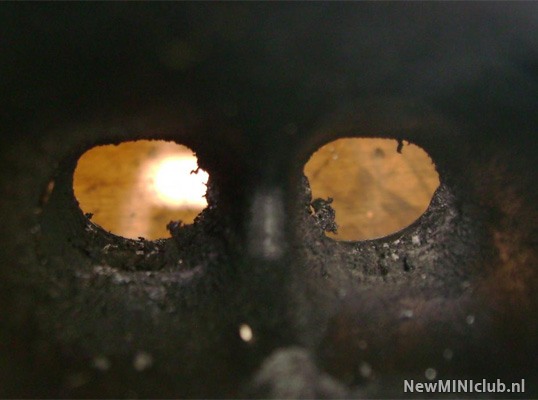
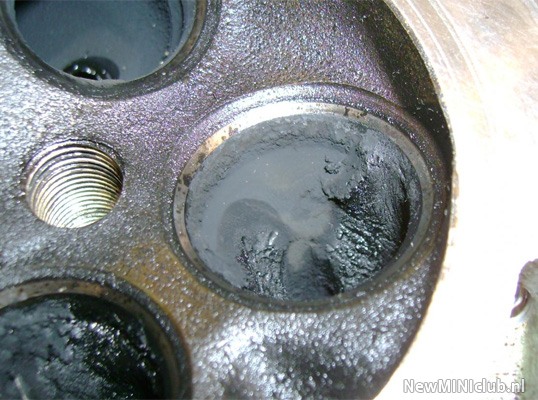
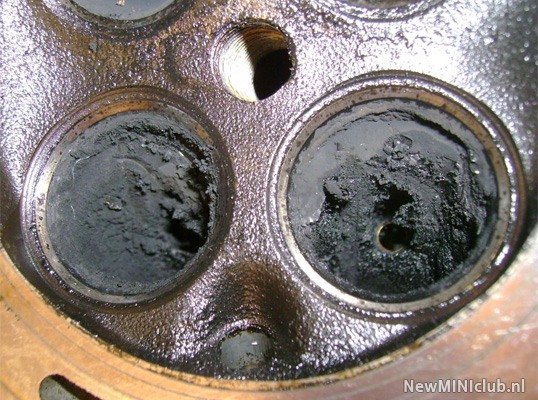
Since the R56 Prince engine is direct injection no fuel flows over the valve for cleaning. As a result, the valves can have significant carbon build-up due to the oil vapor being baked on the valve. Many have documented that adding a catch can has reduced the amount of carbon coking on the valves. Originally Posted by shark715
Oceanmini2, one more question on your post. You mentioned that "direct injection does not clean the valves so keeping your Mini's oil cleaner can help prevent some dirt build up from the PCV gas."What do you mean when you say that direct injection does not clean the valves? I assume you mean the intake valves? I'm not knowledgable about direct injection, but I've been assuming that it includes an injector that squirts fuel under pressure directly into the combustion chamber similar to a diesel injector. Is that correct?
If yes, wouldn't it be true that with direct injection the valves would never be getting deposits to begin with as the fuel is not flowing into each cylinder (through each intake valve) with the air?
If yes, why would the intake valves need to be cleaned? And what would clean oil have to do with that?
Not sure what you mean by "PCV gas". Do you mean that dirty oil would cause dirt to get past the PCV valve (do Mini's even have PCV valves?) and onto the intake valves?
Sorry for all the questions...just trying to understand.
The crankcase (motor) builds pressure and oil and water vapors need to vent. The oil vapor from the crankcase passes through the PCV and hose before it is put back into the intake. The blowby vapors that end up in an engine's crankcase contain moisture as well as combustion byproducts and unburned fuel vapors. The older your oil the more dirt and moisture it will collect. The crankcase is sealed to prevent the escape of these gases into the atmosphere, but the vapors must be removed to prevent oil contamination that leads to sludge formation. The positive crankcase ventilation (PCV) system siphons these vapors from the crankcase and routes them into the intake manifold so they can be reburned in the engine.
R56, 40.000 km.
6th Gear
Quote:
To the people that change there oil between intervals....why? Don't you think BMW has tested and retested this engine since the 2nd gen launch? You're wasting your money on oil and helping oil companies profit...listen to the manufacturer....if it ****s up, it's on them...if youre past you're warranty...(which hopefully you're not since the car came out in 2011) still do it when your car tells you. It's a beast little engine and can take a hell of a beating!!
then why did mini change the oil/filter interval from ~15,000 miles to ~9,000 miles on my 03/12 build CMS All4?Originally Posted by Bakerbrdz
Thanks for the vid.....To the people that change there oil between intervals....why? Don't you think BMW has tested and retested this engine since the 2nd gen launch? You're wasting your money on oil and helping oil companies profit...listen to the manufacturer....if it ****s up, it's on them...if youre past you're warranty...(which hopefully you're not since the car came out in 2011) still do it when your car tells you. It's a beast little engine and can take a hell of a beating!!
on my CMS All4, the countdown "timer" statred at 9,000, but it is now reduced to the point that i will be at zero at 8,1000 miles!
i asked a mechanic at the dealer and he said that is normal if you drive agressively
scott

5th Gear
Thanks for the writeup and pics on deposits, OceanMini2. Even with DI doesn't a bit of fuel go on the intake valves due to valve overlap? Just not nearly as much fuel as a port-injection engine intake valve would see.
I think I read somewhere that the computer also uses number of cold starts in the formula for determining OCI. Good to see that Mini has decreased it to a more reasonable interval. I hope they reprogram my car to the new interval when it goes in to the dealer next. In the meantime I will do a 7500 mi oil change.
I think I read somewhere that the computer also uses number of cold starts in the formula for determining OCI. Good to see that Mini has decreased it to a more reasonable interval. I hope they reprogram my car to the new interval when it goes in to the dealer next. In the meantime I will do a 7500 mi oil change.
6th Gear
Oceanmini2, thanks for taking the time to answer my posts in the detail you did...very insightful!

Quote:
Excellent write up indeed Oceanmini2! Originally Posted by shark715
Oceanmini2, thanks for taking the time to answer my posts in the detail you did...very insightful!

Anyone else thinking about doing their oil change themselves early before the scheduled interval?
6th Gear
Quote:
twice so far, first change just shy of 1500 miles, second change just over 4500 miles (and wheel rotation)Originally Posted by 1bigpea
Anyone else thinking about doing their oil change themselves early before the scheduled interval?
next change on mini at 8100 miles according to the OBC (originally was 9000 miles, but it is now showing the change due at 8100 miles)
scott

6th Gear
Twice. First at about 1,600 miles and again roundt 8,000 miles.

5th Gear
With only 40km, that amount of carbon build-up is nothing more than lazy engineering. Personally, I don't think changing the oil every 5000mi will help all that much. I wonder if Direct Injection engines from other brands have the same problem. Not sure if I want to buy a Countryman S now... 
Does the Justa Countryman motor have Direct Injection ???
Does the Justa Countryman motor have Direct Injection ???
5th Gear
Also found this post from MotoringFile...
Ciaoboy:
I don't have any experience with naturally aspirated direct injection engines, but having been a BMW/MINI service advisor, the 335i's N54 engine and the turbocharged MINI engines had major problems with carbon build-up. Even using top tier gas doesn't help because the fuel doesn't spray onto the intake valves, as it used to with port injection. I'm curious if BMW has found a solution yet. Seems like Toyota is going back to a combination of port and direct injection after experiencing their own problems with carbon build-up.
Ciaoboy:
I don't have any experience with naturally aspirated direct injection engines, but having been a BMW/MINI service advisor, the 335i's N54 engine and the turbocharged MINI engines had major problems with carbon build-up. Even using top tier gas doesn't help because the fuel doesn't spray onto the intake valves, as it used to with port injection. I'm curious if BMW has found a solution yet. Seems like Toyota is going back to a combination of port and direct injection after experiencing their own problems with carbon build-up.


6th Gear
Any one else notice that all of the claims about damage caused by the oil all come back to low oil levels and not the frequency of the oil changes? Every time I see that claim by any poster I just have to chuckle.
As far as why MINI decided to change the interval, my own opinion is that it was a marketing driven decision.
As far as why MINI decided to change the interval, my own opinion is that it was a marketing driven decision.
4th Gear
Quote:
Does the Justa Countryman motor have Direct Injection ???
Yes Audi and VW DI motors have the same problem and I have cleaned several VW valves and seen it first hand. Do your homework and you will find walnut shell blasting is very common on Minis. The only advice I have for for folks that don't understand how old oil sticks to engine parts is to do a rebuild yourself.Originally Posted by Cadenza
With only 40km, that amount of carbon build-up is nothing more than lazy engineering. Personally, I don't think changing the oil every 5000mi will help all that much. I wonder if Direct Injection engines from other brands have the same problem. Not sure if I want to buy a Countryman S now... Does the Justa Countryman motor have Direct Injection ???
5th Gear
I've heard of carbon deposit in DI engines but didn't think it was so bad until I began reading about the Countryman S... a possible purchase OR maybe not. It looks like a cleaning is necessary every 25-30k miles. At $500 a pop, that's an additional $2500 if one keeps a car to 150k. Do you think MINI has resolved the problem on the 2011+ S models with the redesigned PCV system?
OIL: DI gas engine is harsh on oil. It's best to have your oil analyzed. It's an empirical approach to see the actual metal wear numbers, oxidation, fuel dilution, viscosity, etc. Otherwise, it's just a wild guess. In fact, the first 3000 miles after an oil change is when the wear rate is the fastest for most engines.
Here's my UOA (10,685mi & 32 months): NAM ... BITOG
Granted it's a 1st Gen MCS with the traditional Port Injection, that's still a lot of miles and a long time.
OIL: DI gas engine is harsh on oil. It's best to have your oil analyzed. It's an empirical approach to see the actual metal wear numbers, oxidation, fuel dilution, viscosity, etc. Otherwise, it's just a wild guess. In fact, the first 3000 miles after an oil change is when the wear rate is the fastest for most engines.
Here's my UOA (10,685mi & 32 months): NAM ... BITOG
Granted it's a 1st Gen MCS with the traditional Port Injection, that's still a lot of miles and a long time.

2nd Gear
Here's a question: If I'm not up for changing the oil myself, and i don't want to pay Mini $100+ for an oil change prior to the scheduled maintenance, will a Jiffy Lube be able to do it for me trusting they will use the proper parts and oil for a Mini engine? If not, what do you recommend?
Quote:
Good question, and probably the most common when it comes to changing oil. There are many factors that you need to weigh to see if it's worth it for you to even do it before the scheduled maintenance. Here are a few...Originally Posted by minitennisball
Here's a question: If I'm not up for changing the oil myself, and i don't want to pay Mini $100+ for an oil change prior to the scheduled maintenance, will a Jiffy Lube be able to do it for me trusting they will use the proper parts and oil for a Mini engine? If not, what do you recommend?
1) Did you purchase the vehicle? Stick to the maintenance schedule. A bonus change at 4-8K miles is up to you. When the maintenance warranty runs out do it yourself.
2) Did you lease the vehicle? 1 option, stick to maintenance schedule.
3)) You purchased and want to baby your vehicle but don't want to do it yourself: **NEVER let a chain oil place touch your Cooper. Stick to the scheduled maintenance intervals until they run out and then/or...
Watch the video again, see how easy it is, and either do it yourself or have someone that's capable and you trust do it. No sense in paying what the dealership charges OR what a "drive up" oil place charges.
2nd Gear
Thank you for the fast reply. I do not use the car daily, it is a weekend/road trip car that I put about 7k miles a year on (unless I stop taking public transport to work and need to use it as a work car, but I don't see that happening at the moment). Since, I put such low mileage on it, I've bought it outright, and plan on keeping it past the point that the scheduled maintenance is free. I have 5100 miles on it now, and have not changed the oil yet, although I've added 1 quart to top it off since I took delivery in October 2011. After looking at all those pictures of the engine deposits I feel like the oil should be changed pronto ! I've never done an oil change before, but I own a car lift, so I'm thinking it might not be too hard to do. That long wrench thingamajig you used in your video looks a bit intimidating though. As far as finding someone I trust to change it other then a mini dealer, I have no idea at all how I'd do that since I barely trust my own mother (I know, I have issues). What do you suggest?
2nd Gear
Also, the danged dipstick doesn't have max and min marks on it so it's not easy to read. There is a top "****" and a bottom "****". The bottom **** is the pointy ****. Is the top of the pointy **** the "min" mark?

2nd Gear
Quote:
This is good advice for any car. My experience: They forget to put things back on (vacuum hoses) or just choose not to (rock shield on the bottom of the engine bay) or substitute/forget to use the proper oil. Originally Posted by 1bigpea
**NEVER let a chain oil place touch your Cooper. Stick to the scheduled maintenance intervals until they run out and then/or...
This especially applies to the MINI with the special synthetic oil requirements and cartridge filter.
Option 1: Find an independent MINI mechanic in you area who can change it for you.
Option 2: Since you put so little mileage on it, but bite the bullet and have the dealer do it. You'll only end up paying $20-$30 more over an independent operation.
Jiffy Lube wil NEVER touch my MINI--horrible experience using them, but I was renting at the time and had no way of changing myself.
6th Gear
Quote:
i would not let jiffy lube cfhange the oil on my lawnmowerOriginally Posted by minitennisball
Here's a question: If I'm not up for changing the oil myself, and i don't want to pay Mini $100+ for an oil change prior to the scheduled maintenance, will a Jiffy Lube be able to do it for me trusting they will use the proper parts and oil for a Mini engine? If not, what do you recommend?
find an independant mechanic that knows minis or a local owner that can show you how to do it yourself
scott
6th Gear
To echo the advice given, I'd stay away from Jiffy Lube type places. Find a good independent shop or DIY. If you need help finding a good shop, find a MINI club local to you and ask there. Your fellow MINI owners will be glad to help. You can also check at soopercooperinfo.com for a list of independent MINI shops in your area..