When you click on links to various merchants on this site and make a purchase, this can result in this site earning a commission. Affiliate programs and affiliations include, but are not limited to, the eBay Partner Network.
Looking for some internet opinions! Can I make my small-ish BBK work long term, with some added cooling? Or do I need to mentally prepare for a larger brake kit?
Asking because my brakes show signs of weakness, but I'm not sure just how bad they are.
My current set up is a now-defunct Texas Speedwerks BBK. From what I've been able to gather, this is a Wilwood Dynalite/Outlaw 2000 aluminum caliper with four pistons, matched to a 11.75" diameter by 0.81 inch thick two piece rotor, with the main selling point that you could clear certain 15" wheels.
As it sits now, they barely clear my 16" stock X-Lite wheels with spacers (I need to grind the pads) but they fit fine on my 17X7 ENKEI performance J10 wheels. (No spacers needed, which is nice.)
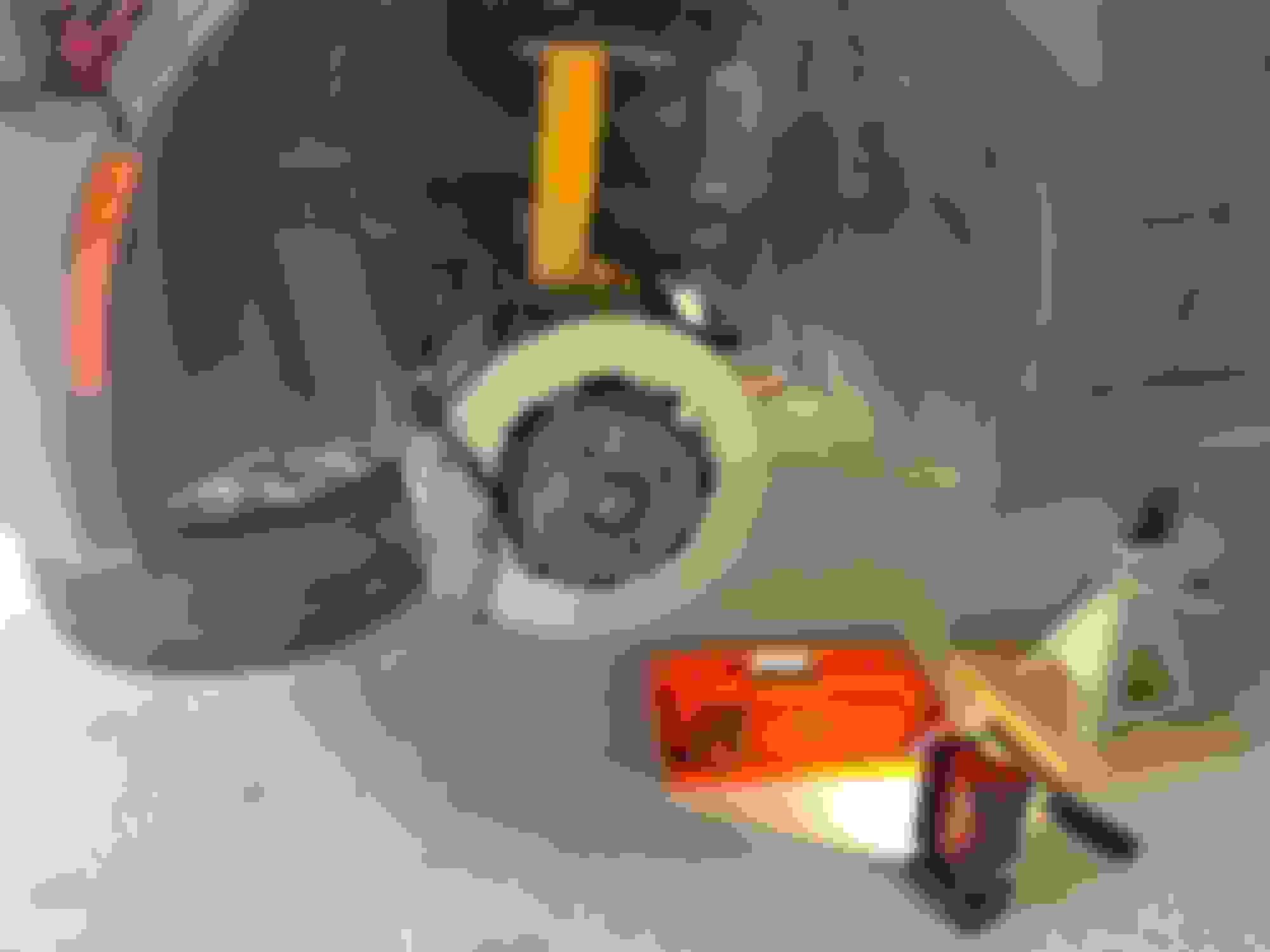
I only use the car for track days, and the Hawk DTC-60's are wearing with some crazy taper. The middles wear down in a complex concave pattern, and the outside top corner wears down the most.
Is this caliper flex? Heat distortion? Totally normal on MINIs during track use?
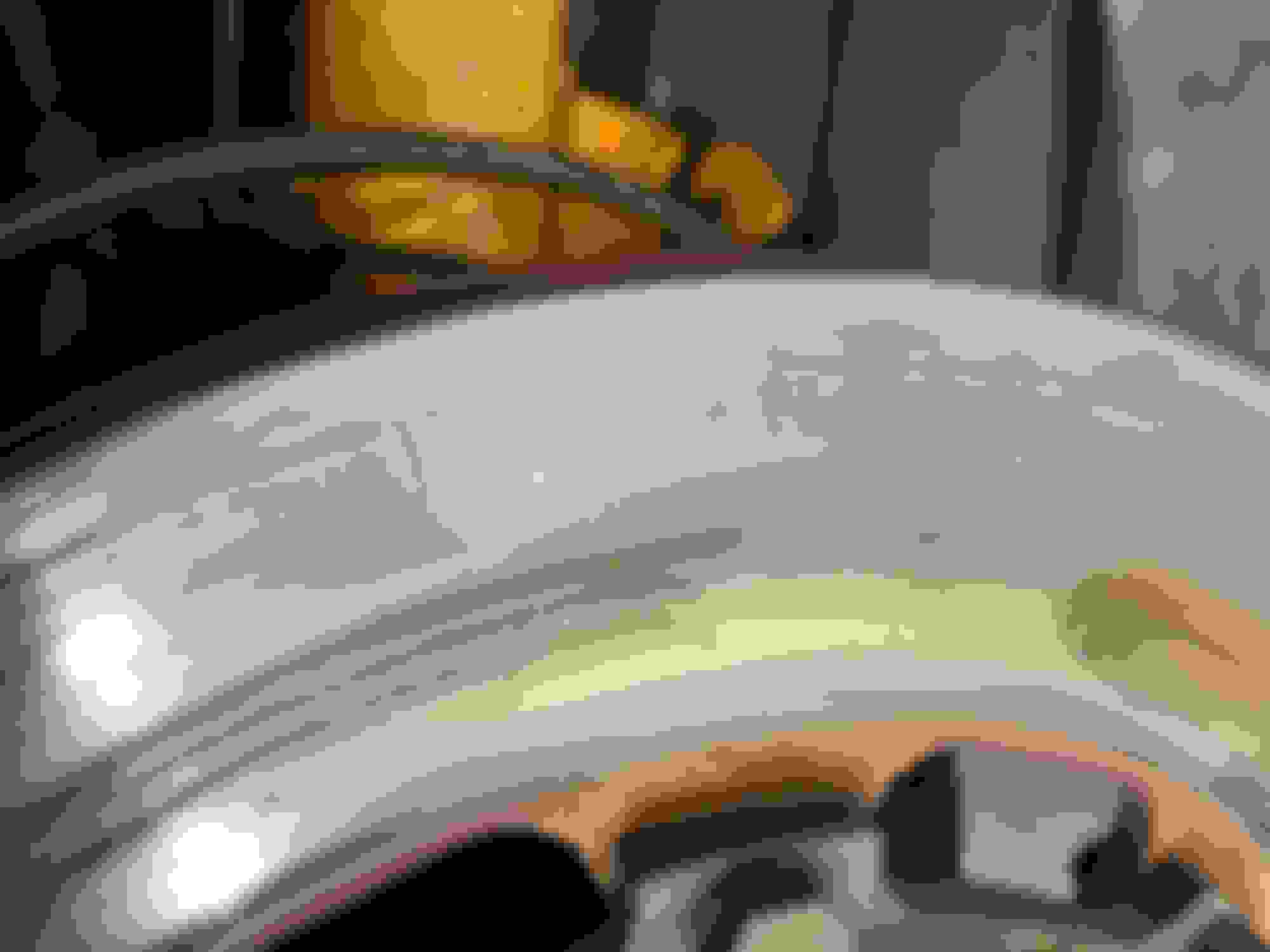
The rotors have made it 12 track days, and this cracking looks like it's about time to replace them. 12 days seems decent?
In another thread @NC TRACKRAT strongly suggested cooling, and I think he or she is right. Will that do the trick? Or do I need to sell my 16" wheels, and upgrade my brake hardware?
One more pic that shows the uneven pad/disc wear from the rust still visible after slow speed driving, but i'm mostly posting because I think it looks cool
It is me and, yes, I am a "he". By the looks of those rotors, yes, thermal shock. You're generating much too much heat. Cooling ducts are in order and, not knowing your driving style, may I suggest some soul-searching into your braking technique. The trick is to use your brakes as quickly as possible, over the shortest distance, as efficiently as possible in order to slow the car enough to make the turn. In other words, get on 'em and get off 'em as quickly as possible. No cadence braking either. There's also something funky going on with the calipers but I'm no expert on the Wilwoods.
My experience is with former 2000 Jeep Wrangler TJ (from new until 2021 ) related vs MINI for tracking, however that shown pad wear pattern does look to me like caliper flex per the OP's impression. On those jeeps, the issue is heavy oversized tires which overwhelm the OEM calipers causing rotational twisting under braking weight transfer due to moment of inertia which then results in significantly reduced pad contact patch (with corresponding loss of stopping performance). My own solution was installing a Black Magic / Vanco Big Brake kit.
Agreed, that's a totally different application with a much slower moving off-pavement trail rig vs MINI used for tracking, however I believe the phenomenon is related.
That is crazy heat and I have melted the wilwood 6 piston calipers and my rotors still didnt look like that WOW. Yes I shouldnt use the 6 piston calipers for track use learned that the hardway
that is 100 % normal for anyone that is fast at the track, there is no way around heat crazing cracking like that it will happen. Ducts will help rotors and pads last longer, I get nearly twice as much life with big ducts vs without.
12 days is a long time, I get 4-6 max out of wilwood rotors on the r53 or the big rotors on my 135i
Yes I shouldnt use the 6 piston calipers for track use learned that the hardway
why not? the more pistons the more even the pressure distribution is on the pads right? I always thought the more was better, and liked the fact that I have 4 pistons to what is probably 1 stock.
Anyone on here know what the heck grade these bolts are? I don't recognize this marking. Would love to get some replacement hardware.
There's some weird going on in that picture. As best I can tell it either reads "O1DO" or "OO1O" with an 'X' opposite. The strange part is the X is not in a consistent location. Generally hardware marking is in a consistent orientation to the fastener features. The closest example I could find is an aircraft designation "special bolt" with an 'X' opposite an 'S'. See here
If you have access to a hardness tester, hardness generally correlates to tensile strength which would tell you your grade. But I think if you had access to a hardness tester you wouldn't be asking this question. If it's a high load application I don't think you can go wrong with a 10.9 replacement.
There's some weird going on in that picture. As best I can tell it either reads "O1DO" or "OO1O" with an 'X' opposite. The strange part is the X is not in a consistent location. Generally hardware marking is in a consistent orientation to the fastener features. The closest example I could find is an aircraft designation "special bolt" with an 'X' opposite an 'S'. See here
If you have access to a hardness tester, hardness generally correlates to tensile strength which would tell you your grade. But I think if you had access to a hardness tester you wouldn't be asking this question. If it's a high load application I don't think you can go wrong with a 10.9 replacement.
If you can get ARP bolts to replace the ones you currently running , the clamping force would be more even..